When Drowsy Driving Turns Deadly: Building Your Houston Rideshare Fatigue Claim
Key Takeaways: Proving a Houston rideshare driver was fatigued is key to establishing negligence and securing compensation after a crash. Drowsy driving breaches the duty of ordinary care under common-law negligence. Strong claims rely on app logs, telematics, dashcam data, witness statements, and driver records revealing hours stacked across multiple apps. Federal hours-of-service standards offer a persuasive benchmark for unsafe driving duration, though they don’t directly govern Uber and Lyft drivers. Available coverage depends on the driver’s app status, with Periods 2 and 3 triggering up to $1 million in liability coverage. Texas law gives injured victims two years to file under § 16.003, so act early to protect evidence and your filing window.
A fatigued rideshare driver can be just as dangerous as a drunk one, and proving that fatigue is the heart of a strong injury claim. When an Uber or Lyft driver nods off behind the wheel, the resulting crash often leaves passengers, pedestrians, and other motorists with serious injuries. Understanding what are your rights when your rideshare driver falls asleep starts with knowing that fatigue can establish negligence. In Houston, building that proof means gathering app data, driver records, and supporting testimony before evidence disappears.
If you or someone you love was hurt because a drowsy rideshare driver caused a collision, the team at Payne Law Firm is ready to listen. Call us at 713-223-5100 for a free consultation, or reach out through our secure contact page.
Why Fatigue Is a Form of Negligence in Texas
Drowsy driving breaches the basic duty every motorist owes to others on the road. Under Texas common-law negligence, every driver must operate a vehicle with the ordinary care a reasonably prudent person would use. A driver who falls asleep or drifts out of a lane has failed to meet this standard. You can read the full text of this statutory duty of care to understand how Texas frames operator responsibility.
Fatigue claims hinge on showing that drowsiness, not just bad luck, caused the wreck. Because rideshare drivers are independent contractors, different insurance and liability rules apply. That distinction doesn’t excuse negligence, but it shapes how you prove it and which insurance policy responds. Establishing rideshare negligence proof in Texas requires connecting the driver’s condition to the moment of impact.
💡 Pro Tip: Jot down everything you remember about the driver’s behavior before the crash, including yawning, swerving, slow reactions, or mentions of a long shift. These observations become powerful drowsy driving evidence later.
What Are Your Rights When Your Rideshare Driver Falls Asleep
You generally have the right to pursue compensation from the at-fault driver and, in many cases, the rideshare company’s insurance. When you ask what are your rights when your rideshare driver falls asleep, the answer depends heavily on the driver’s app status at impact. Uber and Lyft coverage shifts across three distinct periods, and identifying the correct period is central to accessing higher policy limits.
Texas recognizes that rideshare insurance operates on a period-based framework. Period 1 covers a driver waiting for a request. Period 2 begins when a ride is accepted but no passenger is aboard, and Period 3 covers time when a passenger is in the vehicle. During Periods 2 and 3, rideshare platforms generally provide at least $1 million in third-party liability coverage.
| Coverage Period | Driver Status | Typical Coverage |
|---|---|---|
| Period 1 | App on, waiting for request | Limited contingent liability |
| Period 2 | Ride accepted, no passenger | Up to $1 million liability |
| Period 3 | Passenger in vehicle | Up to $1 million liability |
Personal auto policies frequently exclude commercial driving, making period analysis critical. Personal car insurance commonly denies coverage when a vehicle is used to earn money. That gap is why pinning down app status and the applicable coverage period can determine whether a claim is fully compensated or left underinsured.
The Evidence That Proves a Driver Was Too Tired to Drive
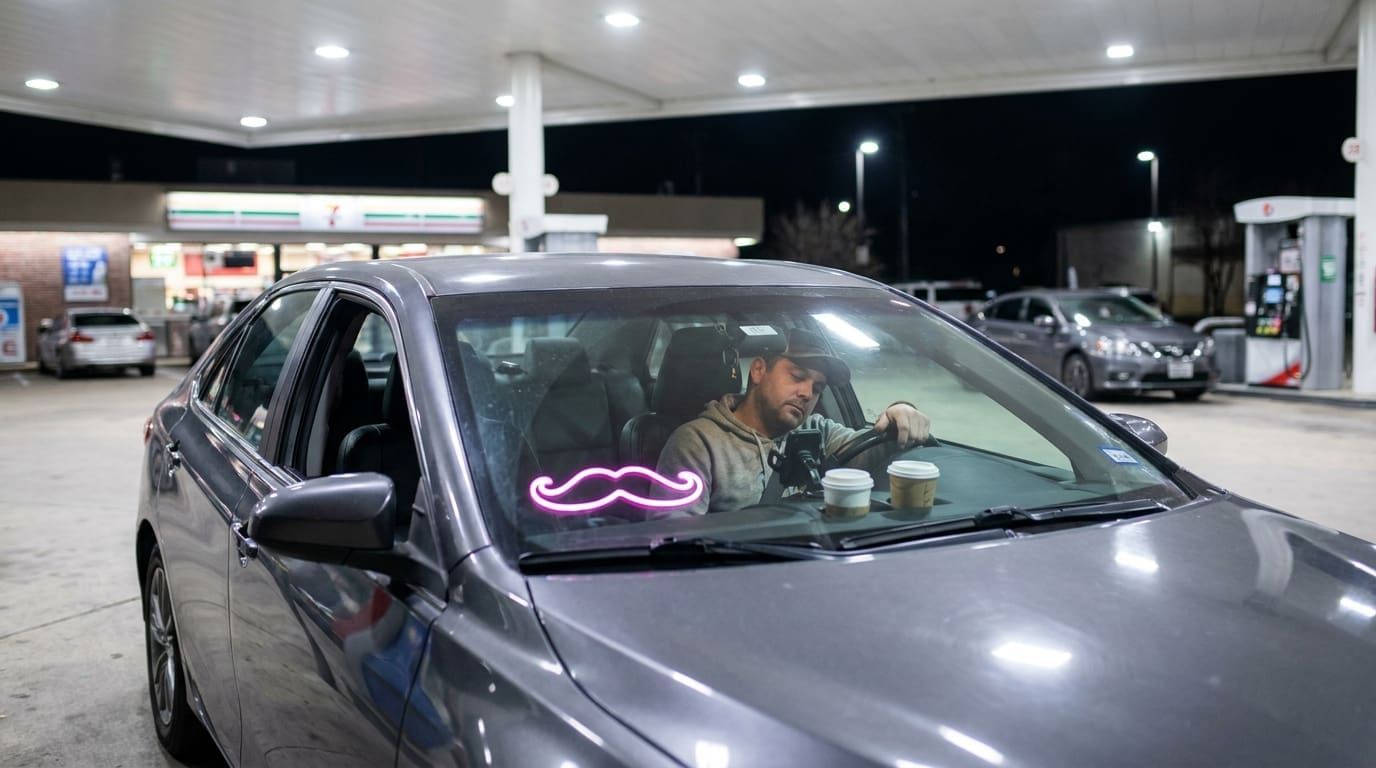
Strong fatigue cases are built on layered evidence rather than a single smoking gun. Few drivers admit to falling asleep, so a thorough rideshare crash investigation in Houston pulls together digital records, physical evidence, and witness accounts. The goal is reconstructing how long the driver had been working and their condition at impact.
Several categories of proof carry the most weight in fatigued driver proof in Houston cases. Each piece helps a jury or adjuster see how exhaustion led to the crash. Preserving these items quickly matters, because app data and vehicle records can be overwritten or lost.
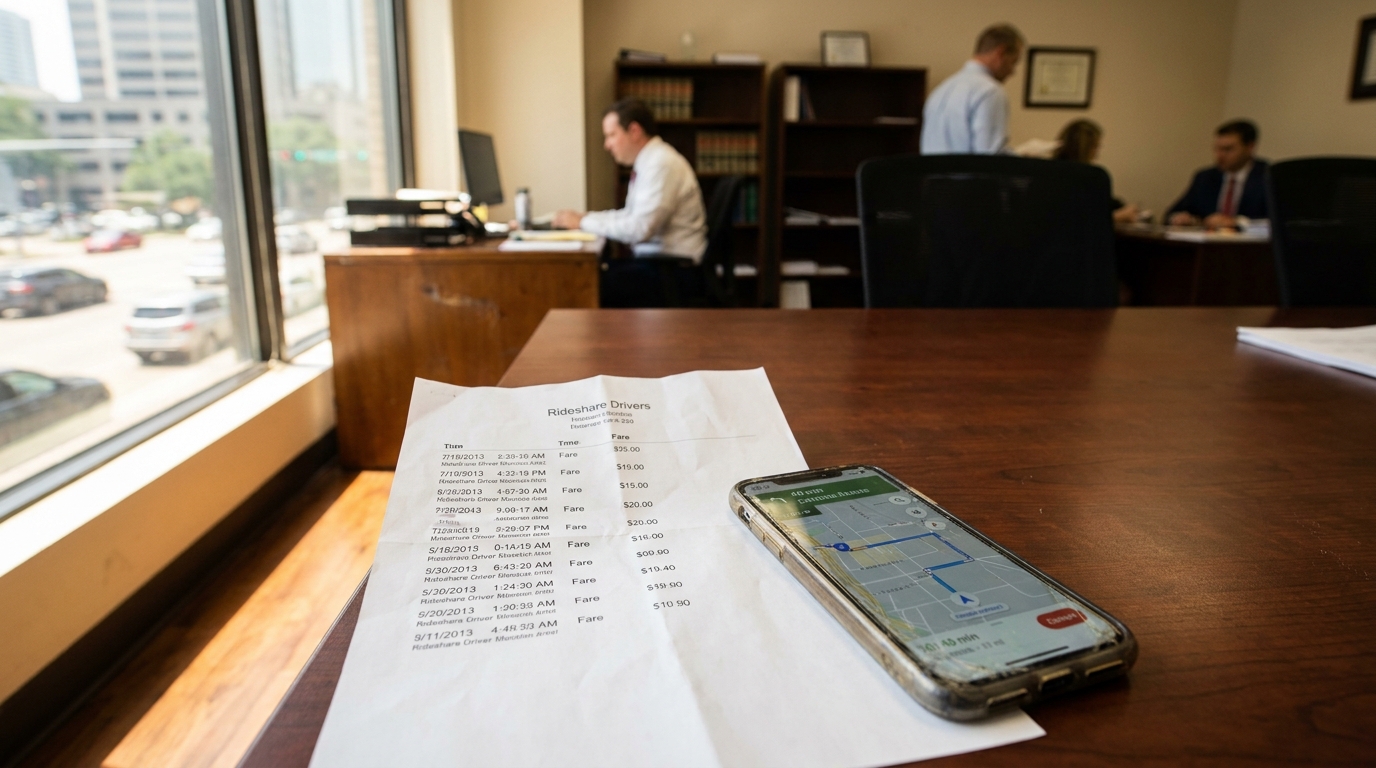
- App and trip logs: Timestamps showing hours online, consecutive trips, and time since the last break reveal dangerous fatigue.
- Telematics and event data: Phone GPS, vehicle "black box" data, and dashcam footage may show drifting, late braking, or no braking.
- Witness statements: Passengers and bystanders often recall a driver yawning, swerving, or appearing exhausted.
- Driver records: Information about whether the driver ran multiple platforms shows extended hours across apps.
Many drivers operate more than one rideshare app simultaneously, quietly compounding fatigue. When a driver stacks hours across multiple platforms, total time behind the wheel may far exceed what any single app shows. Uncovering this pattern often requires subpoenas and transforms a borderline claim into compelling Uber driver fatigue evidence.
💡 Pro Tip: Save screenshots of your ride receipt, the driver’s name, and trip route immediately. Our guide on preserving rideshare app data explains how to lock down digital proof before it disappears.
Using Federal Standards as a Fatigue Benchmark
Although rideshare drivers aren’t bound by trucking rules, federal fatigue science offers a persuasive yardstick. Federal regulations limit commercial drivers to 11 hours of driving after 10 consecutive hours off duty, within a 14-hour on-duty window. These hours of service regulations reflect decades of research on when driving becomes unsafe due to exhaustion.
Courts and juries may consider these standards when evaluating how long is too long behind the wheel. A rideshare driver logging far more continuous hours than a regulated trucker presents a strong narrative of unreasonable risk. While these rules don’t directly govern Uber or Lyft drivers, they help frame what reasonable rest looks like.
How Texas Law Supports a Fatigue Injury Claim
Several Texas statutes support a drowsy rideshare driver claim. Beyond the general duty of care, Texas Transportation Code § 601.053 requires operators to provide evidence of financial responsibility after a collision, helping confirm applicable insurance. Texas Transportation Code § 522.025 bars issuing a commercial driver’s license to disqualified persons; while most rideshare drivers use standard licenses, the provision reflects Texas’s interest in keeping unfit drivers off the road.
Expert testimony often bridges the gap between fatigue and causation. Sleep medicine professionals and accident reconstruction experts may offer opinions linking the driver’s exhausted state to the crash, though courts evaluate such testimony on a fact-specific basis.
Acting within the legal deadline is essential to preserving these rights. Under Texas Civil Practice and Remedies Code § 16.003, an injured person generally must file a personal injury lawsuit within two years of the injury. Limited exceptions can apply, but Texas courts interpret tolling narrowly. Speaking with a Houston rideshare injury lawyer early helps protect both your evidence and filing window.
💡 Pro Tip: Seek medical care right away, even if you feel fine. Gaps in treatment can be used by insurers to dispute your injuries, while prompt records strengthen your rideshare accident evidence in Texas.
Frequently Asked Questions
How do I prove a rideshare driver fell asleep if there is no admission?
You rarely need a confession to prove fatigue. Circumstantial evidence such as app hours, lack of braking, drift patterns, witness observations, and time-of-day factors can collectively support the conclusion. A careful investigation often reconstructs the driver’s condition without direct admission.
Does it matter whether the app was on when the crash happened?
Yes, the driver’s app status is often decisive. It determines which coverage period applies and whether Uber or Lyft’s larger liability policy responds. Identifying the period is one of the first steps in evaluating a claim.
How long do I have to file a fatigue-related rideshare claim in Texas?
Texas generally allows two years from the date of injury under § 16.003. Some narrow exceptions may apply, but courts apply them cautiously. Waiting can also cause valuable evidence to vanish.
Can I still recover if I was a passenger in the rideshare?
In many cases, yes. Passengers are typically covered by the platform’s third-party liability coverage during active ride periods. Your right to compensation doesn’t depend on owning a car or carrying your own policy.
What if the driver was working for more than one app?
Driving across multiple platforms can strengthen your case. It may show extended hours that no single app reveals, supporting a fatigue argument. Uncovering this usually requires formal records requests.
Putting the Pieces Together After a Drowsy Driving Crash
Proving fatigue is challenging, but the right approach can establish negligence and open the door to fair compensation. From app logs and telematics to witness accounts and statutory duties under Texas law, each layer of proof matters. Understanding what are your rights when your rideshare driver falls asleep empowers you to act quickly, preserve evidence, and pursue the applicable coverage. Outcomes always depend on specific facts, so personalized guidance is invaluable.
Payne Law Firm has spent over two decades standing up for injured Houstonians overlooked by insurers. Attorney Jason Payne is Board Certified in Personal Injury Trial Law by the Texas Board of Legal Specialization, and the firm has helped over a thousand families seek deserved compensation. If a drowsy rideshare driver upended your life, contact Payne Law Firm today by calling 713-223-5100 or through our online consultation request. Your first consultation is free, and we’re ready to fight for you like family.