
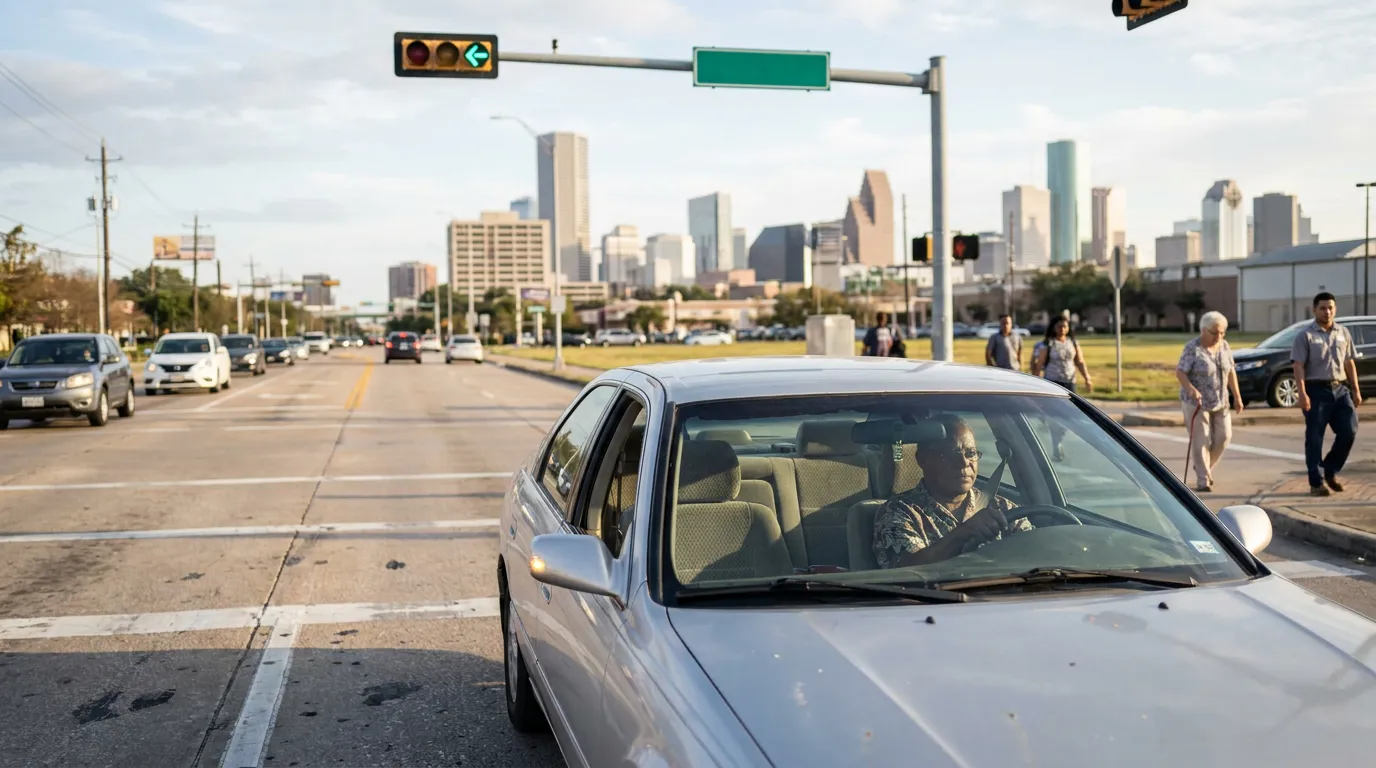
Understanding Right-of-Way Rules After a Houston Turning Collision
Key Takeaways: In Houston left-turn crashes, the turning driver is often treated as at fault initially because Texas Transportation Code § 545.152 requires yielding to oncoming traffic in or near the intersection, including turns into an alley, private road, or driveway. This assessment isn’t binding, signal type matters: an unprotected circular green generally leaves the yield duty with the turning driver, while a protected green arrow may shift blame to an oncoming driver who ran a red light. Turn mechanics under § 545.101, such as cutting the corner or turning from the wrong lane, can independently support a negligence claim. Fault may shift to an oncoming motorist who was speeding, ran a red light, or drove distracted or impaired. Texas proportionate responsibility may allow reduced recovery when both drivers share blame, generally if the claimant is not more than 50 percent responsible. Surveillance video, signal timing data, event data recorder downloads, damage patterns, witness accounts, and medical records often decide these disputes, and much of this evidence can disappear quickly. Most injury suits must generally be filed within two years under Civil Practice and Remedies Code § 16.003, with far shorter notice deadlines possibly applying to claims against governmental units.
The driver making a left turn faces early scrutiny, which is why left-turning drivers are often found at fault in Houston intersection crashes. The injured claimant still bears the burden of proving negligence, but Texas law places an affirmative duty on the turning driver to yield to oncoming traffic, and adjusters and officers often assume the left-turning motorist failed that duty. That assumption isn’t absolute, fault may shift when the oncoming driver ran a red light, sped excessively, or drove impaired, and Texas follows a proportionate responsibility system that may allow recovery even when an injured person shares some blame.
If you were hurt when another driver turned left into your path, or if an adjuster is blaming you for a lawful turn, you deserve straightforward answers. The team at Payne Law Firm has spent more than 20 years helping injured Houstonians understand where they stand, and consultations are always free. Call 713-223-5100 or reach out to our team now to talk through what happened.
The Statute That Drives Left Turn Accident Fault Houston Claims
Texas Transportation Code § 545.152 is a foundational authority in many left-turn liability disputes. It requires an operator turning left at an intersection, into an alley, or into a private road or driveway to yield the right-of-way to a vehicle approaching from the opposite direction that is in the intersection or close enough to be an immediate hazard. As a state statute within Title 7, Subtitle C, Chapter 545, it generally applies in Houston, Harris County, and other Texas jurisdictions.
This provision’s reach is broader than many drivers assume. Section 545.152 applies not only at intersections but also when a driver turns left into an alley, private road, or driveway, so fault often depends on exactly where the turn occurred. A left turn into a strip-center driveway on Westheimer may be analyzed under the same yield obligation as a left turn at a signalized intersection. A separate provision, § 545.256, governs drivers emerging from an alley, building, private road, or driveway. You can review the full text of the Texas right-of-way turning statute through the Legislature’s official portal.
Texas Transportation Code § 544.007, governing traffic-control signals, reinforces the same yield concept. Read together with § 545.152, these provisions often form the primary legal basis for treating a left-turning driver who fails to yield as at fault. An unexcused violation may support a negligence per se theory in some cases, but courts and juries still evaluate the facts, and the inference of fault may be rebutted with credible evidence.
Green Ball Versus Green Arrow: Why the Signal Matters
The type of green light facing the turning driver can be decisive. Under Texas Transportation Code § 544.007(b), an operator facing a circular green signal may proceed straight or turn right or left unless a sign prohibits the turn, but shall yield to other vehicles and pedestrians lawfully in the intersection or an adjacent crosswalk. This unprotected or "permissive" left turn is among the most common and heavily disputed scenarios in Houston left-turn wrecks.
A protected green arrow may change the analysis considerably. Under § 544.007(c), an operator facing a green arrow may cautiously enter the intersection to move in the permitted direction, yielding only to pedestrians lawfully in an adjacent crosswalk and to other lawful traffic. When the arrow was illuminated, oncoming traffic should have been stopped, which may shift fault toward a driver who entered on red.
| Signal Facing Turning Driver | General Yield Duty | Typical Fault Starting Point |
|---|---|---|
| Circular green (unprotected) | Yield to oncoming traffic in or near the intersection | Turning driver, subject to rebuttal |
| Green arrow (protected) | Yield to pedestrians and traffic lawfully in the intersection | Oncoming driver who disregarded the red |
| Yellow or stale green | Heightened caution; clearing the intersection safely | Fact-dependent |
How Turn Mechanics Can Become Evidence of Texas Left Turn Negligence
Improper execution of the turn itself may support a negligence claim independent of any yield violation. Texas Transportation Code § 545.101 requires an operator making a left turn at an intersection to approach in the extreme left-hand lane lawfully available and, after entering the intersection, to turn so as to arrive in a lane lawfully available to traffic moving in that direction on the roadway being entered. Where practicable, the turn should be made left of the intersection’s center.
Deviation from these mechanics frequently shows up in crash reconstruction. A driver who cut the corner, swung wide into a second lane, or turned from a through-only lane may have breached a statutory standard of care, offering evidence of negligence, though a violation alone doesn’t establish liability without proof it caused the collision and resulting harm. The Texas prosecutors’ traffic violation reference published by the Texas District and County Attorneys Association catalogs how right-of-way and turning offenses are officially classified and enforced statewide.
Duties Both Drivers Owe After the Crash
Regardless of who turned, both drivers generally have immediate statutory obligations. Texas Transportation Code § 550.021 requires the operator of a vehicle involved in a collision resulting or reasonably likely to result in injury or death to immediately stop at the scene, determine whether a person requires aid, and remain until further statutory requirements are satisfied. Failing to comply may create criminal exposure and may also be relevant in the civil case.
Evidence That Shapes Fault Determination in a Houston Crash
Physical and digital proof often matters more than either driver’s recollection. In our experience, the following materials can carry significant weight with adjusters and juries:
- Intersection or nearby business surveillance video, often overwritten within days
- Signal timing data from the controlling traffic authority
- Vehicle damage patterns and point-of-impact photographs
- Event data recorder downloads showing speed and braking
- Independent witness statements and the investigating officer’s crash report
- Medical records connecting the collision to the specific injuries claimed
💡 Pro Tip: Photograph the signal head from each vehicle’s driver-seat position if it’s safe to do so. Whether a left-turn arrow was present at that approach is often one of the first disputes an adjuster raises, and a scene photo can help resolve it.
When the Oncoming Driver Shares or Bears the Blame
The assumption against the turning driver is a starting point, not a verdict. If the approaching vehicle was speeding well above the posted limit, entered on a red signal, drove without required headlights at night, or was distracted or impaired, the oncoming motorist may bear substantial or complete responsibility. Fault questions in Houston turning wrecks often mirror the analysis in other right-of-way disputes, such as who is at fault in a feeder road T-bone accident along our frequency roads.
Insurance Tactics and Filing Deadlines in a Left Turn Injury Claim Texas Victims Face
Adjusters commonly apply the yield presumption aggressively, sometimes before reviewing the full record. You may hear that recorded statements are routine, that a quick settlement is in your interest, or that your own conduct bars recovery. Under Texas Civil Practice and Remedies Code § 16.003, most personal injury lawsuits must generally be filed within two years of the date the cause of action accrues, and Texas courts have generally construed tolling and discovery-rule exceptions narrowly. Those exceptions generally apply only in limited circumstances, and other rules may apply to claims involving minors or certain defendants, so deadlines should never be assumed. You can read more about civil lawsuit filing deadlines before deciding how to proceed.
Claims involving governmental units generally follow a separate track. Under the Texas Tort Claims Act, notice requirements for claims against a city, county, or state entity are typically distinct from the civil statute of limitations and frequently much shorter, and some municipal charters or ordinances impose even shorter periods. These are often separate processes, and satisfying one may not satisfy the other. Because outcomes turn on specific facts, a timely review by a left turn collision lawyer Houston residents trust is generally advisable.
Frequently Asked Questions
1. Is the left-turning driver always at fault in Texas?
No. Section 545.152 often supports a strong inference of fault, but that inference can be overcome by evidence. If the oncoming vehicle ran a red light, was speeding, or was otherwise not lawfully in the intersection, liability may shift in whole or in part.
2. Can I still recover if I was partly responsible?
In many cases, yes. Texas applies a proportionate responsibility framework under Chapter 33 of the Civil Practice and Remedies Code, and a claimant may recover damages reduced by their percentage of responsibility, generally so long as that share is not greater than 50 percent. Because allocation is fact-dependent, an individualized review is important.
3. What if the turning driver received a citation?
A citation is generally not admissible as proof of negligence by itself, and it does not establish civil liability. A conviction or plea may have limited evidentiary use in some circumstances, but the traffic case and the injury claim are separate proceedings with different standards of proof.
4. How quickly should I act on evidence?
As soon as possible. Surveillance footage near Houston intersections is often retained only briefly, and signal timing records may require a formal request. Early preservation efforts can frequently make a difference in a disputed left-turn case.
5. Does this analysis apply to turns into driveways?
Yes, in many situations. Section 545.152 expressly covers turning left into an alley, private road, or driveway, so a similar yield obligation may generally govern a left turn into a business lot or neighborhood drive. Drivers pulling out of a driveway onto a roadway are instead governed by § 545.256.
Getting Clear Answers About Who Was Responsible
Determining fault in a Houston left turn collision generally begins with the statutory yield duty, then moves to the signal configuration, the mechanics of the turn, and the oncoming driver’s conduct. The early assumption against the turning motorist can be powerful but is not conclusive, every case ultimately depends on the physical evidence, witness accounts, and medical documentation available. Nothing in this discussion should be read as a prediction about any particular claim.
At Payne Law Firm, we treat our clients like family, and we believe injured people deserve to feel heard, informed, and respected during one of the hardest moments of their lives. Attorney Jason E. Payne is Board Certified in Personal Injury Trial Law by the Texas Board of Legal Specialization and has been named to Texas Super Lawyers from 2019 through 2026, and our team has helped over a thousand individuals and families pursue compensation. To schedule a free consultation, call 713-223-5100, visit Payne Law Firm’s website, or request your free case review today.
Disclaimer: This content is for informational purposes only and is not legal advice. Every case is unique, and results may vary. Consult an attorney about your specific circumstances.