
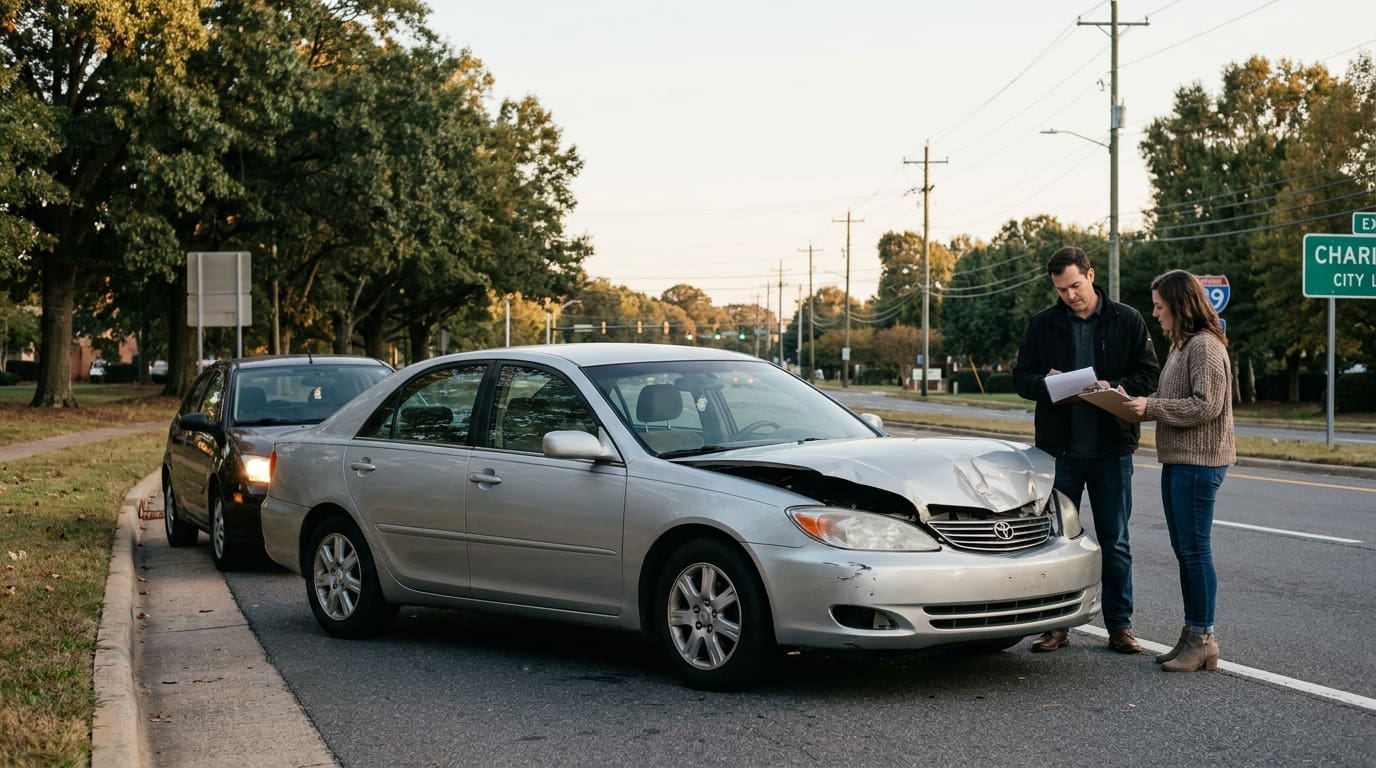
If you have been hurt in a car crash caused by someone with no insurance, you have options. North Carolina law (G.S. § 20-279.21) mandates that every bodily injury liability insurance policy include uninsured motorist coverage. That coverage steps in when the person at fault was uninsured or left without stopping. Knowing how this coverage works can shape how much you recover for treatment costs, missed pay, and pain and suffering. After a crash, a car accident lawyer in Charlotte can check which policies apply to your losses.
Charlotte drivers cannot opt out of UM coverage. With a borrowed car, check the UM terms on the car’s policy and on your own.
Hit-and-run crashes add a few steps. Generally, you have to tell the police about the crash within 24 hours and help with your insurer’s investigation.
Contributory negligence can apply to UM claims just as it applies to third-party liability claims. The last clear chance exception is one way around that rule.
Uninsured vs. Underinsured Motorist Coverage

Uninsured and underinsured coverage fit different situations. The deciding question is whether the driver who caused the crash had any insurance, and if so, how much. With no policy, or a driver who can’t be found, look to uninsured motorist coverage. When the other driver’s limits are too small for your losses, underinsured motorist (UIM) coverage may pick up part of the gap.
Serious injuries can outgrow a small policy fast once medical bills in an NC injury claim add up. Data from the state of North Carolina for 2020 listed Charlotte with over 126,400 car accidents, with 288 of the crashes being fatal.
What Changed in 2025
As of July 1, 2025, North Carolina’s minimum liability requirements increased significantly for all policies issued or renewed on or after that date. Both the per-person and per-accident bodily injury minimums went up, and so did the property damage minimum. These minimums directly affect your UM coverage floor because your UM limits cannot drop below them.
Your UM bodily injury coverage limits default to the highest bodily injury liability limits on your policy. Under G.S. § 20-279.21(b)(3), UM limits must equal the highest bodily injury liability limits for any vehicle insured under the policy unless the named insured selects different limits. The law also sets an upper limit on how high those UM limits can go.
Under North Carolina law, commercial motor vehicle policies aren’t required to provide uninsured motorist coverage, which can complicate recovery efforts if you’re hit by an underinsured trucker. In a truck crash, proving negligence by a trucking company often becomes part of the claim.
Limits and Stacking: Can UM Coverage Be Combined?
Not on the same policy. North Carolina law prohibits stacking UM coverage across multiple vehicles insured under a single policy. Under G.S. § 20-279.21(b)(3), if you are insured under a policy that covers more than one motor vehicle, you cannot combine the UM limits from multiple vehicles on that policy. Even if you insure three cars on one policy, you are limited to the UM coverage amount applicable to a single vehicle. However, if you are insured under more than one separate policy, you may be able to combine the highest applicable UM limit from each policy.
Understanding North Carolina auto insurance requirements before an accident occurs can help you make informed decisions about adequate coverage levels.
Excess Liability Policies and UM Coverage
If you carry an umbrella or excess liability policy, your UM coverage under that policy may be limited or excluded entirely. North Carolina statute § 58-3-152 permits insurers offering excess liability coverage to limit or exclude UM and underinsured motorist (UIM) coverage as cross-referenced to G.S. § 20-279.21(b)(3) and (b)(4). This means your umbrella policy may not extend the same UM protection as your primary auto policy.
Pro Tip: If your umbrella policy excludes UM/UIM coverage, consider raising the UM limits on your primary auto policy to increase protection against uninsured drivers.
When to Talk to a Lawyer About a UM Claim
Here, the company you file with is the one you pay premiums to. That company still reviews fault, the cost of your care and which limits apply. A lawyer’s role is to find every source of coverage and document every loss before the insurer sets a value.
That work often includes:
- Collecting the declarations page for each policy that might apply
- Finding out what, if any, insurance the other driver carried
- Handling the insurer’s requests for statements and records
- Weighing how North Carolina’s fault-based insurance rules bear on the claim
You could potentially pursue a civil lawsuit directly against the uninsured at-fault driver, though collecting a judgment from someone without insurance can be difficult. A lawyer can explain how that option compares with a UM claim.
Bring your declarations pages, the crash report, photos, medical records and any insurer letters to that first meeting. For a fuller list of what to hold on to, see our post on keeping evidence after a car crash.