
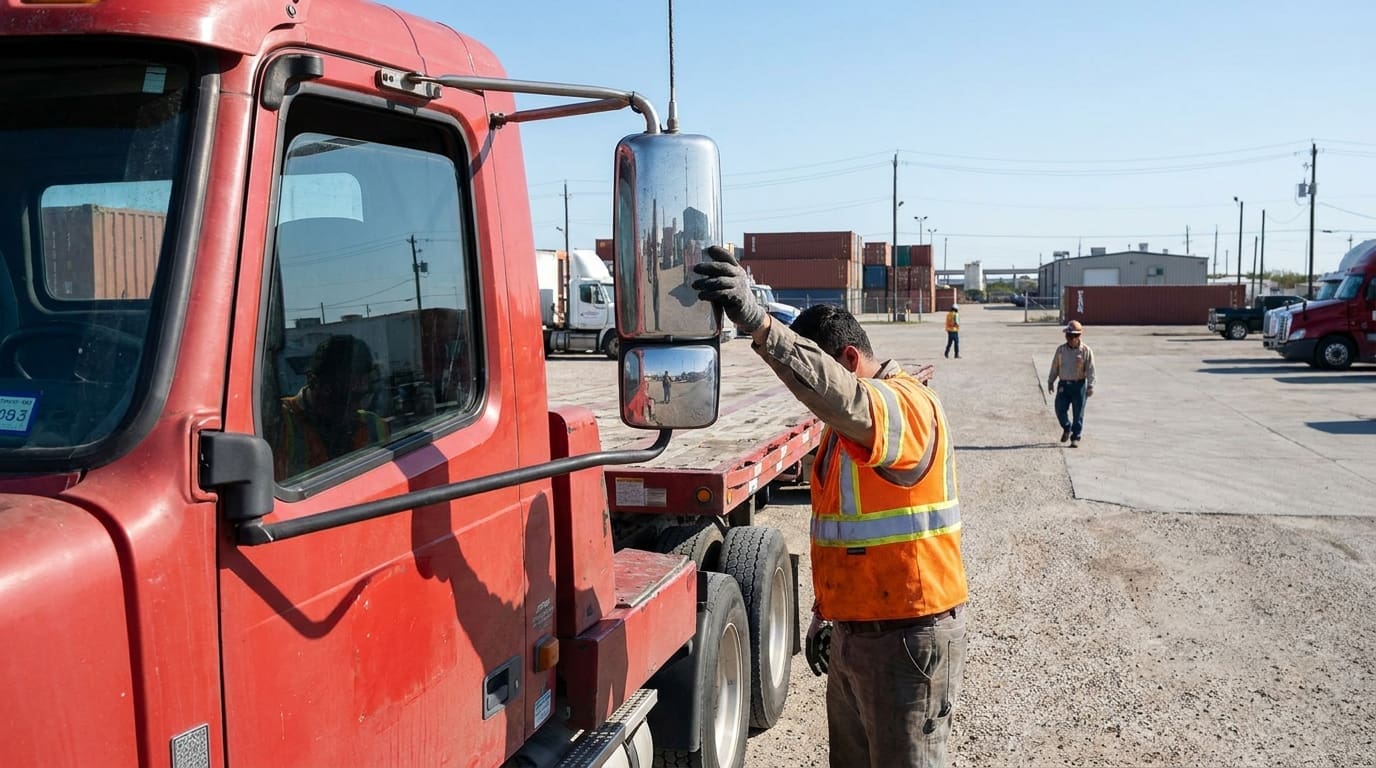
Photographing Truck Mirror Positions After a Crash: Preserving Evidence
Key Takeaways: Photographing truck mirror positions after a no zone crash in Houston preserves critical evidence of driver visibility. Texas law under Civil Practice and Remedies Code § 16.003(a) imposes a two-year statute of limitations, making prompt evidence collection essential. Mirror photos, combined with black box data and accident reconstruction, establish negligence against drivers and trucking companies. Houston’s busy corridors along I-10, I-45, and Highway 290 see frequent no zone collisions where mirror positioning reveals fault.
If you or a loved one has been struck by a commercial truck in Houston’s dangerous blind spots, the photos you take after a crash may shape your case’s outcome. Truck no zone accidents Houston roads produce often involve sideswipe collisions and lane-change impacts where the truck driver claims they could not see the smaller vehicle. Mirror positioning can tell a different story. Properly angled mirrors should minimize blind spots, and when they are misaligned, cracked, or missing, that physical evidence points to negligence. This guide explains why and how to photograph truck mirrors after a no zone crash.
At Payne Law Firm, we treat our clients like family and have spent over 20 years fighting for injured Houstonians. If you need guidance after a truck crash, call us at 713-223-5100 or reach out to our team online for a free consultation.
Why Mirror Positions Matter in Truck No Zone Accidents Houston Drivers Face
The Federal Motor Carrier Safety Administration (FMCSA) confirms that truck drivers cannot see what is in their blind spots, which is why mirror configuration is critical. Commercial trucks have four major no zones: the front, rear, and both sides. Mirrors are the primary tool drivers use to monitor these danger areas. When a mirror is misaligned, dirty, damaged, or missing, the truck driver loses visibility into zones where passenger vehicles frequently travel.
Photographing the truck’s mirrors after a crash captures the driver’s field of vision at the moment of impact. If the mirror was pointed incorrectly, that photograph demonstrates the driver had no ability to see your vehicle. This Houston blind spot truck evidence becomes powerful when paired with accident reconstruction examining vehicle positioning, skid marks, black box data, and damage patterns.
💡 Pro Tip: Do not touch or adjust any part of the truck after the crash, including its mirrors. Altering the truck’s condition could compromise your evidence and give the defense grounds to challenge your photos.
Understanding the No Zone and Why Houston Is Especially at Risk
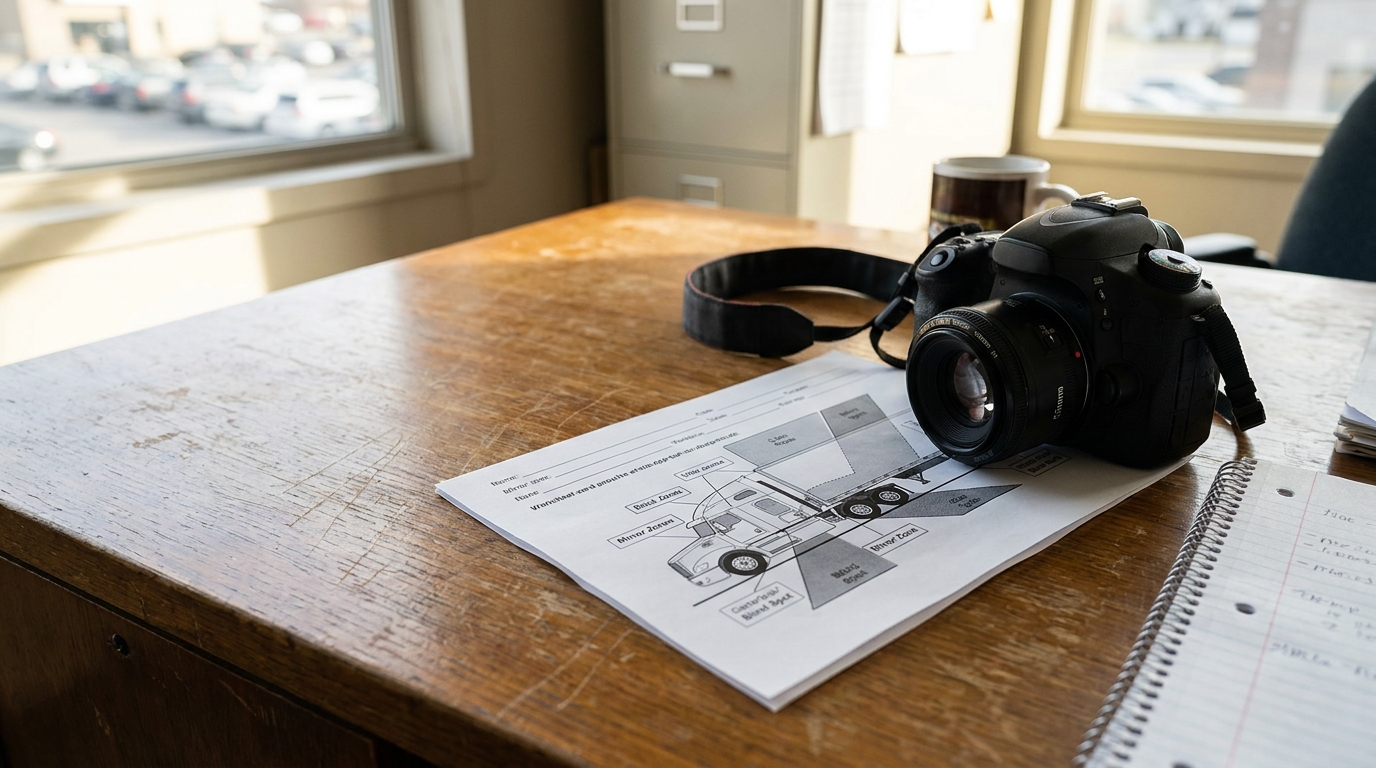
Houston’s commercial trucking routes along I-10, I-45, and Highway 290 are among the busiest in Texas, creating constant interaction between passenger vehicles and large trucks. These high-volume corridors create frequent opportunities for no zone collisions, particularly during lane changes, merges, and highway exits. If you are unfamiliar with truck no zone areas, they are the blind spots surrounding a commercial truck where the driver has limited or zero visibility.
The FMCSA provides dedicated safety resources, including guidance on understanding large truck blind spots and how to pass through them safely. Despite these campaigns, many crashes occur because truck drivers fail to check mirrors, trucking companies fail to maintain mirror systems, or mirrors become misaligned. In those situations, negligence liability may extend beyond the driver to include the trucking company.
Who Can Be Held Liable for Mirror-Related Negligence
Liability in a no zone truck crash is not always limited to the person behind the wheel. Texas law allows injured victims to pursue claims against multiple parties when evidence supports shared fault.
Potentially Liable Party | How Mirror Evidence Applies |
|---|---|
Truck Driver | Failed to check or adjust mirrors before or during the trip |
Trucking Company | Did not maintain mirrors or enforce pre-trip inspection policies |
Maintenance Provider | Improperly installed or repaired mirror assemblies |
Vehicle/Parts Manufacturer | Produced defective mirror hardware or mounting systems |
💡 Pro Tip: Ask your attorney to issue a spoliation letter to the trucking company immediately after the crash. This legally compels them to preserve the truck, its mirrors, black box data, and maintenance records.
Step-by-Step Guide to Photographing Truck Mirrors After a Crash
If you are physically able after a collision, documenting mirror positions should be one of your first priorities at the scene. The following steps will help you capture no zone crash scene photos Texas courts and insurance adjusters can use.
Photograph All Mirrors From Multiple Angles
Start with the mirror closest to the point of impact and work your way around the truck. Capture each mirror from directly behind the truck (showing what the driver would see), from the side (showing the mirror’s angle relative to the truck body), and from close up (showing any cracks, dirt, or damage). Repeat this for every mirror on the vehicle, including hood-mounted convex mirrors and fender mirrors.
Capture Context and Surroundings
Your photos should show the broader scene so mirror positions can be understood in context. Take wide shots that include the truck, your vehicle, lane markings, and any debris. Photograph the roadway from the truck driver’s seat if possible, showing what the driver could or could not see.
Document Damage and Serial Numbers
Close-up photos of mirror damage, including cracks, missing glass, loose mounts, or fogging, can support a maintenance negligence claim. If visible, photograph the mirror’s manufacturer label or serial number, which may become relevant if a product defect contributed to the crash.
💡 Pro Tip: Use your phone’s timestamp and GPS features to ensure every photo is automatically tagged with the date, time, and location. This metadata can authenticate your evidence.
How Mirror Photos Strengthen Your Truck Accident Claim
Mirror photographs serve as one piece of a larger evidentiary puzzle your legal team will assemble. Under Texas law, proving a truck accident claim requires establishing duty of care, breach of duty, causation, and damages. A photograph showing a misaligned or broken mirror directly supports the breach and causation elements by demonstrating the driver lacked the visibility needed to operate safely.
Black box data from trucks reveals speed, braking, steering, and vehicle behavior before impact. When this data shows the driver made no evasive maneuver, and mirror photos show the driver had no way to see your vehicle, the evidence together paints a compelling picture of negligence. Dashcam footage, accident scene photos, and vehicle damage patterns complete the evidence needed to build a strong case for truck accident claims in Houston.
💡 Pro Tip: If you have a dashcam, do not delete or overwrite the footage. Save it to a separate device or cloud storage immediately. Dashcam video showing the truck’s mirror positions before the crash can be among the most persuasive evidence available.
The Two-Year Deadline You Cannot Afford to Miss
Texas Civil Practice and Remedies Code § 16.003(a) requires injured individuals to file a personal injury lawsuit within two years of the crash date. This same deadline applies to wrongful death actions under § 16.003(b). Missing this deadline generally means losing your right to pursue compensation entirely, though limited tolling exceptions may apply in situations involving minors, mental incompetence, or fraudulent concealment.
This filing deadline makes early evidence preservation critical. Trucks involved in crashes are often repaired, reassigned, or scrapped quickly. Mirrors that were misaligned on the crash day may be replaced within days. The sooner you document mirror positions and your attorney secures maintenance records and electronic data, the stronger your case will be.
Texas Comparative Negligence and Mirror Evidence
Texas follows a modified comparative negligence rule under Civil Practice and Remedies Code § 33.001, meaning you may still recover compensation even if you share some fault. Your damages are reduced by your percentage of fault, and you are barred from recovery only if you are more than 50% at fault. Mirror evidence can play a key role. If the trucking company argues you were driving in the truck’s blind spot, photos showing the mirror was broken or misaligned shift responsibility back to the truck driver and carrier.
💡 Pro Tip: Do not give recorded statements to the trucking company’s insurance adjuster before consulting an attorney. Adjusters may try to use your words to assign you a higher percentage of fault.
Frequently Asked Questions
1. What is a truck’s no zone and why does it matter after a crash?
A truck’s no zone refers to the large blind spots on all four sides of a commercial truck where the driver has limited or no visibility. Proving your vehicle was in a no zone while the truck’s mirrors were misaligned or damaged establishes negligence.
2. How soon after a crash should I photograph truck mirrors?
Photograph truck mirrors as soon as it is safe at the accident scene. Trucks are often moved or repaired quickly, and mirror positions may change once the vehicle leaves the scene.
3. Can I still recover damages if I was partially at fault for being in the no zone?
Under Texas Civil Practice and Remedies Code § 33.001, you may recover damages as long as you are not more than 50% at fault. Your compensation is reduced by your fault percentage, but mirror evidence showing the driver could not see you due to equipment failure can minimize your attributed fault.
4. What other evidence should I collect besides mirror photos?
Collect accident scene photos, dashcam or surveillance footage, witness contact information, police report details, and vehicle damage photos. Your attorney can also pursue black box data, GPS records, driver logs, and maintenance records for truck mirror blind spot proof.
5. Does the statute of limitations affect when I need to gather evidence?
Yes. While Texas Civil Practice and Remedies Code § 16.003(a) gives you two years to file suit, evidence like mirror positions, skid marks, and electronic data can disappear far sooner. Acting quickly to preserve evidence protects your ability to prove your claim.
Protect Your Evidence and Your Rights After a Houston Truck Crash
Truck no zone accidents Houston families experience can leave lasting injuries and overwhelming uncertainty. Mirror positions on a commercial truck may seem like a small detail, but they can become the evidence proving a driver or trucking company failed to keep you safe. By photographing mirrors promptly, preserving digital evidence, and understanding your rights under Texas law, you give yourself the strongest foundation for pursuing fair compensation.
Attorney Jason Payne, Board Certified in Personal Injury Trial Law by the Texas Board of Legal Specialization and recognized as a Texas Super Lawyer from 2019 through 2026, built his practice around helping injured Houstonians. At Payne Law Firm, we offer free consultations and treat every client like family. Call 713-223-5100 or contact us today to discuss your truck accident case with a team that has helped over a thousand injured individuals and families get the compensation they deserved.