
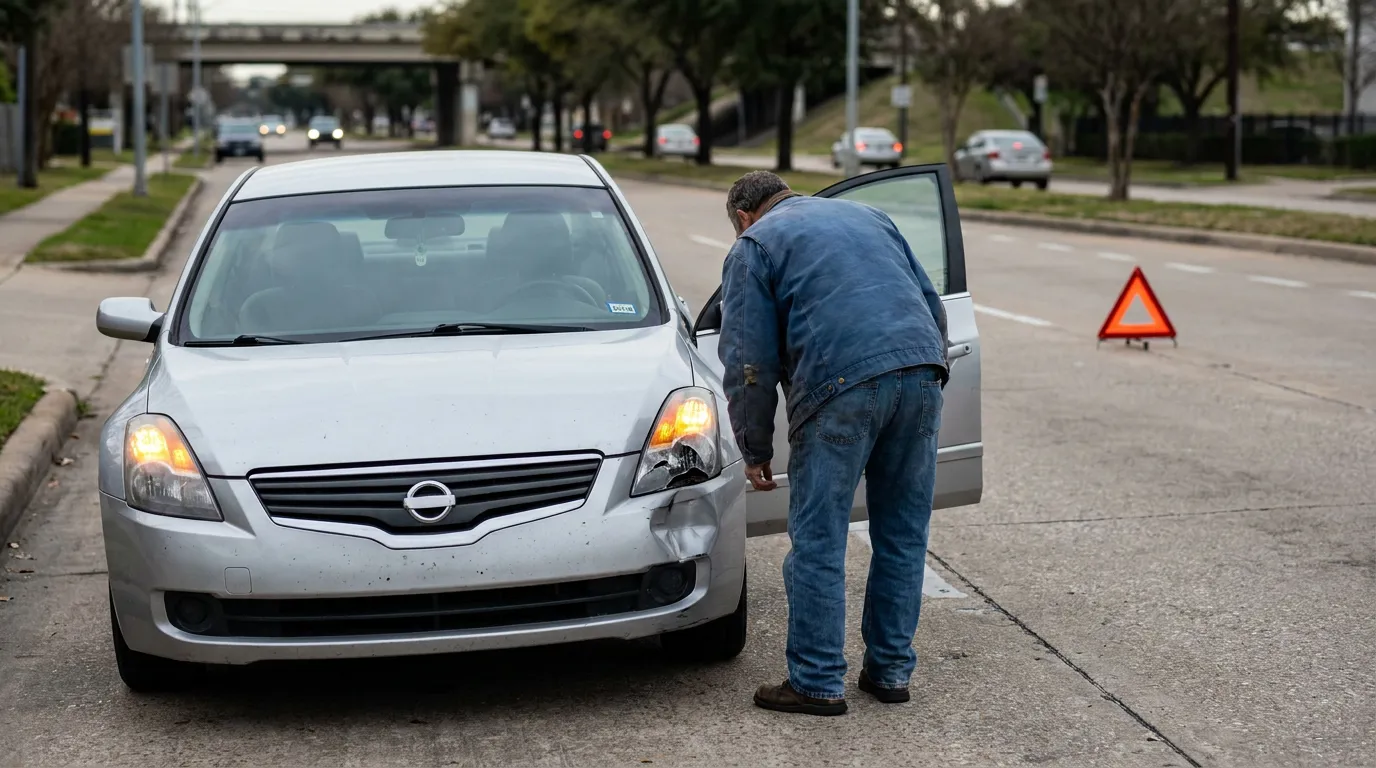
Why Two Simple Words at a Houston Crash Scene Can Follow You for Years
Key Takeaways: Saying "I’m okay" after a Houston rideshare crash is generally unwise, because adrenaline and shock can mask soft tissue injuries like whiplash that may not produce symptoms for hours or days. A safer response is that you are unsure and want to be evaluated by a medical professional. Early statements, apologies, and guesses about fault can end up in an adjuster’s file and may matter under Texas proportionate responsibility rules in § 33.001, which generally bar recovery when a claimant’s responsibility exceeds 50 percent and otherwise reduce recovery proportionally. Coverage usually depends on the driver’s app status, with Tex. Ins. Code § 1954.051 placing primary coverage on the transportation network company or its driver while logged in, and § 1954.152 providing that personal policies are not required to cover a driver during a prearranged ride. Texas generally allows two years to file a personal injury suit under § 16.003(a), so words spoken on day one can still surface years later. Prompt medical care, preserved trip records, and careful communication with insurers are among the most practical protections for an injured passenger.
Saying "I’m okay" after a Houston rideshare crash is generally not a good idea, even when you feel fine. Adrenaline and shock can mask soft tissue injuries, and whiplash in particular may produce no symptoms until hours or days later. A better answer is that you’re not sure yet and want to be evaluated by a medical professional. That response protects your health and avoids handing an adjuster a quotable statement before anyone knows the true extent of your injuries.
If you were hurt as a passenger in an Uber or Lyft and you’re worried about something you said at the scene, the team at Payne Law Firm can help you understand where you stand. With more than 20 years of service to injured Houstonians, our firm treats clients like family and offers free consultations. Call 713-223-5100 or contact us now to talk through what happened.
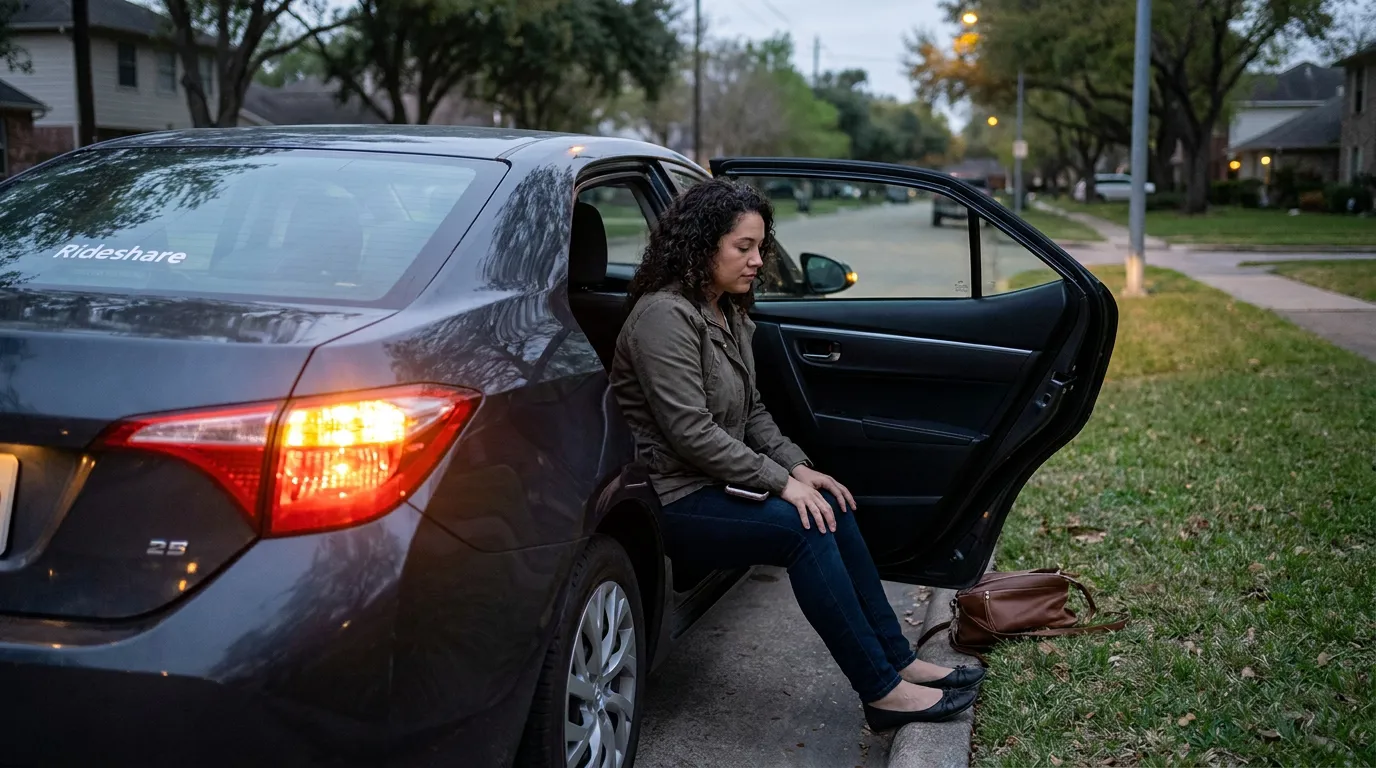
How Adrenaline Hides a Whiplash Injury After a Rideshare Accident in Houston
Whiplash happens when the head and neck snap rapidly forward and backward, straining muscles, ligaments, and discs in the cervical spine. Passengers are especially vulnerable because they often have no warning of impact and no chance to brace. Rear-end collisions at Houston intersections, sudden stops on the Southwest Freeway, and low-speed parking lot impacts can all produce these forces.
The delay in symptoms is what makes early statements so risky. Neck stiffness, headaches, dizziness, shoulder pain, reduced range of motion, and difficulty concentrating may surface a day or two after the crash. By then, a recorded statement that you were uninjured may already exist in the claim file. Only a treating provider can assess your condition.
Getting evaluated promptly also creates documentation your claim may later depend on. Emergency room records, urgent care notes, and imaging studies help connect your symptoms to the collision in time and place. Gaps in treatment are among the most common arguments insurers raise when minimizing a soft tissue injury claim.
Scene Statements Houston Rideshare Crash Victims Should Approach Carefully
Anything you say at the scene may end up in an adjuster’s notes, a police report, or a defense attorney’s file. You are generally not required to speculate about your physical condition or how the crash happened. Being polite and cooperative doesn’t require you to provide conclusions you can’t yet support.
Statements that commonly create problems for injured passengers include:
- "I’m okay" or "I’m not hurt," offered before any medical evaluation
- Apologies of any kind, which can be recast as an admission of shared fault
- Guesses about speed, distance, or right of way
- Downplaying pain to avoid inconveniencing others
- Agreeing to a recorded statement with any insurer before understanding your injuries
Instead, focus on facts and preservation. Request emergency services, photograph the vehicles and surroundings, note whether the trip was active in the app, screenshot the trip receipt, and collect witness contact information. Our guide on what to do after a rideshare crash walks through these steps in order.
💡 Pro Tip: Before you leave the scene, screenshot the ride in your app history. Trip records can disappear from view over time, and that screenshot may help establish that the driver was engaged in a prearranged ride at the moment of impact.
How Texas Comparative Fault Rules Turn Words Into Dollars
Texas generally allocates damages according to each party’s share of responsibility, meaning statements about fault may carry direct financial consequences. Comparative negligence, as Cornell’s Legal Information Institute explains, determines responsibility and damages based on the negligence of every party involved. Texas uses a modified version with a hard ceiling.
Under Tex. Civ. Prac. & Rem. Code § 33.001, a claimant may not recover damages if his percentage of responsibility is greater than 50 percent, often called the 51% bar rule. A claimant found exactly 50 percent responsible is not barred, and below that threshold recovery is generally reduced in proportion to the claimant’s assigned share under § 33.012. The proportionate responsibility framework generally applies to negligence claims across Texas, including rideshare cases in Harris County, subject to the exceptions in Chapter 33.
Passengers are rarely assigned meaningful fault, but the doctrine still matters. Insurers may use minimizing remarks to argue that injuries were negligible, that symptoms arose from something other than the crash, or that a seat belt or positioning issue contributed. How a court or jury would weigh that depends on the specific facts.
Compensatory Damages and Why Documentation Drives Value
Texas law distinguishes between categories of damages, and each generally requires proof. Tex. Civ. Prac. & Rem. Code § 41.001(4) defines economic damages as compensatory damages for actual economic loss, such as medical bills and lost wages, excluding exemplary and non-economic damages. Section 41.001(5) defines exemplary damages, including punitive damages awarded as punishment rather than compensation, and § 41.001(2) defines the clear and convincing evidence standard Chapter 41 requires for such awards.
Exemplary damages are uncommon in ordinary negligence cases. Under § 41.003, they generally require clear and convincing evidence of fraud, malice, or gross negligence, and § 41.008 caps most awards. For most injured passengers, the realistic focus is documenting economic and non-economic losses thoroughly. A statement that you were uninjured may make that documentation harder to present, though it doesn’t automatically defeat a claim supported by credible medical evidence.
Which Insurance Policy Actually Covers Your Whiplash Injury Rideshare Accident Houston Claim
Texas insurance law generally places primary coverage on the transportation network company or its driver whenever the driver is logged into the app. Under Tex. Ins. Code § 1954.051, a TNC driver, or the company on the driver’s behalf, must maintain primary automobile insurance covering the driver while logged on and while engaged in a prearranged ride. That’s the policy most Houston passenger claims draw from.
Just as importantly, the driver’s personal policy may not respond at all. Tex. Ins. Code § 1954.152 provides that a personal auto policy is not required to cover a driver while logged on, engaged in a prearranged ride, or otherwise transporting passengers for compensation, though an insurer may choose to write such coverage. Identifying the correct policy early can be the difference between a denied claim and a covered one.
| Coverage Question | What Texas Law Generally Provides |
|---|---|
| Who carries primary coverage while the app is on? | The TNC or the driver on the company’s behalf, under § 1954.051 |
| Does the personal auto policy have to respond? | Not required during a prearranged ride, under § 1954.152 |
| Are minimum limits set by statute? | Yes, § 1954.052 sets minimum liability amounts that differ by app status |
| Does fault affect recovery? | Yes, under the § 33.001 proportionate responsibility rules |
Coverage amounts are generally set by statute rather than negotiation. Tex. Ins. Code § 1954.052 establishes tiered minimums. While logged on but not engaged in a prearranged ride, the statute requires at least $50,000 per person for bodily injury or death, $100,000 per incident, and $25,000 for property damage. While engaged in a prearranged ride, Tex. Ins. Code § 1954.053 requires at least $1 million in combined coverage. Review the full transportation network company insurance statute for details. Whether a particular limit applies depends on the driver’s app status and other case-specific facts.
Time Limits That Make Early Words Matter Years Later
Texas generally requires a personal injury suit to be filed within two years. Tex. Civ. Prac. & Rem. Code § 16.003(a) provides that suit must be brought no later than two years after the cause of action accrues. If a lawsuit isn’t filed within that period, a defendant may raise limitations as a defense and a plaintiff may lose the right to pursue the claim.
This is precisely why "I’m okay" should never be treated as a final medical assessment. A claim may still be pursued within the statutory window, and your own words from day one may still be in the file when it is. Certain tolling or deferred accrual doctrines exist in limited circumstances, such as claims by minors under § 16.001, but Texas courts generally interpret such exceptions narrowly.
Administrative Deadlines Are a Separate Question
Civil statutes of limitations are distinct from notice deadlines that may apply when a governmental unit is involved. If a city bus, public entity vehicle, or government employee played a role in the collision, separate and often much shorter notice requirements under the Texas Tort Claims Act or a local charter may apply, and missing them can bar a claim outright.
Getting Guidance Before You Give a Statement
Insurers may request a recorded statement soon after a rideshare crash, sometimes within days. You’re generally not obligated to provide one to another party’s insurer before understanding your medical condition, though your own policy may impose cooperation duties. Attorney Jason E. Payne is Board Certified in Personal Injury Trial Law by the Texas Board of Legal Specialization, and our team can help you evaluate how and when to communicate with an adjuster. If you need a whiplash injury rideshare accident Houston lawyer, we are ready to listen.
💡 Pro Tip: Keep a short daily symptom journal in the weeks after the crash. Contemporaneous notes about pain levels, missed work, and limitations on daily activities often carry real weight when an insurer disputes the severity of a soft tissue injury.
Frequently Asked Questions
1. I already said I was okay at the scene. Is my claim over?
Not necessarily. An early statement is generally one piece of evidence rather than a binding legal admission. Prompt treatment, consistent records, and a clear explanation of delayed symptom onset may help address it, though outcomes depend on the facts.
2. How soon should I see a doctor after a Houston rideshare crash?
As soon as reasonably possible, ideally the same day. Early evaluation protects your health and helps create the medical record connecting symptoms to the collision. Extended treatment gaps are a frequent target for insurers challenging a Houston whiplash claim.
3. Can an insurance adjuster use my apology against me?
Potentially, yes. Under the proportionate responsibility framework in § 33.001, an insurer may try to use an apology to argue shared fault. Whether such an argument succeeds is fact-dependent and ultimately weighed by a court or jury.
4. Does it matter whether the driver was logged into the app?
It can matter a great deal. The driver’s app status generally determines whether the TNC’s statutory coverage under Chapter 1954 applies and at what limits, or whether some other policy must be pursued. Preserving your trip receipt may help establish that status.
5. What if the other driver caused the crash instead of my Uber driver?
You may still have a claim. Depending on the facts, recovery might involve the at-fault driver’s liability coverage, the rideshare company’s statutory coverage, including any applicable uninsured/underinsured motorist coverage, or both. A careful review of the available policies is generally required.
Protecting Your Health and Your Claim Starts With What You Say First
Two words at a crash scene shouldn’t determine whether you receive fair compensation, but under Texas law they may influence how an insurer values your case. Whiplash symptoms frequently appear after the adrenaline fades, coverage generally depends on the rideshare driver’s app status under Chapter 1954, recovery may be reduced or barred based on assigned responsibility under § 33.001, and the filing window under § 16.003(a) is generally two years. Declining to guess about your condition, seeking medical care quickly, and preserving evidence are among the most practical steps an injured passenger can take. Every case turns on its own facts, so nothing here substitutes for advice about your specific situation.
Payne Law Firm has helped over a thousand injured individuals and families pursue the compensation they deserved, and Attorney Jason Payne built his practice around helping injured Houstonians feel heard, informed, and respected. If you were hurt as a rideshare passenger, visit Payne Law Firm’s website to learn more, call 713-223-5100, or schedule your free consultation today.
Disclaimer: This content is for informational purposes only and is not legal advice. Every case is unique, and results may vary. Consult an attorney about your specific circumstances.