

Who Really Put That Truck on the Road? Understanding Broker Accountability After a Houston Crash
Key Takeaways: A freight broker may be sued for hiring an unsafe trucking company, and this may be easier after the Supreme Court’s unanimous decision in Montgomery v. Caribe Transport II, LLC, decided May 14, 2026, which held that negligent carrier selection claims fall within the FAAAA’s safety exception and are not barred by federal preemption. Brokers don’t own trucks or employ drivers, but they choose which carrier hauls a load, and safety ratings, operating authority, insurance filings, and violation histories are generally available before dispatch. Texas registration rules under Transportation Code Chapters 643 and 646, TxDMV rules, and federal standards in 49 CFR Part 390 help frame the safety baseline a broker could reasonably be expected to check. Removing the preemption defense may let plaintiffs reach evidence such as load confirmations, carrier qualification files, and internal vetting communications. A claim still requires proof of duty, breach, causation, and damages under state law, and contract clauses shifting responsibility to the carrier don’t always control. Broker claims are often layered onto a case against the driver and motor carrier, making prompt investigation and evidence preservation important.
A freight broker may be sued for hiring an unsafe trucking company, and recent federal developments may make those claims harder to dismiss early. Brokers don’t own trucks or employ drivers, but they choose which carrier hauls a load. When a broker arranges freight with a carrier that has a troubling safety record, expired authority, or a pattern of violations, Texas law may allow an injured person to pursue a negligent selection claim directly against that broker, assuming the usual elements of negligence can be proven. For families facing catastrophic injuries or a wrongful death after an 18-wheeler collision, that additional defendant can matter a great deal.
If you were hurt in a collision with a commercial truck anywhere in the Houston area, the team at Payne Law Firm is ready to listen. Call 713-223-5100 or schedule your free consultation today to discuss who may be responsible for your injuries.
What a Freight Broker Actually Does in the Supply Chain
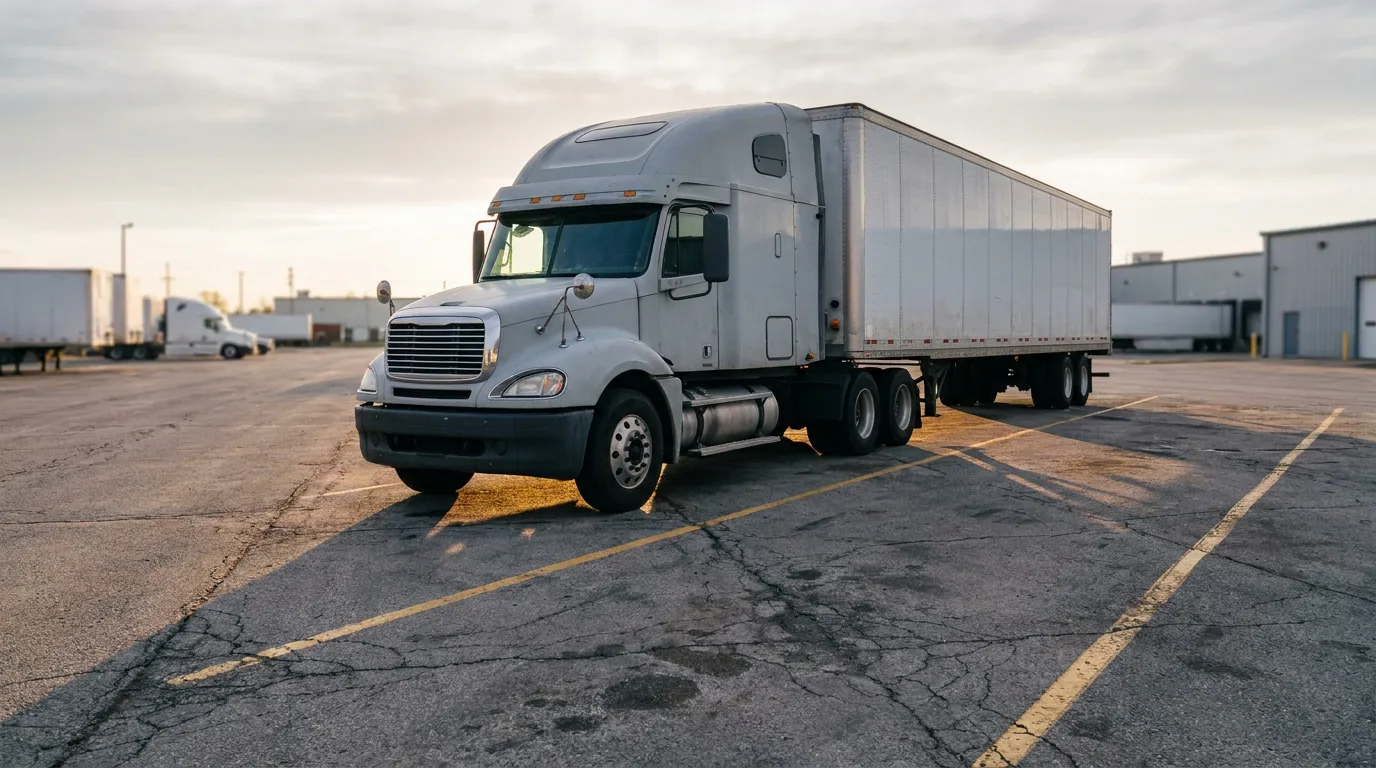
A freight broker is a middleman, not a carrier, and that distinction generally drives the liability analysis. Brokers arrange transportation between shippers who need goods moved and motor carriers who own the equipment and employ drivers. Federal law treats brokers, carriers, and freight forwarders as separate categories with different registration obligations, and understanding the difference between broker and carrier authority is often an early step in any investigation.
Because brokers profit from every load they place, they may have both the opportunity and ability to screen carriers. Safety data, registration status, insurance filings, and violation histories are generally accessible before a load is assigned. Plaintiffs’ attorneys often argue that a broker who skipped this screening created a foreseeable risk of harm to everyone on the road.
Not every broker relationship supports a claim, and outcomes depend heavily on specific facts. Courts may consider what the broker knew or should have known, how much control it exercised, and whether the carrier’s deficiencies connected to the crash. A single expired filing, standing alone, may not establish breach or causation.
Why Federal Preemption Used to Block These Cases
For years, brokers argued that the Federal Aviation Administration Authorization Act shielded them from state negligence claims. The statute at 49 U.S.C. § 14501(c)(1) generally prohibits states from enacting or enforcing a law related to a price, route, or service of any motor carrier, broker, or freight forwarder regarding property transportation. Defense counsel routinely invoked this provision to seek dismissal of negligent hiring suits.
The statute contains a carve-out that plaintiffs relied on in response. Under 49 U.S.C. § 14501(c)(2)(A), preemption "shall not restrict the safety regulatory authority of a State with respect to motor vehicles." This language, often called the FAAAA safety exception, preserves traditional state authority over roadway safety.
Federal appellate courts split on how to apply that exception to carrier selection claims. Some circuits, including the Seventh Circuit, found negligent selection suits preempted; others allowed them to proceed, leaving a claim’s viability often dependent on where the case was filed.
How the Supreme Court Changed Freight Broker Liability Truck Accident Claims
The Supreme Court resolved the circuit split in a way that may benefit injured plaintiffs. In Montgomery v. Caribe Transport II, LLC, decided May 14, 2026, a unanimous Court held that a negligent carrier selection claim falls within the FAAAA’s preemption provision but is saved by the safety exception, because requiring a broker to use reasonable care in choosing a carrier is a claim "with respect to motor vehicles." Justice Barrett wrote for the Court, and Justice Kavanaugh filed a concurrence joined by Justice Alito. Commentary on this unanimous FAAAA ruling explains that the decision applies nationwide, including in Texas state and federal courts.
This does not mean a broker will be liable after a crash. The ruling addressed preemption, a threshold defense, and the case was remanded rather than decided on the merits. An injured person must still prove duty, breach, causation, and damages under Texas negligence principles, and brokers remain free to contest each element and seek summary judgment.
Practically speaking, the decision removes a defense that in some cases ended matters before discovery began. Plaintiffs may now be able to reach evidence such as load confirmations, carrier qualification files, internal vetting policies, and communications showing what the broker knew.
💡 Pro Tip: Preservation letters sent early can stop a broker or carrier from routinely deleting emails, dispatch records, and electronic logging data that may be central to proving carrier selection negligence.
The Texas Rules a Broker Could Reasonably Be Expected to Check
Texas maintains its own registration and compliance framework for motor carriers operating inside the state. Texas Transportation Code Chapter 643 generally requires registration for motor carriers operating commercial motor vehicles on Texas roads, subject to statutory exemptions, and the TxDMV publishes the governing Texas motor carrier statutes and rules that spell out those obligations. Chapter 646 governs motor transportation brokers, imposing bond requirements and other standards specifically on brokers who arrange freight transportation within the state’s commercial motor vehicle regulatory framework.
Administrative rules fill in the operational details. Title 43, Part 218 of the Texas Administrative Code, including 43 Tex. Admin. Code § 218.17, governs TxDMV motor carrier requirements. Because this information is publicly available, a broker’s failure to verify a carrier’s Texas registration status may, under certain circumstances, be offered as evidence supporting a Texas broker liability theory, although these rules impose duties on carriers rather than brokers directly.
Federal safety regulations supply a parallel standard. 49 CFR Part 390 establishes general applicability of the Federal Motor Carrier Safety Regulations to carriers, drivers, and their agents, 49 CFR § 390.5 defines key terms such as "motor carrier" and "employer," and 49 CFR § 390.11 requires every employer to demand observance of the applicable rules by its drivers. These provisions frequently frame the safety baseline in litigation, even though brokers are not themselves motor carriers under these rules.
Documents That Often Reveal Inadequate Vetting
- Carrier qualification packets and onboarding checklists
- Insurance certificates and proof of active operating authority
- Safety rating and violation history pulled before dispatch
- Load confirmations showing rates, deadlines, and routing pressure
- Internal emails discussing whether to use a marginal carrier
Contract Clauses Do Not Always Control
Brokers often point to contract language attempting to shift responsibility onto the carrier. Texas Transportation Code § 623.0155(a) generally prohibits requiring indemnification from a motor carrier, as a condition of transporting property for compensation, for that person’s own negligence or intentional acts. Subsection (b) provides that the prohibition doesn’t apply to claims arising from the carrier’s own wrongful or negligent act or omission, a nuance addressed in the Texas indemnification restrictions for motor carriers.
These provisions matter because paperwork rarely tells the whole story. Indemnity language allocates costs between contracting parties and doesn’t by itself determine what an injured third party may recover. Whether a particular clause is enforceable is a fact-dependent question courts evaluate case by case.
Building the Underlying Negligence Case in Texas
Broker claims are generally layered on top of a traditional truck accident case, not substituted for it. Texas Civil Practice and Remedies Code Chapter 72, including § 72.054, sets out special procedures and standards applying to claims against an employer for the negligence of an employee operating a commercial motor vehicle, and that framework is often the starting point before broker-specific theories are added.
Post-crash conduct can also be relevant. Texas Transportation Code § 550.021(a) requires an operator involved in a collision resulting in or reasonably likely to result in injury or death to immediately stop at the scene or as close as possible, return if not stopped there, remain at the scene, and determine whether anyone requires aid. Violations can carry criminal consequences separate from any civil lawsuit.
| Potential Defendant | Typical Theory | Common Evidence |
|---|---|---|
| Truck driver | Negligent operation | ELD data, dashcam, citations |
| Motor carrier | Negligent supervision, training | Driver file, maintenance logs |
| Freight broker | Negligent carrier selection | Vetting records, safety data pulls |
| Maintenance provider | Defective repair | Work orders, inspection reports |
Investigations move quickly, and evidence may disappear faster than many families expect. Our truck crash lawyer Houston team works with accident reconstructionists and medical professionals to document both fault and the scope of damages, which may include medical costs, lost income, pain and suffering, and wrongful death remedies available under Texas law.
Common Challenges Families Face
Insurance carriers frequently minimize broker involvement early in the claim. Adjusters may insist the broker was only a "load matcher" with no duty. That characterization deserves scrutiny, and readers researching whether a freight broker is liable for an 18-wheeler crash will find the answer depends on what the broker actually did.
Multiple defendants can also mean multiple insurers pointing at each other. This finger-pointing may delay resolution, though it can also expand available coverage. Each case turns on its own facts, and no outcome can be predicted in advance.
Frequently Asked Questions
1. Does the Supreme Court ruling guarantee I can sue the broker?
No. The decision means FAAAA preemption generally will not bar a safety-based negligent selection claim, but you must still prove the broker owed and breached a duty and that the breach caused your injuries.
2. How do I find out which broker arranged the load?
Bills of lading, load confirmations, and dispatch records typically identify the broker, usually obtained through formal discovery or early preservation requests.
3. Can I bring a claim if the carrier had insurance?
Possibly. Carrier coverage may be insufficient for catastrophic injuries, and a viable 18-wheeler broker claim may provide an additional potential source of recovery, subject to the facts.
4. How long do I have to file in Texas?
Texas generally applies a two-year limitations period for personal injury and wrongful death claims, though exceptions and tolling rules exist. Claims involving governmental entities may involve separate administrative notice deadlines.
5. What if I am partly at fault?
Texas uses a proportionate responsibility system in which recovery is reduced by your percentage of responsibility, and you are barred only if your responsibility exceeds 50 percent. An attorney can evaluate how comparative fault arguments might affect your case.
Moving Forward With Confidence After a Devastating Truck Crash
Freight broker preemption was once a powerful shield, and it is now considerably narrower for safety-based claims. Between the Supreme Court’s unanimous ruling on the safety exception, Texas registration requirements under Chapters 643 and 646, and federal safety standards under 49 CFR Part 390, injured Houstonians may have avenues for seeking accountability from responsible parties, potentially including brokers who placed an unsafe motor carrier on the road. Outcomes still depend on prompt investigation, careful evidence preservation, and a clear-eyed assessment of the specific facts involved.
For more than 20 years, Payne Law Firm has helped over a thousand injured individuals and families pursue compensation, and Attorney Jason E. Payne is Board Certified in Personal Injury Trial Law by the Texas Board of Legal Specialization. A native of Port Arthur, he built this practice around making Houstonians feel heard, informed, and respected, and the firm treats its clients like family. Reach Payne Law Firm in Houston at 713-223-5100 or request your free case review to learn where you stand.
Disclaimer: This content is for informational purposes only and is not legal advice. Every case is unique, and results may vary. Consult an attorney about your specific circumstances.