
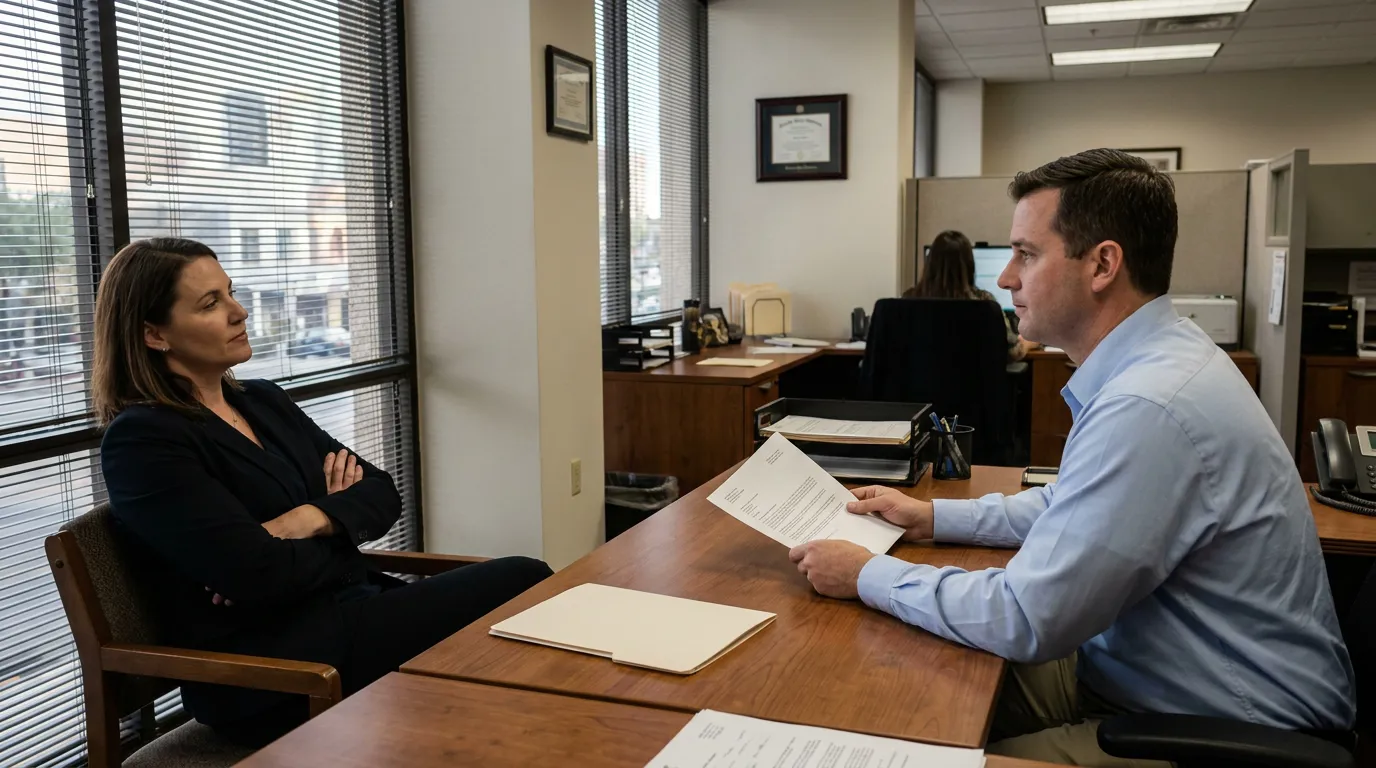
When an Insurance Company Crosses the Legal Line After a Houston Wreck
Key Takeaways: Texas law bans specific insurer settlement tactics through Tex. Ins. Code § 541.060, which prohibits nine practices including misrepresenting policy provisions, stonewalling claims where liability is reasonably clear, failing to explain denials, delaying coverage decisions, dodging first-party coverage, enforcing full releases on partial payments, refusing to pay without investigation, delaying or refusing settlement of a Texas personal automobile insurance claim solely because other insurance of a different kind is available, and requiring a claimant to produce federal income tax returns as a condition of settling a claim. Chapter 542 adds lowballing and procedural failures. Claimants must prove standing, the violation, and damages. Steps include requesting written denials, logging communications, obtaining declarations pages, avoiding early releases, and tracking expenses. Most Texas personal injury lawsuits face a two-year filing deadline under Tex. Civ. Prac. & Rem. Code § 16.003. Payne Law Firm offers free consultations at 713-223-5100.
Texas law protects crash victims from adjuster misconduct. Chapter 541 of the Texas Insurance Code identifies unfair or deceptive acts, and Section 541.060 lists prohibited settlement practices. If an insurer lowballs, stalls, or misstates policy coverage after a Houston collision, that conduct may violate the law.
If an adjuster’s behavior feels wrong, you don’t have to navigate it alone. Payne Law Firm has spent over 20 years standing between injured Houstonians and insurance companies. Call 713-223-5100 or contact us now for a free consultation.
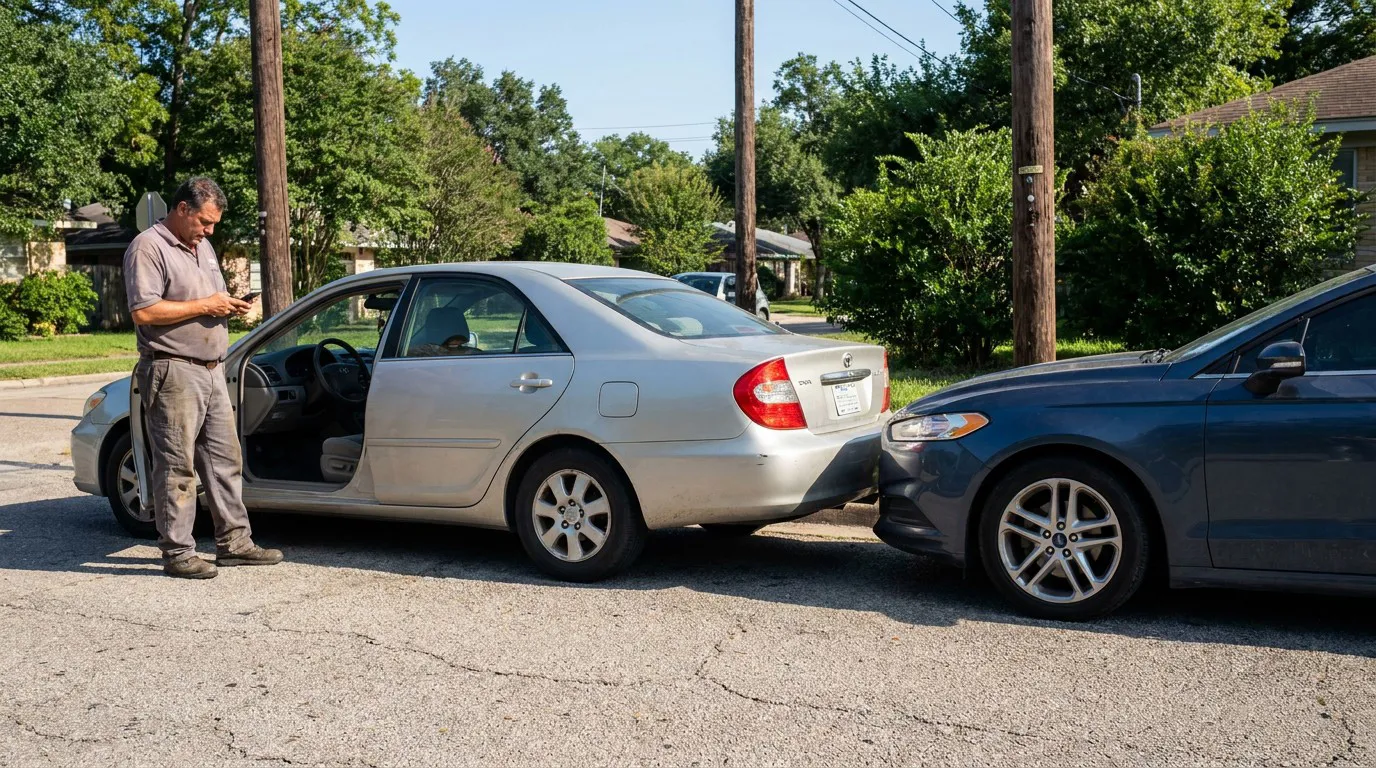
The Statutory Backbone Behind Every Bad Faith Insurance Houston Claim
Section 541.060 is the primary provision Houston crash victims rely on when insurers mishandle claims. Tex. Ins. Code § 541.060(a) states it is "an unfair method of competition or an unfair or deceptive act or practice in the business of insurance to engage in the following unfair settlement practices with respect to a claim by an insured or beneficiary." This converts adjuster misconduct into a potential statutory violation for those with standing under Tex. Ins. Code § 541.151.
Chapter 542, Subchapter A is the Unfair Claim Settlement Practices Act. Tex. Ins. Code § 542.003(a) provides that "an insurer engaging in business in this state may not engage in an unfair claim settlement practice." Texas courts treat Subchapter A as a regulatory standard enforced by the Department of Insurance rather than as a private cause of action. Review the Texas Insurance Code Chapter 541 to see how the Legislature structured these duties.
The 541.060 List of Prohibited Insurer Conduct
The statute enumerates specific practices that may map to real tactics. Below is a plain-English walkthrough of practices Texas law bans. Identifying conduct on this list does not automatically establish liability; claimants must prove standing, the violation, causation, and damages.
| Statutory Provision | Prohibited Practice |
|---|---|
| § 541.060(a)(1) | Misrepresenting a material fact or policy provision relating to coverage at issue |
| § 541.060(a)(2) | Failing to attempt in good faith to effectuate a prompt, fair, and equitable settlement once liability has become reasonably clear |
| § 541.060(a)(3) | Failing to promptly provide a reasonable explanation for a denial or compromise offer |
| § 541.060(a)(4) | Failing within a reasonable time to affirm or deny coverage, or to submit a reservation of rights |
| § 541.060(a)(5) | Refusing, failing, or unreasonably delaying a first-party settlement offer because other coverage may exist or third parties may be responsible |
| § 541.060(a)(6) | Enforcing a full and final release when only a partial payment has been made |
| § 541.060(a)(7) | Refusing to pay a claim without conducting a reasonable investigation |
| § 541.060(a)(8) | Delaying or refusing settlement of a Texas personal automobile insurance claim solely because other insurance of a different kind is available |
| § 541.060(a)(9) | Requiring a claimant to produce federal income tax returns as a condition of settling a claim |
Misrepresenting Policy Terms and Stonewalling Clear Claims
The first banned practice involves misstating coverage. Tex. Ins. Code § 541.060(a)(1) prohibits "misrepresenting to a claimant a material fact or policy provision relating to coverage at issue." This includes an adjuster falsely claiming rental reimbursement or uninsured motorist coverage doesn’t exist when your declarations page shows otherwise.
The second banned practice targets stonewalling when fault appears clear. Section 541.060(a)(2) bars "failing to attempt in good faith to effectuate a prompt, fair, and equitable settlement of a claim with respect to which the insurer’s liability has become reasonably clear." Rear-end and red-light collisions in Harris County may fall into this category. Note that § 541.060(b) denies third parties a cause of action under all of subsection (a), not just subsection (a)(2), by providing that subsection (a) does not provide a cause of action to a third party asserting one or more claims against an insured covered under a liability insurance policy.
💡 Pro Tip: Save every voicemail, email, and letter from the adjuster. Documentation of what was said and when often makes the difference between suspicion and a provable pattern.
Silence, Delay, and Coverage Decisions That Never Come
The third and fourth banned practices address transparency and timing. Section 541.060(a)(3) prohibits "failing to promptly provide to a policyholder a reasonable explanation of the basis in the policy, in relation to the facts or applicable law, for the insurer’s denial of a claim or offer of a compromise settlement." Section 541.060(a)(4) prohibits "failing within a reasonable time to affirm or deny coverage of a claim to a policyholder; or submit a reservation of rights." Unexplained denials and indefinite insurance claim delays in Texas can raise questions under these provisions.
The fifth banned practice addresses insurers dodging first-party coverage. Section 541.060(a)(5) prohibits "refusing, failing, or unreasonably delaying a settlement offer under applicable first-party coverage on the basis that other coverage may be available or that third parties are responsible for the damages suffered." If your UM/UIM or PIP carrier points at the other driver to justify inaction, that conduct may warrant review.
Coercive Releases and Investigations That Never Happen
The sixth banned practice addresses coercive releases. Section 541.060(a)(6) prohibits "undertaking to enforce a full and final release of a claim from a policyholder when only a partial payment has been made, unless the payment is a compromise settlement of a doubtful or disputed claim." Injured people are sometimes handed a check and release before they know the full scope of medical treatment.
The seventh banned practice concerns whether a genuine investigation occurred. Section 541.060(a)(7) prohibits "refusing to pay a claim without conducting a reasonable investigation with respect to the claim." A denial issued without reviewing the crash report, photographs, witness statements, or medical records may be vulnerable.
Two More Practices Chapter 542 Adds to the Picture
Chapter 542 broadens the prohibited conduct list. Tex. Ins. Code § 542.003(b)(4)-(5) prohibits not attempting in good faith to effect a prompt, fair, and equitable settlement where liability has become reasonably clear, and compelling a policyholder to institute a suit by offering substantially less than the amount ultimately recovered.
The statute also lists additional prohibited practices. Section 542.003(b) enumerates seven total prohibited unfair claim settlement practices, with (b)(1) knowingly misrepresenting pertinent facts or policy provisions, (b)(2) failing to acknowledge pertinent communications with reasonable promptness, and (b)(3) failing to adopt reasonable standards for prompt claim investigation all appearing before subsections (b)(4)-(5).
Chapter 542 also contains Subchapter B, the Prompt Payment of Claims provisions, which set statutory deadlines through §§ 542.055, 542.056, 542.057, and 542.058 for acknowledging, accepting or rejecting, and paying claims (with § 542.059 addressing two types of deadline extensions: a court-granted extension for guaranty associations upon a showing of good cause, and an automatic 15-day extension for all insurers in the event of a weather-related catastrophe or major natural disaster). These provisions apply to first-party claims and carry their own statutory interest and attorney’s fee remedy under § 542.060.
Practical Steps That Protect a Houston Crash Claim
Preserving evidence early gives any later argument about texas 541.060 unfair settlement practices something concrete to stand on. Insurers document their files carefully, and claimants who do the same are in a stronger position:
- Request written explanations when claims are denied or reduced
- Keep a dated log of every call, including who you spoke with and what was promised
- Ask for the policy declarations page in writing
- Avoid signing releases until the full scope of medical treatment is understood
- Track medical bills, mileage, and lost wages as they accumulate
Before your next call with a claims representative, know what to tell an insurance adjuster and what you’re not obligated to volunteer. Recorded statements taken early can complicate an otherwise straightforward file.
💡 Pro Tip: If an adjuster gives you a coverage answer over the phone, follow up with an email confirming what you were told. A written record of a misstatement is more useful than a memory of one.
Why Experience With Texas Insurance Code Violations Matters
Recognizing auto insurance claim abuse is one thing; documenting it in a way that holds up is another. Attorney Jason E. Payne is Board Certified in Personal Injury Trial Law by the Texas Board of Legal Specialization and has been named to Texas Super Lawyers from 2019 through 2026. A native of Port Arthur, he built his practice around helping injured Houstonians feel heard, informed, and respected.
The firm treats its clients like family. Payne Law Firm has helped over a thousand injured individuals and families pursue compensation, and the team understands that many clients arrive already feeling overlooked by larger institutions. A Houston car accident lawyer can review the correspondence in your file and explain what the statutes may support.
Frequently Asked Questions
1. Does an adjuster’s rude behavior count as an unfair settlement practice?
Generally not by itself. The 541.060 list targets specific conduct such as misrepresenting policy terms, unreasonable delay, and denial without investigation, rather than discourtesy.
2. What does "liability has become reasonably clear" actually mean?
It is a fact-sensitive standard rather than a fixed formula. Under § 541.060(a)(2), the duty to attempt a prompt, fair, and equitable settlement attaches once the insurer’s liability becomes reasonably clear based on available crash evidence, investigation performed, and timing.
3. Can I pursue a bad faith claim against the other driver’s insurer?
Usually not, because these duties run to the insurer’s own insured. Section 541.060(a) frames these practices in terms of claims by an insured or beneficiary, § 541.060(b) denies third parties a cause of action under subsection (a) as a whole, and Texas courts have held third-party claimants lack standing to sue the other driver’s carrier.
4. How long do I have to act on a Houston crash claim?
Most Texas personal injury lawsuits are subject to a two-year filing deadline under Tex. Civ. Prac. & Rem. Code § 16.003. Insurance Code claims have their own limitations rules, and limited tolling or discovery-rule arguments exist, but Texas courts interpret exceptions narrowly. General background on filing a personal injury claim is available through TexasLawHelp.
5. Should I file a complaint with the Texas Department of Insurance?
Some claimants choose to, and insurers must maintain complaint records under § 542.005. A regulatory complaint is distinct from a civil lawsuit, does not create a private remedy, and does not extend court filing deadlines. Speaking with counsel before filing can help you understand how the two tracks interact.
Knowing the Rules Changes the Conversation
Texas has drawn boundaries around how insurers must handle claims, from the prohibition on misrepresenting coverage in § 541.060(a)(1) through the reasonable-investigation requirement in § 541.060(a)(7), reinforced by the Unfair Claim Settlement Practices Act in Chapter 542. Recognizing those boundaries may not make an adjuster more cooperative overnight, but it can change what you document and ask for.
You deserve to feel heard while you heal. Reach out to Payne Law Firm for a free consultation, call 713-223-5100, or schedule your case review to have someone review what the insurance company has told you and explain where you stand.
Disclaimer: This content is for informational purposes only and is not legal advice. Every case is unique, and results may vary. Consult an attorney about your specific circumstances.