
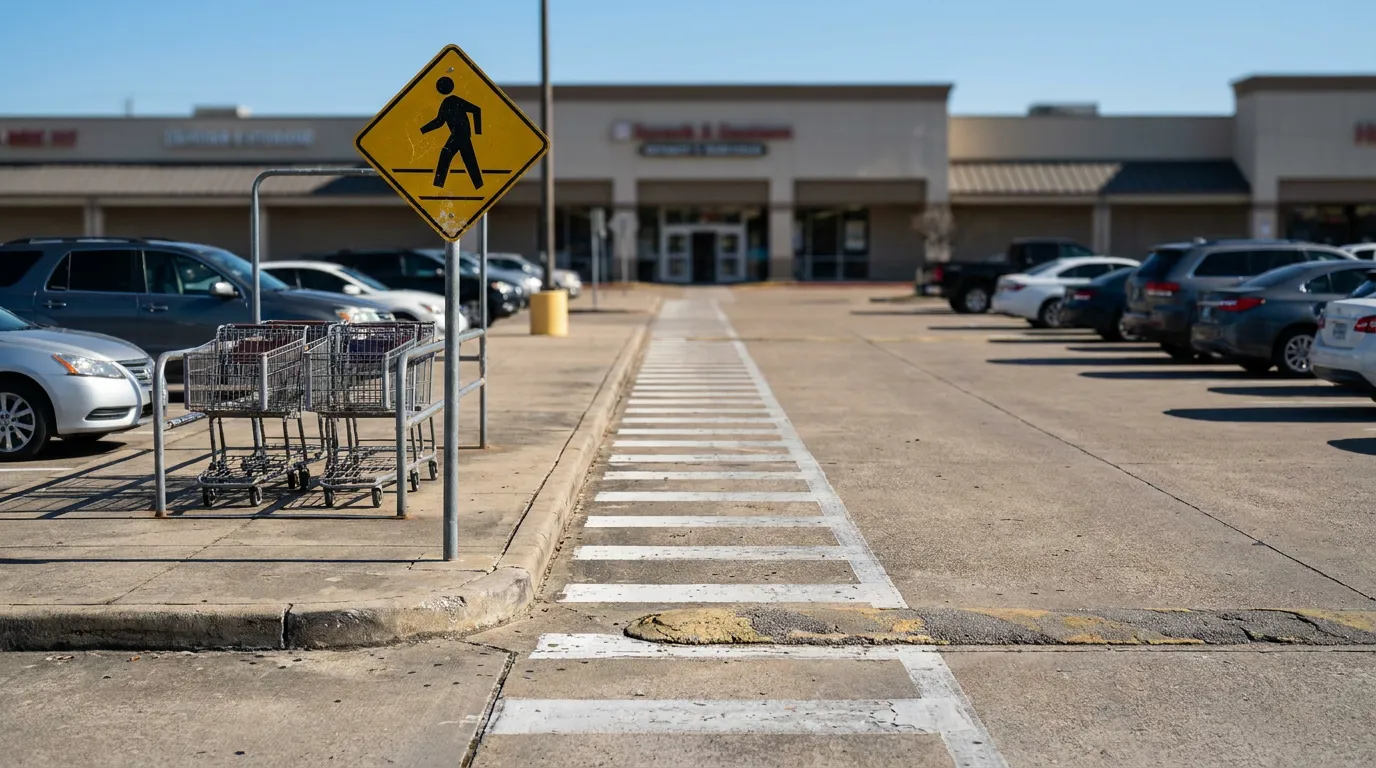
Parking Lot Injuries in Houston and Who May Be Responsible
Key Takeaways: When a car hits a pedestrian in a Houston parking lot, the driver is often the main party at fault, but a vehicle owner, an employer, a property owner, or a maintenance contractor may also share the blame. Texas reckless driving and collision-duty laws expressly cover business parking areas such as grocery store, mall, and restaurant lots, but not paid lots or private residential property. Under Texas’s modified comparative fault system, an injured pedestrian who is 50 percent or less at fault can generally still recover, though the award is reduced by their share of fault. Most personal injury claims must be filed within two years, and claims against government entities may require much earlier notice. Getting medical care quickly, saving surveillance footage, and being careful with insurance adjusters can help protect a claim.
When a car hits a pedestrian in a Houston parking lot, the driver is often the first party who may be held responsible, but not always the only one. Depending on the facts, a vehicle owner, an employer whose worker was driving on the job, or a property owner whose lot design or upkeep helped cause the crash may also be liable. Comparative fault rules can also affect how much an injured person recovers.
You do not have to sort through these questions by yourself. At Payne Law Firm, we treat our clients like family and offer personal legal support from the first conversation. Call 713-223-5100 or contact us now to schedule a free consultation.
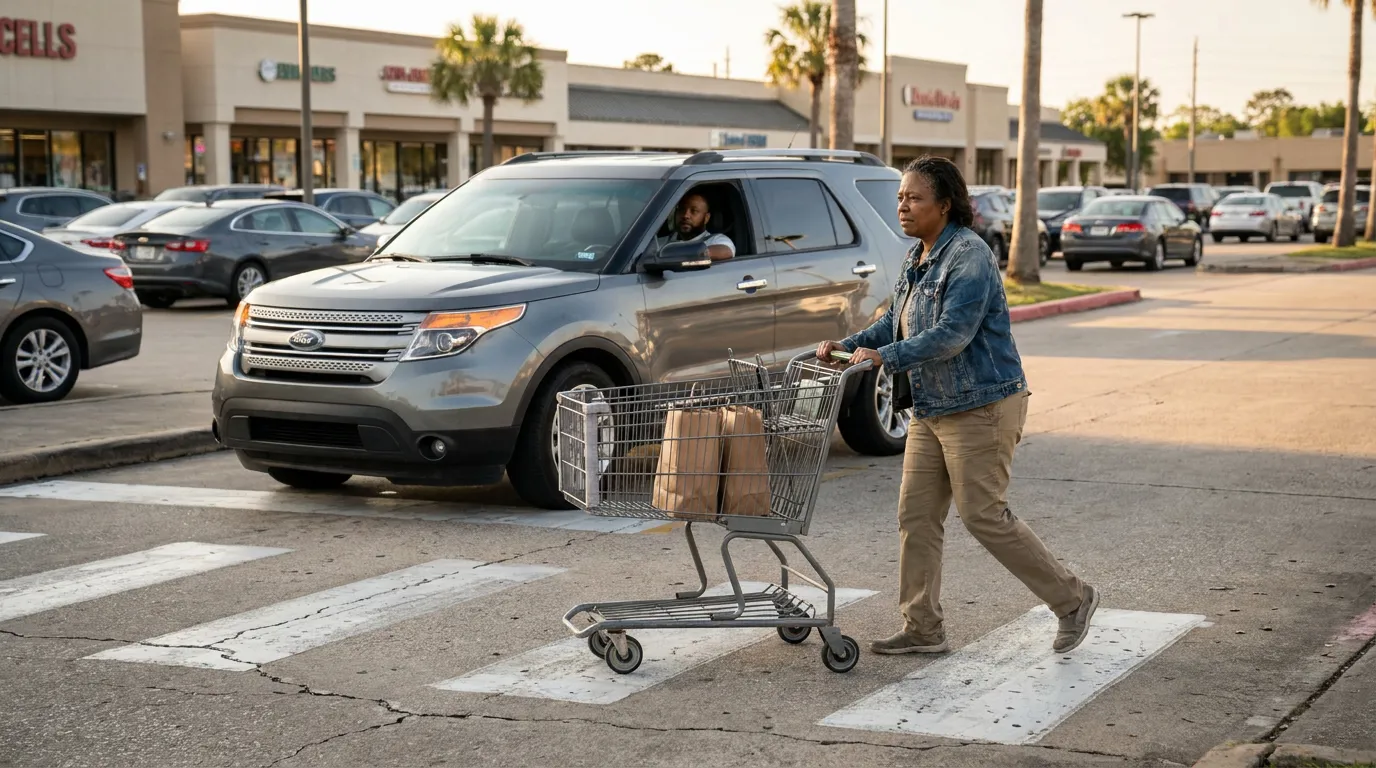
Why Pedestrians Hit in Parking Lots Face Unique Risks
Parking lots combine heavy foot traffic, distracted drivers, and cars moving in every direction. Drivers often look for an open space or check their phones instead of watching people on foot, and may struggle to see shoppers pushing carts, parents with small children, and older adults walking between parked SUVs and trucks.
Backing vehicles often cause these injuries. A driver reversing out of a space may have a limited view, especially in a large pickup or SUV. Small children and people using wheelchairs may sit below the rear window line, and even a slow-moving vehicle can cause broken bones and head injuries.
How Texas Traffic Laws Apply on Private Property
Many people assume traffic laws stop at the edge of the public street, but several Texas laws expressly reach business parking areas. Breaking a law that applies to the situation may support a negligence per se argument, or at least serve as evidence that a driver was careless. Courts decide case by case whether a given law sets the standard of care.
Laws That Cover Business Parking Lots
Texas Transportation Code § 545.401(c)(1) applies the reckless driving offense to private access ways and parking areas that businesses provide for their customers. This generally covers grocery store, mall, and restaurant lots in Houston, but not paid parking areas or private residential property. Under Tex. Transp. Code § 545.401, driving with willful or wanton disregard for the safety of people or property is a misdemeanor that can carry a fine of up to $200, up to 30 days in jail, or both.
Texas Transportation Code § 550.001(2) likewise applies the state’s collision-duty laws to business parking areas, with the same exceptions. Under Tex. Transp. Code § 550.021, a driver in a crash that causes or is likely to cause injury or death must stop right away, give reasonable help, and stay at the scene until meeting certain duties. Leaving can be a second-degree felony when someone dies and a third-degree felony when someone suffers serious bodily injury.
Right-of-Way Rules at Driveways and Crosswalks
Texas’s pedestrian right-of-way statutes set out several duties that often come into play near parking lots. These rules mainly cover roadways, sidewalks, and crosswalks, so how they apply inside a private lot may depend on the facts. They include:
- Driveways and entrances: Under Tex. Transp. Code § 552.006, a driver coming out of or entering an alley, building, private road, or driveway must yield to a pedestrian approaching on a sidewalk that crosses it.
- Crosswalks without signals: Under Tex. Transp. Code § 552.003, where no traffic signal is working, drivers must stop and yield to pedestrians in a crosswalk who are on the driver’s half of the road or close enough on the other half to be in danger.
- Crossings with signals: Under Tex. Transp. Code § 552.002, drivers must yield to a pedestrian lawfully in the crosswalk or facing a "Walk" signal.
- Sidewalk users: Tex. Transp. Code § 552.0035 gives sidewalk users, such as people using wheelchairs or mobility devices, crosswalk rights similar to pedestrians.
- Backing up: Under Tex. Transp. Code § 545.415(a), a driver may not back up unless they can do so safely and without getting in the way of other traffic.
Texas Transportation Code § 552.008 also requires drivers to use due care to avoid hitting pedestrians, sound the horn when needed, and take proper care around children or people who seem confused or impaired. That law refers to pedestrians "on a roadway," so whether it applies directly inside a private lot may depend on how a court reads it. Even so, Texas common law separately requires drivers to use ordinary care.
💡 Pro Tip: If a driver broke Tex. Transp. Code § 552.003 by failing to yield and caused serious bodily injury to a pedestrian, tougher criminal penalties may apply. A criminal case is separate from your civil injury claim, but its records can sometimes help support your claim.
Parties Who May Share Parking Lot Pedestrian Accident Liability
More than one party may share liability for a parking lot pedestrian accident, and finding all of them may affect how much money is available.
| Potential Party | Possible Basis for Liability |
|---|---|
| Driver | Failing to yield, unsafe backing, distraction, speeding, or reckless driving |
| Vehicle owner | Negligent entrustment, if the owner knew or should have known the driver was unlicensed, unfit, or reckless |
| Employer | Liability for a worker driving on the job, or negligent hiring or supervision |
| Property owner or manager | Poor lighting, missing signs, faded crosswalks, or unsafe lot design |
| Maintenance or security contractor | Failing to perform agreed safety or upkeep duties |
When the Property Owner May Be Responsible
A property owner may share the blame if dangerous conditions in the lot helped cause the crash. Examples include burned-out lights, overgrown plants that block drivers’ views, or missing stop signs at busy lanes. Premises liability law generally requires showing that the owner knew or should have known of an unreasonably dangerous condition and failed to fix it or warn about it. You can learn more about how premises liability works in our related guide.
How Comparative Fault Can Affect Your Recovery
Insurance companies often try to shift blame onto injured pedestrians, so you need to understand comparative fault. Under Texas proportionate responsibility law, found in Tex. Civ. Prac. & Rem. Code § 33.001, a claimant who is more than 50 percent responsible cannot recover damages. If you are 50 percent or less at fault, § 33.012 reduces your recovery by your percentage of fault.
Laws can cut both ways, which is why insurers study them closely. For example, Tex. Transp. Code § 552.003(b) bars a pedestrian from suddenly leaving a curb or other safe place and walking or running into the path of a vehicle so close that the driver cannot yield. An insurer may point to such rules to argue that you share fault, but a careful investigation may help push back against unfair blame.
The Deadline to File a Claim
Texas generally gives injured people two years from the date of injury to file a personal injury lawsuit under Tex. Civ. Prac. & Rem. Code § 16.003. You generally must file a wrongful death claim within two years of the date of death. Exceptions, such as extra time for minors, apply only in limited cases. Claims against a government entity may also require written notice within as little as six months under the Texas Tort Claims Act, or sooner under some city charters.
Steps That Can Protect Your Claim After a Parking Lot Crash
What you do in the days after a crash can greatly affect the strength of your claim. Stores may record over surveillance video within days or weeks, and witnesses often leave before anyone gets their contact information.
Getting medical care right away can help protect both your health and your case. Some injuries, including brain injuries, may not show symptoms right away, and medical records can help link the crash to your injuries. If you can do so safely, photograph the scene, the vehicle, its license plate, the lighting, and any signs.
💡 Pro Tip: Ask the business in writing to save its surveillance footage as soon as possible. A prompt request can help keep the store from routinely deleting important video.
Be careful about speaking with the driver’s insurance company before you understand your rights. Adjusters may ask for recorded statements or offer a quick settlement before you know the full cost of your injuries. Signing a settlement release usually ends your claim. A Houston pedestrian accident lawyer can handle these talks for you.
Frequently Asked Questions
1. Can I file a claim if the driver who hit me in a parking lot fled?
Yes, in many cases. Leaving the scene of an injury crash is a crime under Tex. Transp. Code § 550.021, and that law applies to business parking lots. If no one identifies the driver, your own uninsured motorist coverage may pay, depending on your policy terms.
2. Do traffic laws apply in private parking lots in Texas?
Some do. Tex. Transp. Code §§ 545.401 and 550.001 expressly reach business parking areas, but not paid parking areas or private residential property. Drivers also always owe a general duty of ordinary care.
3. What if I was partly at fault for the accident?
You may still recover damages if you were 50 percent or less responsible under Tex. Civ. Prac. & Rem. Code Chapter 33. The court would reduce your recovery by your percentage of fault.
4. Can the store or property owner be held liable?
Possibly. If poor lighting, unsafe design, or missing signs helped cause the crash, the property owner may share the blame under premises liability law.
5. What compensation may be available?
You may be able to seek medical bills, lost income, reduced earning capacity, pain and suffering, and mental anguish. Families who lost a loved one may be able to pursue wrongful death damages, and exemplary damages may be available if the driver acted with gross negligence.
Moving Forward After a Houston Parking Lot Injury
Liability for a parking lot pedestrian crash depends on how the driver acted, where the crash happened, the condition of the property, and how Texas comparative fault rules apply. Acting quickly to save evidence and get medical care can make a real difference. Our firm has served Houstonians for more than 20 years, and Attorney Jason E. Payne is Board Certified in Personal Injury Trial Law by the Texas Board of Legal Specialization. Learn more about how our Houston pedestrian accident lawyer team supports injured people and their families.
You deserve to feel heard, informed, and respected while you recover. Payne Law Firm has helped more than a thousand injured people and families seek compensation, and we would be honored to hear your story. Call 713-223-5100 or schedule your free consultation today.
Disclaimer: This content is for informational purposes only and is not legal advice. Every case is unique, and results may vary. Consult an attorney about your specific circumstances.