
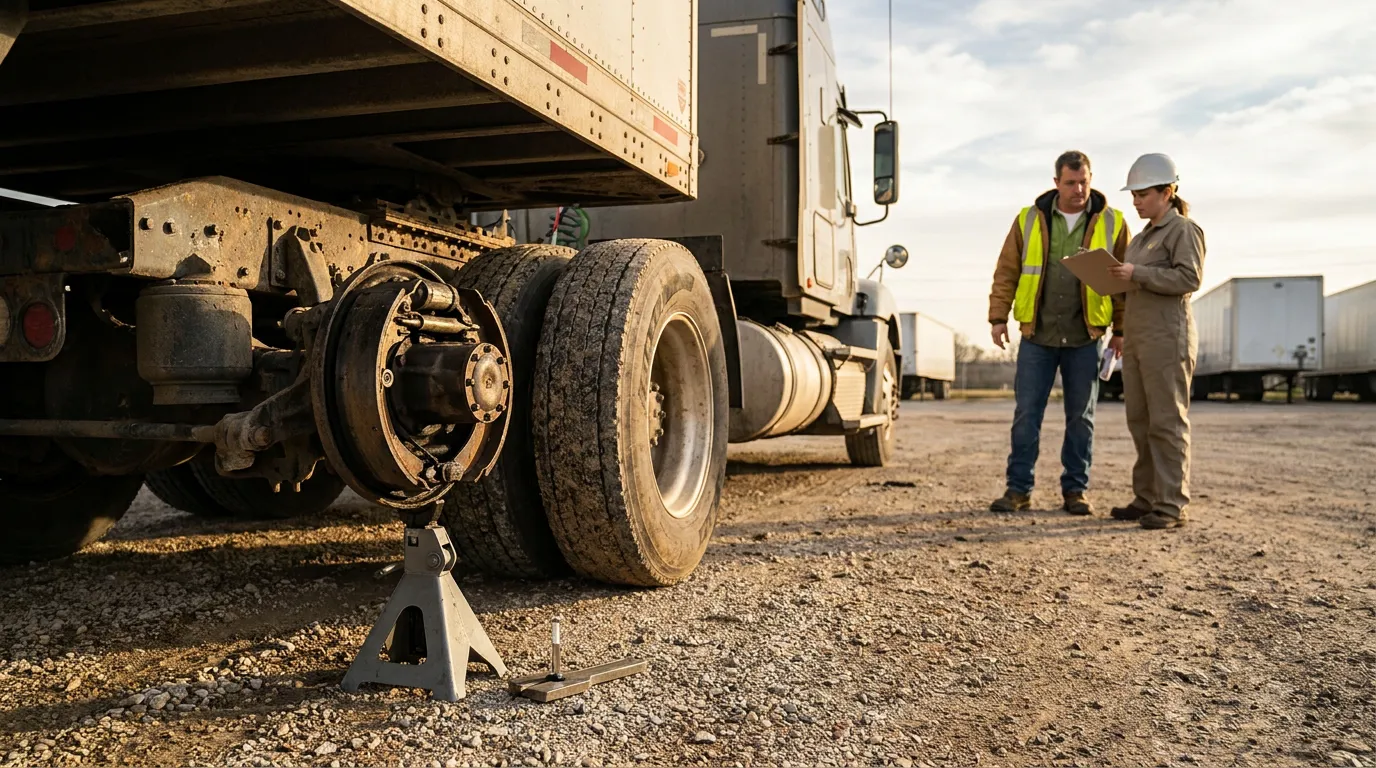
Understanding the Air Pressure Standard Behind Brake Failure Truck Claims
Key Takeaways: The "20% defective brake rule" comes from Tex. Transp. Code § 547.406(a)(1), which requires an air-braked bus, truck, or truck-tractor to have reservoir capacity sufficient to fully apply the service brakes without dropping fully charged reservoir pressure by more than 20 percent. Related provisions cap vacuum depletion at 40 percent for certain vacuum-braked trucks, require check valves, and set performance floors such as 43.5 percent braking force for non-passenger vehicles and a 40-foot stop from 20 mph for heavier single-unit vehicles. These equipment rules apply by vehicle type rather than by weight alone, while the separate annual inspection program under Chapter 548 generally reaches vehicles over 26,000 pounds and is aligned with federal motor carrier rules. A violation is generally evidence a jury may weigh rather than an automatic win, so proving liability typically requires linking the mechanical failure to the crash and injuries through inspection records, maintenance files, ECM data, and expert analysis. Responsibility may be shared among the driver, carrier, repair shop, parts manufacturer, or shipper, and Texas proportionate responsibility generally bars recovery only when the claimant’s responsibility is greater than 50 percent. Most personal injury suits generally must be filed within two years, and early investigation can be critical because brake components and digital data may disappear quickly.
The "20% defective brake rule" is shorthand for a Texas equipment standard requiring that an air-braked commercial vehicle carry enough reservoir capacity to fully apply its service brakes without dropping reservoir pressure by more than 20 percent. When a loaded 18-wheeler cannot meet that benchmark, its stopping ability may be compromised before the driver ever touches the pedal. For families hurt in a crash on the Katy Freeway, the North Loop, or Beltway 8, that single figure can become one of the most important numbers in the case.
If a truck’s brakes failed and your family is now facing hospital bills and lost income, you do not have to sort through the regulations alone. The team at Payne Law Firm has spent more than 20 years standing beside injured Houstonians, and we treat our clients like family from the first phone call forward. Call 713-223-5100 or contact us now to request a free consultation about your options.
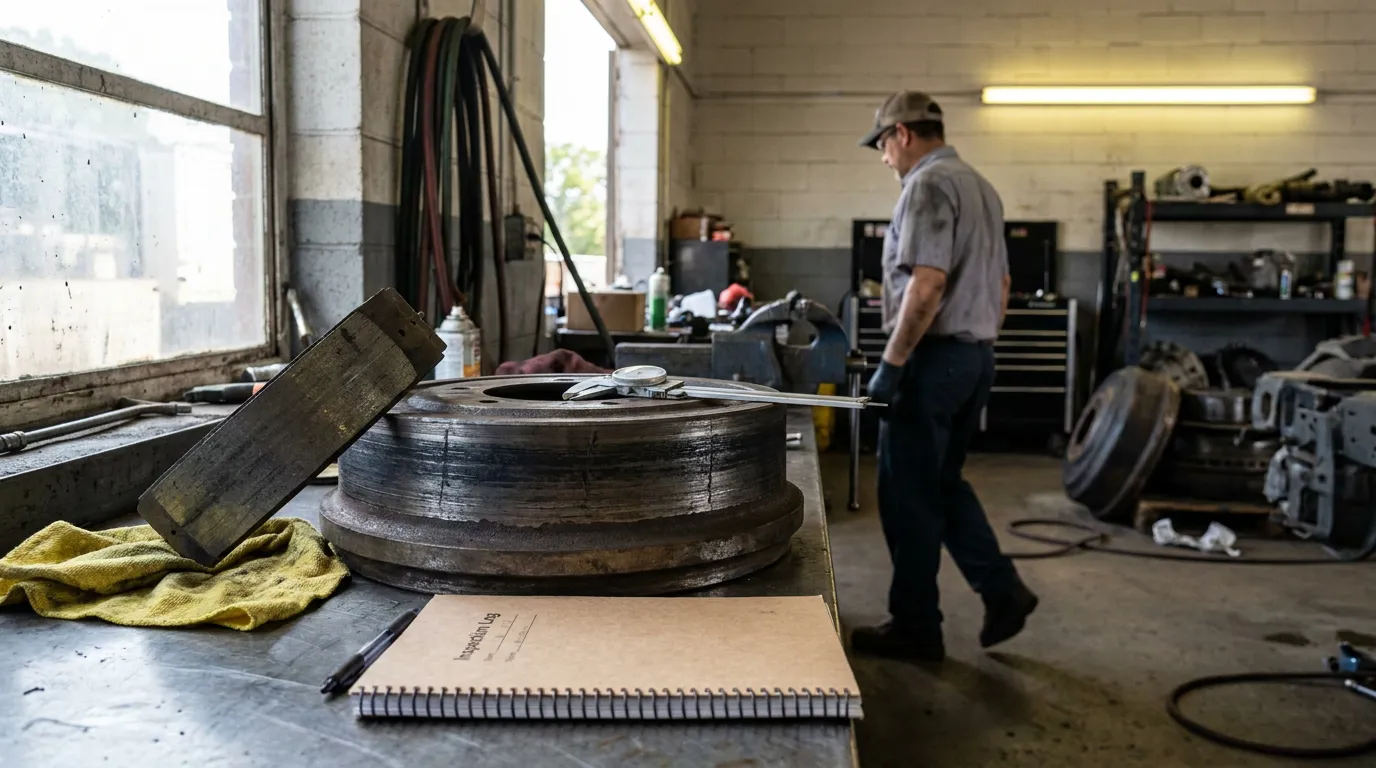
What the 20 Percent Defective Brakes Standard Actually Says
Texas codified this requirement in its vehicle equipment statutes. Under Tex. Transp. Code § 547.406(a)(1), a bus, truck, or truck-tractor equipped with air brakes must have at least one reservoir sufficient to ensure the service brakes can be fully applied without lowering reservoir pressure, when fully charged to the maximum pressure set by the air compressor governor cut-out, by more than 20 percent. This is a minimum equipment specification, not a guarantee of safety or a standalone measure of fault.
The same statute addresses vacuum-braked vehicles. A truck with at least three axles equipped with vacuum brakes, or a truck-tractor or truck used to tow a vacuum-braked vehicle, must have reserve capacity sufficient to ensure that, fully charged and with the engine stopped, the service brakes can be fully applied without depleting the vacuum supply by more than 40 percent, under Tex. Transp. Code § 547.406(b). Additionally, any motor vehicle, trailer, semitrailer, or pole trailer equipped with an air or vacuum reservoir or reserve capacity must have a check valve or equivalent device to prevent depletion of the air or vacuum supply by failure or leakage, under Tex. Transp. Code § 547.406(c). These commercial truck braking standards give investigators an objective measure after a wreck, though Chapter 547 also contains applicability provisions and exemptions that must be checked for a particular vehicle.
Stopping Distance and Braking Force Benchmarks
Pressure capacity is only half the analysis, because Texas also regulates actual performance. Service brakes generally must develop a braking force of at least 43.5 percent of the vehicle’s gross weight for non-passenger vehicles, and must decelerate to a stop from 20 mph or less at no less than 14 feet per second per second, under Tex. Transp. Code § 547.408(a)(1)-(2). These figures let a reconstructionist compare what the truck should have done with what it did, under the statute’s dry, smooth, hard-surface test conditions.
Maximum stopping distances are set out in the same section. Tex. Transp. Code § 547.408(a)(3) sets a schedule of maximum stopping distances from 20 mph by vehicle class, with a 40-foot maximum applying to heavier single unit vehicles and combinations, while lighter classes are held to shorter distances, such as 30 feet for a motorcycle, moped, or single unit vehicle rated at 10,000 pounds or less. Skid marks, ECM data, and scene measurements can sometimes be compared against that benchmark, though real-world analysis is often contested by opposing engineers.
| Standard | Requirement | Authority |
|---|---|---|
| Air brake reservoir | No more than 20% pressure drop on full application | Tex. Transp. Code § 547.406(a)(1) |
| Vacuum brake reserve | No more than 40% vacuum depletion (certain vacuum-braked trucks) | Tex. Transp. Code § 547.406(b) |
| Braking force | At least 43.5% of gross weight (non-passenger vehicles) | Tex. Transp. Code § 547.408(a)(1) |
| Stopping distance | 40 feet from 20 mph (heavier single unit vehicles and combinations) | Tex. Transp. Code § 547.408(a)(3) |
Which Vehicles Fall Under the Brake Defect Threshold
Not every truck on a Houston road is governed by the same rules. For state inspection purposes, Texas defines a "commercial motor vehicle" under Tex. Transp. Code § 548.001(1) using three separate prongs: subsection (A) covers a self-propelled or towed vehicle, other than certain excluded vehicles such as qualifying farm vehicles, used on a public highway to transport passengers or cargo if the vehicle or combination has a gross weight, registered weight, or gross weight rating over 26,000 pounds; subsection (B) separately reaches vehicles designed or used to transport more than 15 passengers, including the driver; and subsection (C) separately reaches vehicles transporting hazardous materials in a quantity requiring placarding under the Hazardous Materials Transportation Act. This definition governs inspection duties rather than the Chapter 547 equipment standards, which apply according to vehicle type regardless of weight.
Inspection duties flow from that classification. The commission must establish an inspection program meeting federal motor carrier safety regulations and requiring an annual inspection of all required safety equipment, per Tex. Transp. Code § 548.201(a)(1)-(2). A brake inspection failure documented in those records, or the absence of records altogether, can become meaningful evidence in a Texas truck crash liability dispute, though it still must be tied to the vehicle’s condition at the time of the crash.
💡 Pro Tip: Ask your attorney to send a litigation hold letter early. Maintenance files, driver vehicle inspection reports, and roadside out-of-service brake criteria violations are often kept only for limited retention periods.
Proving Truck Brake Failure Liability Houston Juries Will Accept
Establishing that brakes were defective is different from establishing that the defect caused the collision. A plaintiff generally must show duty, breach, causation, and damages, and whether an equipment violation supports negligence per se or is simply evidence of negligence depends on the statute and facts, so a violation is generally something a jury weighs rather than an automatic win. Accident reconstructionists, brake system engineers, and treating physicians often work together to connect the mechanical failure to the specific injuries suffered.
Responsibility in these cases is rarely limited to the driver. A motor carrier that skipped maintenance, a repair shop that reassembled a slack adjuster incorrectly, a parts manufacturer, or a shipper that overloaded a trailer may each bear a share, depending on the duties owed and the proof available. Readers may also find our discussion of FMVSS 223 and truck crash claims useful when underride or rear-impact guards are involved.
Holding the Trucking Company Accountable
Texas addresses employer liability for commercial vehicle crashes in a dedicated chapter. On motion by a defendant, the court must bifurcate trial, and a first-phase finding that an employee was negligent operating the employer’s commercial motor vehicle may let the claimant proceed in the second phase on a claim against the employer, such as negligent entrustment, unless the claimant already pursued that claim in phase one, under Tex. Civ. Prac. & Rem. Code § 72.052(e). How this plays out depends heavily on the pleadings, any employer stipulation under § 72.054, and the trial court’s rulings.
Evidence that commonly supports an 18-wheeler brake defect claim includes:
- Annual and periodic inspection reports, plus any out-of-service orders
- Driver vehicle inspection reports and post-trip logs
- Repair invoices, parts receipts, and third-party maintenance contracts
- Engine control module and telematics downloads
- Photographs and physical preservation of the brake components themselves
How Fault Percentages Work in Texas Truck Brake Negligence Houston Cases
Texas follows a modified comparative fault system called proportionate responsibility. Under Tex. Civ. Prac. & Rem. Code § 33.001, a claimant generally may not recover damages if his percentage of responsibility is greater than 50 percent. Below that line, recovery is generally reduced in proportion to the claimant’s assigned share, and Chapter 33 has its own applicability provisions determining which claims it covers.
This framework is why percentage allocations become such a battleground. A jury might assign a portion of responsibility to a carrier for deferred brake maintenance, another to a repair vendor, and a smaller share to a driver. The proportionate responsibility law governs how those numbers are apportioned among everyone found responsible, and insurers may try to shift figures toward the injured person.
💡 Pro Tip: Be cautious with recorded statements. Adjusters sometimes ask questions designed to elicit admissions that support a higher fault percentage against you.
Deadlines That Can Quietly End a Strong Case
Texas generally requires suit for personal injury within two years after the day the cause of action accrues under Tex. Civ. Prac. & Rem. Code § 16.003(a). The same provision also covers suits for injury to the estate or property of another, which can matter when a brake failure destroys a vehicle along with causing bodily harm. Suits filed after limitations expires are typically subject to dismissal regardless of merits, if the defense raises and preserves the issue.
Exceptions exist, but courts often interpret them narrowly. The discovery rule, tolling for minors or legal incapacity, and other doctrines may apply in limited circumstances, and nothing about them is automatic. Claims involving governmental entities can also involve separate and often much shorter administrative notice requirements in addition to the civil filing deadline, so timing questions should be reviewed promptly with counsel.
Why Early Investigation Protects the Timeline
Waiting can cost more than time. Brake drums may get replaced, trucks may return to service, and digital data can overwrite itself. A Houston truck accident attorney can work to secure inspection histories and physical evidence while the two-year clock is still running.
Frequently Asked Questions
1. Does a 20 percent pressure drop automatically mean the trucking company is liable?
No single statutory violation decides a case by itself. A shortfall under Tex. Transp. Code § 547.406(a)(1) may be evidence of a defect, but a claimant still generally must prove the condition caused the crash and resulting injuries. Outcomes depend on the specific facts.
2. How does the FMCSA brake rule interact with Texas law?
Texas inspection requirements are designed to align with federal motor carrier safety regulations. Tex. Transp. Code § 548.201(a)(1)-(2) requires an inspection program meeting those federal requirements, and the federal performance figures in 49 C.F.R. § 393.52 are organized by vehicle class much like the state schedule. Roadside out-of-service brake criteria findings often surface in both systems.
3. What if I was partly at fault for the collision?
Partial fault does not necessarily end your claim. Under Tex. Civ. Prac. & Rem. Code § 33.001, recovery is generally barred only when your responsibility is greater than 50 percent, with damages otherwise reduced proportionally.
4. Can I still bring a claim if the truck passed its annual inspection?
Possibly. An inspection reflects a condition at one moment, and brake components can degrade or be improperly repaired afterward. Maintenance records between inspections are often revealing.
5. How long do I have to file?
Generally two years from the date of injury, subject to limited exceptions that courts often apply narrowly and to shorter notice rules for claims against governmental entities. Prompt legal review is advisable.
Moving Forward After a Brake Failure Collision
Texas has written concrete numbers into its equipment statutes, and those numbers may give injured people a measurable standard to hold carriers to. Establishing truck brake failure liability Houston families can rely on generally takes preserved evidence, credible engineering analysis, and an understanding of how proportionate responsibility may shape the final recovery. The rules are technical, the deadlines are firm, and the insurance companies involved rarely volunteer information.
You deserve a legal team that explains every step and takes your situation seriously. Attorney Jason E. Payne is Board Certified in Personal Injury Trial Law by the Texas Board of Legal Specialization, and the firm has helped over a thousand injured individuals and families pursue the compensation they sought. Reach Payne Law Firm at 713-223-5100 or schedule your free consultation today.
Disclaimer: This content is for informational purposes only and is not legal advice. Every case is unique, and results may vary. Consult an attorney about your specific circumstances.