
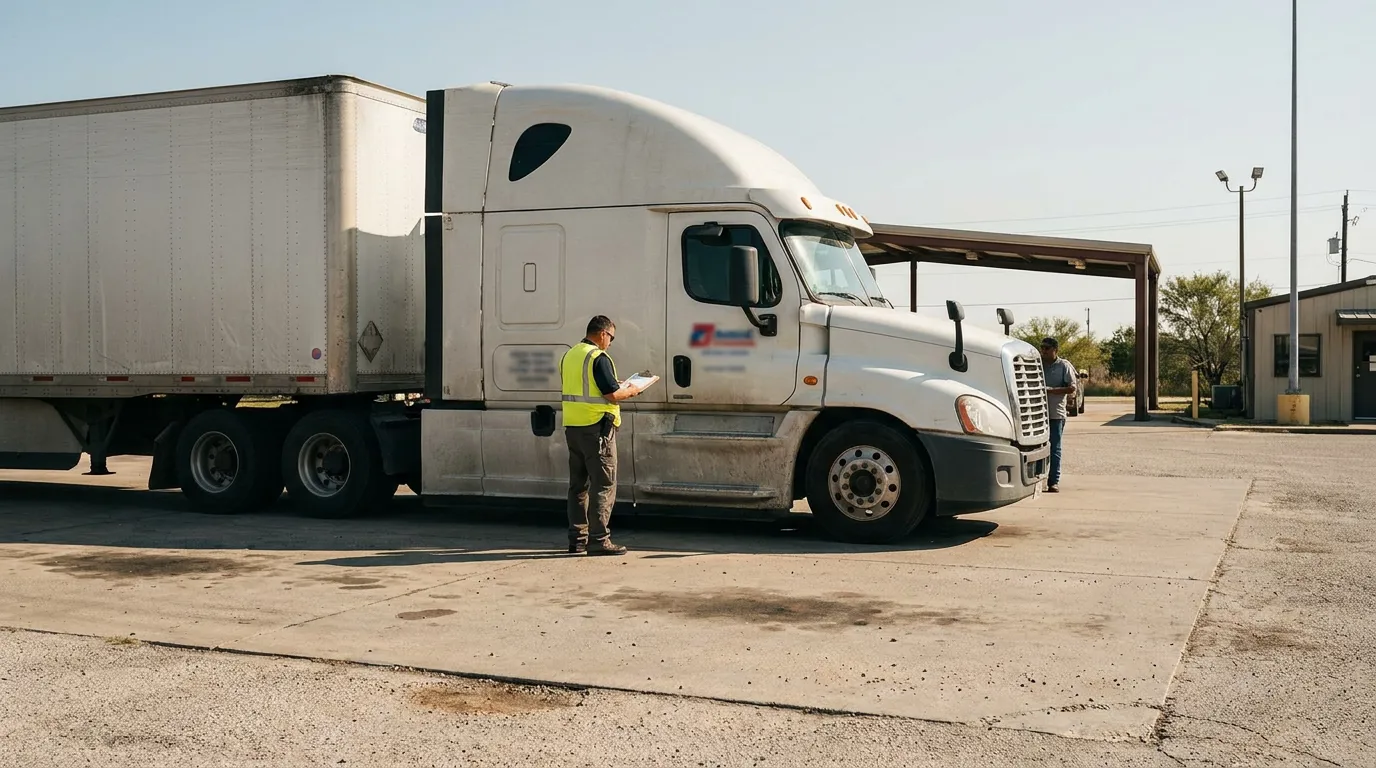
The Federal Testing Clock That Starts the Moment a Big Rig Crashes
Key Takeaways: Federal law requires trucking companies to drug and alcohol test surviving drivers after qualifying crashes under 49 C.F.R. § 382.303. Fatal crashes trigger testing when the driver performed safety-sensitive functions. Injury or tow-away crashes require testing only if the driver receives a moving violation citation. Carriers must stop alcohol testing after eight hours and controlled substance testing after 32 hours, documenting delays. Texas law reinforces these duties through Tex. Transp. Code § 644.252 and CDL disqualification under § 522.081(b). Missing or undocumented tests may support negligent hiring and supervision claims. Injured Houstonians should act promptly to preserve evidence.
When a commercial truck is involved in a serious wreck, federal law mandates drug and alcohol testing by the motor carrier itself. Under 49 C.F.R. § 382.303, carriers must test surviving drivers after qualifying crashes within tight deadlines: eight hours for alcohol and 32 hours for controlled substances. Fatalities trigger testing without citation. Injury or tow-away crashes trigger testing when the driver receives a moving violation citation. For Houston families, those test results, or their absence, can become critical evidence.
If you were hurt or lost someone in a collision with an 18-wheeler, evidence may begin disappearing almost immediately. The team at Payne Law Firm treats clients like family from the first conversation. Call 713-223-5100 or contact us now for a free consultation.
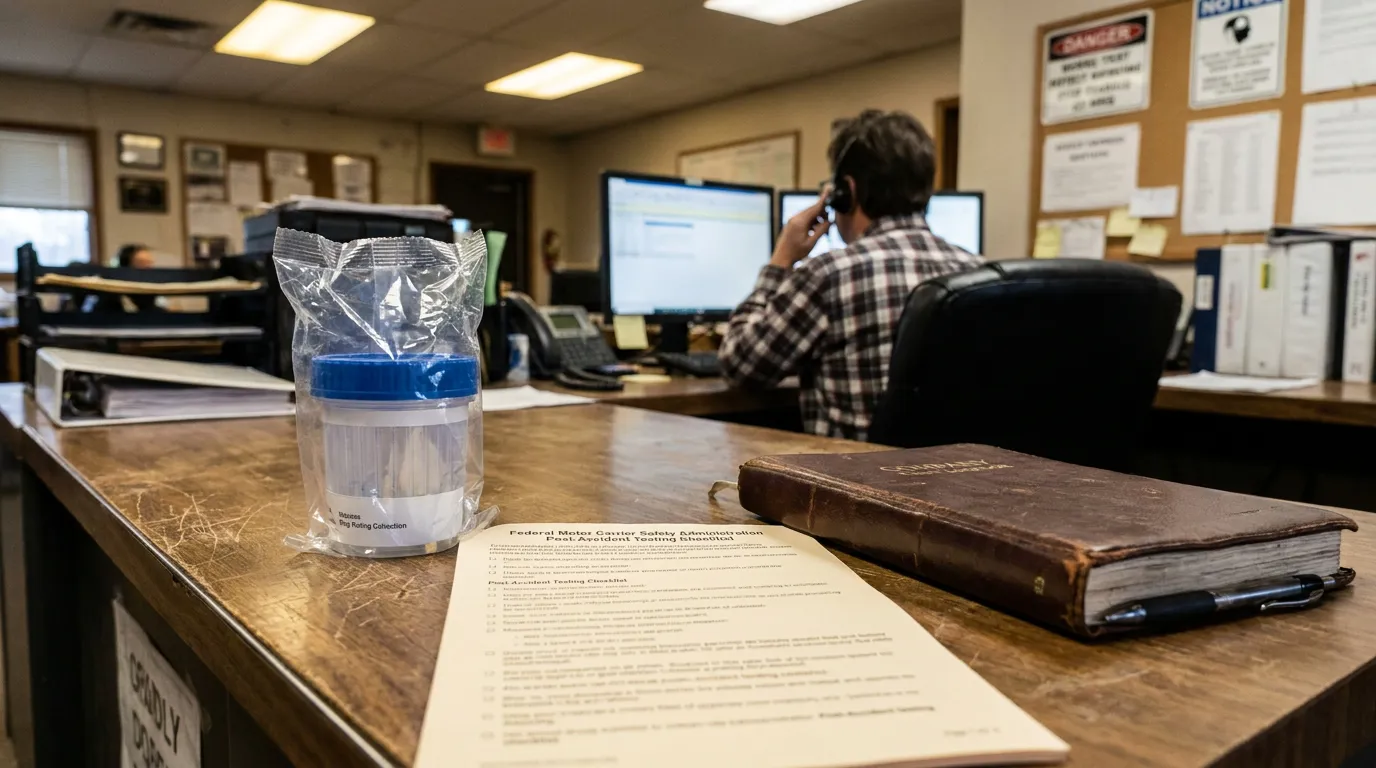
Who Actually Has the Duty to Test After a Houston Truck Crash?
The obligation falls on the trucking company, not law enforcement. Federal regulations require employers to test surviving drivers for alcohol and controlled substances as soon as practicable following an occurrence involving a commercial motor vehicle operating on a public road in commerce.
This distinction matters in litigation. Police investigations are separate from the carrier’s federal testing obligation. One exception exists: carriers may use tests conducted by officials with independent testing authority if they obtain those results. Otherwise, carriers cannot cite the absence of police testing to excuse failing their own requirements.
Why the Carrier’s Duty Creates Discoverable Evidence
The resulting paperwork lives in the employer’s files. Testing records, chain-of-custody forms, laboratory reports, and communications about testing are business records within the carrier’s control. A truck accident attorney investigation in Houston frequently begins with preservation letters targeting these materials.
💡 Pro Tip: Ask an attorney about sending a spoliation letter within days of the crash. Testing records, electronic logging data, and dashcam footage may be subject to routine destruction unless carriers are put on notice to preserve them.
Understanding 49 CFR 382.303 Post-Accident Drug Testing Triggers
Not every collision triggers mandatory testing, which is why crash facts matter. The regulation defines specific circumstances. Whether testing was required depends on crash severity and citations. The post-accident testing requirements structure around two categories.
| Crash Circumstance | Citation Required? | Alcohol Test | Drug Test |
|---|---|---|---|
| Loss of human life | No | Cease after 8 hours | Cease after 32 hours |
| Bodily injury with immediate medical treatment away from scene | Yes, moving violation | Cease after 8 hours | Cease after 32 hours |
| Vehicle towed or disabled | Yes, moving violation | Cease after 8 hours | Cease after 32 hours |
Fatal crashes are the clearest trigger. Under 49 C.F.R. § 382.303(a)(1), loss of human life requires testing the driver performing safety-sensitive functions, regardless of fault or citation.
The second category is conditional and frequently litigated. Under 49 C.F.R. § 382.303(a)(2), bodily injury requiring immediate medical treatment away from the scene, or tow-away crashes, trigger testing only if the driver receives a moving violation citation within eight hours for alcohol or 32 hours for controlled substances. Whether and when a citation issued determines if testing requirements attached.
The Two-Deadline Structure
Federal rules impose two clocks. Alcohol testing should occur within two hours. If not, carriers must document delay reasons. After eight hours, carriers must cease alcohol testing attempts and document why. Controlled substance attempts must cease at 32 hours, with documentation.
Documentation duties are not optional. Records must be submitted to FMCSA upon request. Absence of such records may itself be informative.
What Happens When the Driver Is Injured or Leaves the Scene
Drivers subject to testing must remain readily available, or carriers may deem them to have refused. However, nothing requires delaying necessary medical attention or prohibits drivers from leaving to obtain emergency care or assistance.
This creates a fact-sensitive gray area. A driver transported to a Houston trauma center hasn’t automatically refused testing. But a driver who goes home and resurfaces two days later presents a different picture. Whether conduct constitutes refusal depends on the timeline and the carrier’s efforts to reach the driver.
How Texas Law Reinforces Federal Driver Testing Obligations
Texas has woven the federal framework into state law. Under Tex. Transp. Code § 644.252(a), employers required to conduct testing under 49 C.F.R. Part 382 must report specified outcomes to the department. This supplements federal enforcement.
Reportable outcomes under Tex. Transp. Code § 644.252(a)(1)-(3) include:
- Valid positive test results, including dilute specimens under 49 C.F.R. § 40.3
- Refusal to provide a specimen
- Adulterated or substituted specimens
Information is confidential. Tex. Transp. Code § 644.252(b)-(c) provides that reported information is confidential, subject to release only as provided by Section 521.053. Injured parties generally obtain testing information through civil discovery.
Licensing Consequences That Underscore the Stakes
Positive results or refusals carry serious professional consequences. The Texas commercial driver’s license statute at Tex. Transp. Code § 522.081(b) provides disqualification of at least one year for driving under the influence, refusing testing, or showing alcohol concentration of 0.04 or more while operating a commercial motor vehicle. Longer periods apply for hazardous materials transport, with lifetime disqualification for repeat offenses.
These consequences explain why testing compliance deserves scrutiny. Carriers and drivers both face significant exposure from positive tests, which is why compliance should not be assumed.
Testing Failures as Evidence in a Houston Truck Crash Case
Post-accident testing is one of six federally mandated test categories. Under 49 C.F.R. Part 382 Subpart C, programs must also cover pre-employment, random, reasonable suspicion, return-to-duty, and follow-up testing. For 2026, minimum random rates remain ten percent for alcohol and fifty percent for controlled substances.
A carrier that skipped a required post-accident test may have skipped others. Random testing logs, reasonable suspicion documentation, and pre-employment records may reveal patterns supporting negligent hiring, retention, and supervision claims against the employer.
Documented reasons for missed tests can cut both ways. A contemporaneous written explanation showing the driver was in surgery may support justification. No record at all may permit factfinders to draw conclusions about safety culture.
Practical Steps for Families After a Serious Commercial Vehicle Collision
Preservation and documentation are critical in the first weeks.
- Request the Texas Peace Officer’s Crash Report and note any citations issued to the truck driver
- Photograph the scene, vehicle positions, and visible injuries when safe
- Seek prompt medical evaluation to document treatment away from the scene
- Write down names of responding agencies, EMS providers, and witnesses
- Avoid giving recorded statements to the carrier’s insurer before speaking with counsel
💡 Pro Tip: Whether the driver received a moving violation citation often determines whether testing was legally required in non-fatal crashes. Confirm this detail early.
Working with a Houston truck accident lawyer early may make a meaningful difference in what evidence survives. Attorney Jason E. Payne is Board Certified in Personal Injury Trial Law by the Texas Board of Legal Specialization and has been recognized in Texas Super Lawyers from 2019 through 2026. Over more than twenty years, the firm has helped over a thousand injured individuals and families pursue compensation.
Frequently Asked Questions
1. Does every Houston truck crash require a drug test?
No. Testing is mandatory when accidents involve loss of human life, or when bodily injury requiring immediate treatment away from the scene or a tow-away occurred and the driver received a moving violation citation. Minor crashes without those elements generally don’t trigger federal requirements.
2. How long does the trucking company have to complete the test?
Federal rules require carriers to stop attempting alcohol testing after eight hours and controlled substances testing after 32 hours. Alcohol testing should ideally occur within two hours, with written reasons required if it doesn’t.
3. What if the truck driver was taken to the hospital?
The regulation doesn’t require delaying necessary medical attention. Drivers may leave for emergency care without that alone constituting refusal. However, drivers must otherwise remain readily available for testing.
4. Can I get the test results for my case?
Testing information is obtained through civil discovery. Information reported under Tex. Transp. Code § 644.252 is confidential and released only as provided by Section 521.053.
5. Does a negative test mean I have no case?
Not necessarily. Impairment is one potential theory. Fatigue, hours-of-service violations, improper maintenance, inadequate training, unsafe loading, and ordinary negligence may each independently support claims.
Why the Testing Timeline Deserves Immediate Attention
The federal framework governing driver testing is precise, deadline-driven, and paperwork-heavy. Fatal crashes trigger testing without citation. Injury or tow-away crashes trigger it only when moving violation citations issue. Carriers bear the duty, must work within the eight-hour and 32-hour windows, and document failures. Texas law reinforces this through reporting and disqualification provisions. For injured Houstonians, understanding when testing is required is a first step toward learning whether carriers met obligations.
You should not have to decode federal regulations while recovering or grieving. Payne Law Firm is deeply rooted in the Houston community, and Attorney Jason E. Payne, a native of Port Arthur, built this practice around helping injured people feel heard, informed, and respected. Call 713-223-5100 or reach out for a free consultation today.
Disclaimer: This content is for informational purposes only and is not legal advice. Every case is unique, and results may vary. Consult an attorney about your specific circumstances.