
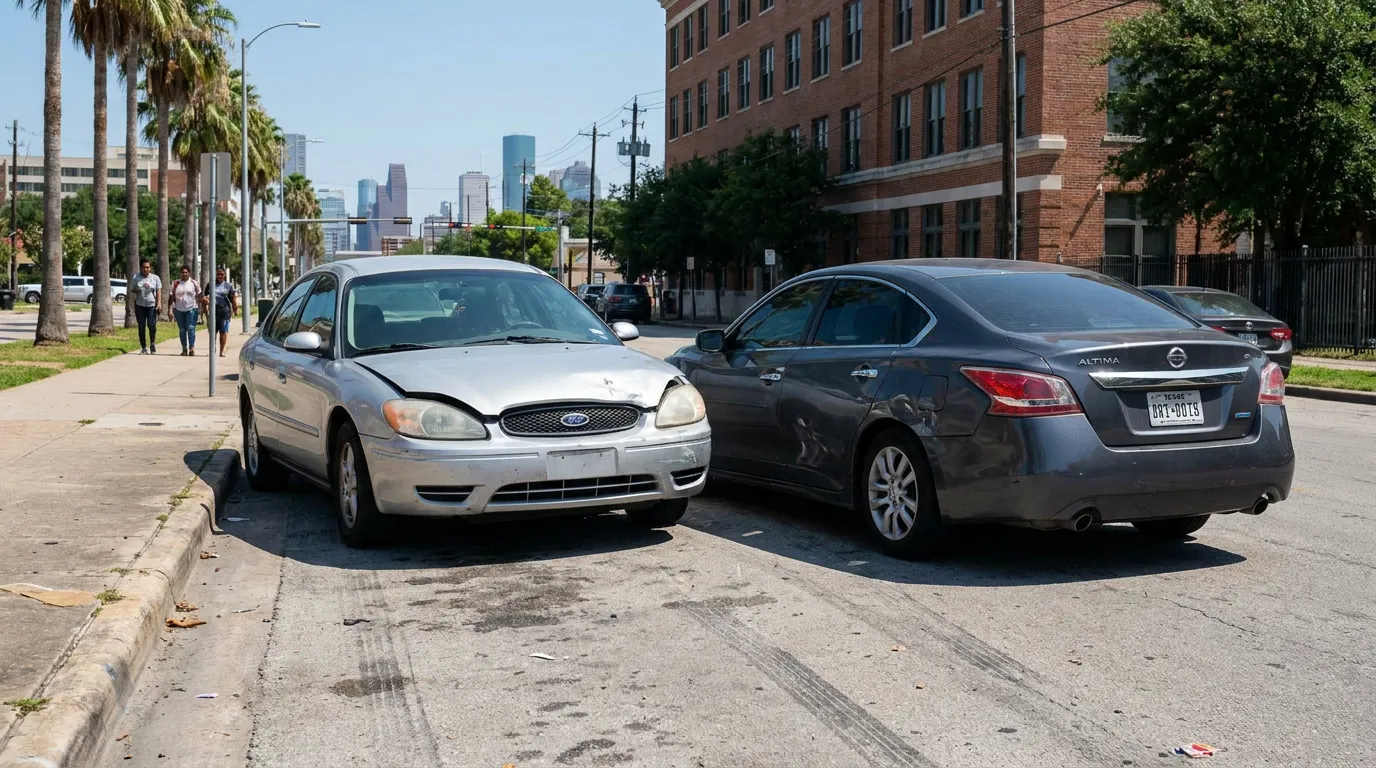
When Your Insurance Company Drags Its Feet After a Wreck
Key Takeaways: Texas Insurance Code Section 542.060 requires first-party insurers liable for a claim who fail to follow prompt payment rules to pay the claim amount plus 18 percent annual interest as damages, along with reasonable attorney’s fees. This remedy from the 1991 Prompt Payment of Claims Act makes Texas one of few states giving policyholders a direct right to sue over claim delay. Insurers must acknowledge and investigate within 15 days, accept or reject within 15 business days of receiving requested information, and pay within 5 business days of acceptance. Extensions are capped at 45 additional days. Delaying payment more than 60 days after receiving all requested items may trigger statutory damages, though no penalty applies if the claim was invalid. The penalty doesn’t require proof of bad faith and may be awarded in addition to prejudgment interest.
Under Section 542.060 of the Texas Insurance Code, a first party insurer that is liable for a claim and fails to follow prompt payment rules may be required to pay the claim amount plus 18 percent annual interest as damages, together with reasonable attorney’s fees. For a Houston crash victim facing emergency room bills and a totaled vehicle, this provision can convert an insurer’s delay into real financial consequences.
If your claim has stalled and no one will give you a straight answer, you do not have to keep fighting alone. The team at Payne Law Firm has served injured Texans for more than 20 years, and Attorney Jason E. Payne is Board Certified in Personal Injury Trial Law by the Texas Board of Legal Specialization. Call 713-223-5100 or schedule your free consultation to have someone review your claim timeline.
Where the Texas Insurance Code 542.060 Prompt Payment Penalty Came From
The 18 percent penalty traces back to the Prompt Payment of Claims Act, passed by the Texas Legislature in 1991. Originally codified at Insurance Code article 21.55, the statute was recodified in 2003 as Subchapter B of Chapter 542, carrying forward both the penalty interest and the right to seek reasonable attorney’s fees.
Texas is unusual. Many states enforce prompt-pay rules primarily through the insurance department without giving policyholders a private cause of action. A comparative review of property and casualty prompt-pay laws places Texas among the minority of states allowing policyholders to sue directly, with its 18 percent rate among the highest nationally. Michigan provides 12 percent penalty interest without a comparable attorney’s fee provision, and Florida ties its figure to the judgment rate.
Who the Law Covers
Texas’s prompt payment law applies broadly to insurers authorized to do business in the state, including eligible surplus lines insurers. Limited coverages fall outside it, including title, fidelity, surety, guaranty bonds, marine (other than inland marine), workers’ compensation, and mortgage guaranty insurance. Most first-party claims connected to a Houston crash, collision, uninsured/underinsured motorist, and personal injury protection claims, generally fall within the statute’s reach.
The Statutory Clock Every Houston Claimant Should Track
The deadlines are where most late payment disputes begin. Subchapter B establishes specific timeframes, and missing them may expose the carrier to liability. Under Tex. Ins. Code §§ 542.055(a), 542.056(a), and 542.057(a), the framework runs as follows:
| Stage | Deadline |
|---|---|
| Acknowledge claim, begin investigating, request information | 15 days after receipt of notice of claim (within the 30th business day for eligible surplus lines insurers) |
| Accept or reject after receiving all requested information | 15 business days (30 days if arson is reasonably suspected) |
| Extension for further investigation | Capped at 45 additional days |
| Payment after notice of acceptance | 5 business days (20 days for surplus lines) |
Texas caps any extension at 45 days. If an insurer notifies you it needs more time, Tex. Ins. Code § 542.056(d) requires it to accept or reject within 45 days of that notice. Carriers cannot lawfully stack open-ended extensions.
Delay in actual payment carries its own trigger. Tex. Ins. Code § 542.058(a) provides that an insurer delaying payment for more than 60 days after receiving all reasonably requested items may be required to pay damages under Section 542.060. An important exception: no penalty applies where arbitration or litigation establishes the claim was invalid and should not have been paid.
Hurricane Season Changes the Math
Deadlines shift when the Texas Department of Insurance designates a weather-related catastrophe. Claim-handling periods in Subchapter B are generally extended by 15 days, relevant along the Gulf Coast. Department rules define a catastrophe by thresholds such as significant aggregate insured losses and a large volume of claims.
💡 Pro Tip: Date-stamp everything. Save the email confirming your claim submission, note when you mailed each requested document, and keep delivery receipts. Penalty calculation depends on when the insurer received what, and reconstructing that record months later is harder than building it as you go.
Why This Remedy Has Teeth
The penalty generally does not require proof of the insurer’s state of mind. A claimant typically doesn’t need to prove bad faith or intent; the focus is on whether the insurer was liable for the claim and failed to comply with the subchapter. Texas courts have applied the provision to late payments even where the amount was small.
The penalty may be awarded in addition to other amounts. Section 542.060(a)-(b) states nothing prevents an award of prejudgment interest on the claim amount as provided by law, and attorney’s fees are taxed as costs. The 18 percent is a statutory damages add-on, not a ceiling. Understanding what damages you can recover helps put the penalty in context.
The 2017 Amendment Houston Readers Need to Know
The flat 18 percent doesn’t apply to every claim anymore. In 2017, House Bill 1774 created Chapter 542A and amended Section 542.060 to change the calculation for actions governed by Chapter 542A, primarily first-party claims for property damage caused by forces of nature. For those claims, the insurer may owe simple interest determined on the date of judgment by adding five percent to the interest rate under Section 304.003 of the Finance Code. Chapter 542A also imposes pre-suit notice requirements and can limit recoverable attorney’s fees.
For claims outside Chapter 542A, the flat 18 percent generally governs. This distinction can produce very different numbers. The statutory text of Chapter 542 of the Insurance Code sets out both versions, and whether a claim falls under Chapter 542A sometimes requires careful analysis.
Practical Steps When a First Party Insurer Stalls
Documentation often decides these disputes. Insurers frequently argue the clock never started because a requested item was missing. Build a clean record:
- Submit requested documents in one traceable batch and confirm receipt in writing
- Ask the adjuster to identify, in writing, every outstanding item needed
- Request a copy of any extension notice and note when it was issued
- Keep a log of every call, including the adjuster’s name and what was said
- Preserve medical records, repair estimates, and wage documentation
Be realistic about what the statute does. It addresses timing, not claim value. A carrier paying a lowball amount quickly generally hasn’t violated prompt payment deadlines, although underpayment may raise other claims.
💡 Pro Tip: If an adjuster asks for the same document twice, send it again anyway and note both requests. Repeated requests can be a tactic for restarting the clock, and documented duplicate submissions may undercut that position.
How Texas Cross-References Its Prompt Payment Rules
Subchapter B reaches beyond auto claims. For example, Tex. Ins. Code § 1301.156 directs that insurers comply with Subchapter B, Chapter 542, with respect to prompt payment to insureds. That provision governs health coverage rather than first-party auto crash claims directly.
This illustrates the Legislature treats Subchapter B as the baseline prompt payment standard across coverage types. That context helps when an adjuster suggests the deadlines are merely aspirational. They are statutory, and violations may carry a defined claim delay remedy.
Frequently Asked Questions
1. Do I have to prove the insurer acted in bad faith to recover the 18 percent?
Generally, no. Section 542.060(a) imposes liability based on noncompliance with the subchapter itself, without requiring proof of bad faith. You still need to establish the insurer was liable for the claim and missed a statutory deadline.
2. Does the penalty apply if my claim was denied and the denial was correct?
Generally, no. Tex. Ins. Code § 542.058(b) provides the delay penalty doesn’t apply where arbitration or litigation determines the claim was invalid and should not have been paid.
3. Is the 18 percent instead of prejudgment interest?
No. Section 542.060 expressly preserves the availability of prejudgment interest on the claim amount. The penalty interest is generally in addition to other amounts the law allows.
4. How does the 2017 amendment affect a car accident claim?
It depends on how the claim is characterized. The amended rate calculation applies to actions governed by Chapter 542A, which centers on first-party claims for property damage caused by forces of nature. Many first-party auto claims may remain subject to the flat 18 percent, but the analysis is fact-specific.
5. Can I pursue the penalty on my own?
You may, though the analysis is technical. Deadline computation, extension notices, and the Chapter 542A question often require close statutory work. Working with a Texas Insurance Code 542.060 prompt payment lawyer can help you understand whether the timeline supports a claim.
Holding Carriers to the Calendar
Texas gives policyholders an enforceable, statutory answer to insurer delay. Between the acknowledgment, acceptance, and payment deadlines in Sections 542.055 through 542.057, the 60-day payment trigger in Section 542.058, and the statutory damages in Section 542.060, the framework makes delay expensive. Whether it applies to your Houston injury claim depends on your policy, documentation, and the timeline the carrier created.
No one should have to fight an insurance company while recovering from a crash. Payne Law Firm has helped over a thousand injured individuals and families pursue the compensation they sought, and Attorney Payne, a native of Port Arthur, built this practice around treating clients like family and making sure Houstonians feel heard and respected. Reach the firm at 713-223-5100, request a free case review, or learn more about the Payne Law Firm team today.
Disclaimer: This content is for informational purposes only and is not legal advice. Every case is unique, and results may vary. Consult an attorney about your specific circumstances.