
How Texas Split Truck Accident Trials Into Two Parts
Key Takeaways: A bifurcated trial under Texas HB 19 splits qualifying Houston truck accident cases into two phases: phase one decides liability and compensatory damages; phase two, if reached, determines exemplary (punitive) damages. The rule stems from Subchapter B of Chapter 72 of the Texas Civil Practice and Remedies Code, effective September 1, 2021, applying to actions filed on or after that date. The statute was amended by H.B. 2190 in 2023 with nonsubstantive terminology updates. It applies only to civil actions involving commercial motor vehicles used commercially, including 18-wheelers and delivery trucks. Bifurcation requires a timely defendant motion under § 72.052(b). Because jurors typically hear driver conduct first, with carrier evidence reserved for phase two, early evidence preservation and thorough phase one preparation are critical.
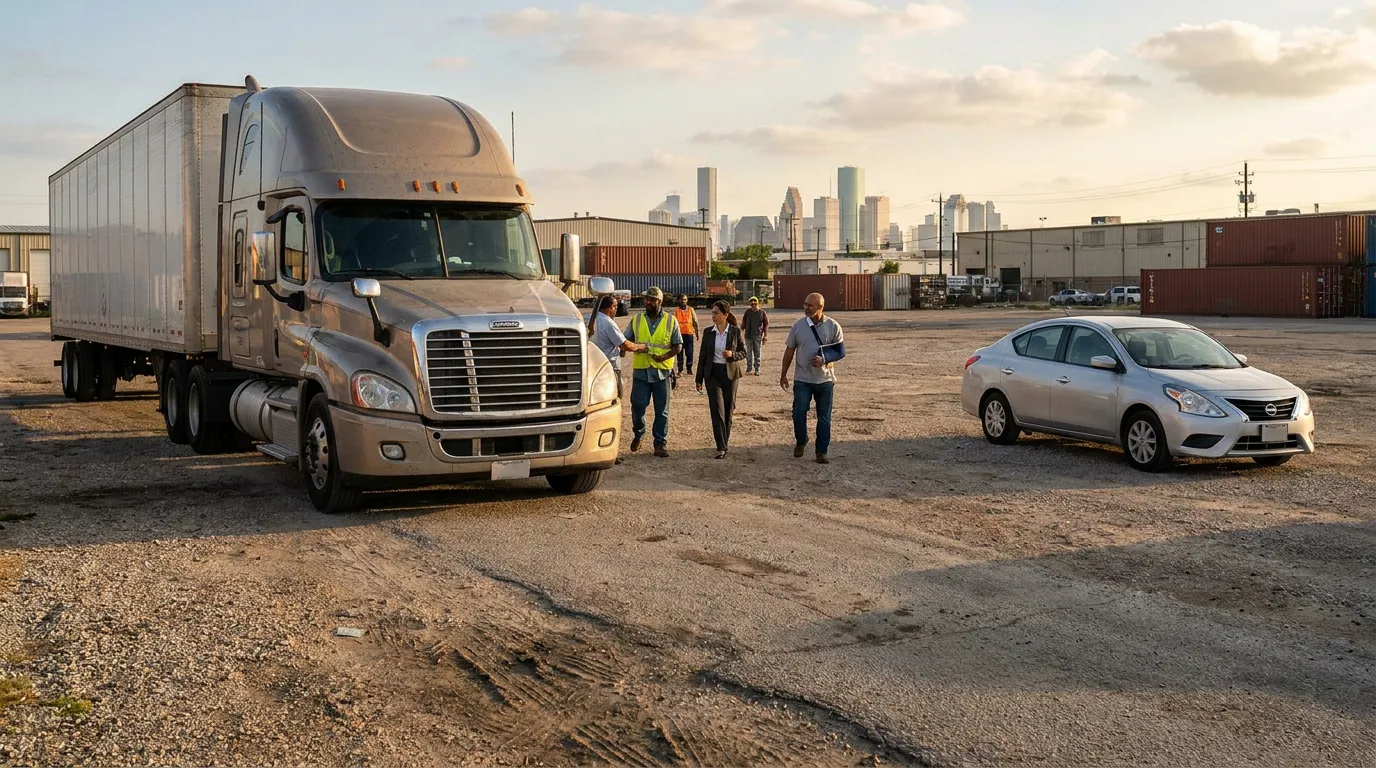
If you were hurt in a crash with an 18-wheeler in Houston, your trial could be divided in half. Under Texas Civil Practice and Remedies Code § 72.052(a), in a covered commercial motor vehicle case, "on motion by a defendant, the court shall provide for a bifurcated trial." Phase one decides liability and compensatory damages. Phase two, if reached, decides exemplary (punitive) damages and amounts. Jurors generally hear the driver’s conduct first, while evidence supporting punitive damages against the trucking company is reserved for the second phase.
At Payne Law Firm, we help injured Houstonians understand the road ahead before they enter a courtroom. Call 713-223-5100 or schedule your free consultation to discuss your options with a team that treats clients like family.

Where the Texas HB 19 Bifurcated Trial Rule Came From
HB 19 passed during the 87th Texas Legislature, was signed June 16, 2021, and took effect September 1, 2021, adding Subchapter B to Chapter 72 of the Civil Practice and Remedies Code. This framework governs qualifying Houston truck-accident suits filed on or after that date.
Support for the bill crossed party lines. The House approved it 81-49 on April 30, 2021, and the Senate voted 31-0. Bill author Rep. Jeff Leach, R-Plano, argued that lawsuits from motor vehicle crashes had risen 118% over the prior decade while severe-injury and fatal crashes had fallen or risen slightly.
Context matters for Houston drivers. In 2019, Texas recorded 1.26 deaths per 100 million vehicle miles traveled, compared to a national average of 1.1. Reporting on the Texas commercial vehicle liability law noted that under the new structure, a jury might not focus on the employer until the second phase.
The 2021 version is not current. Section 72.052 was amended by Acts 2023, 88th Leg., R.S., Ch. 709 (H.B. 2190), Sec. 116, effective September 1, 2023. That change was a nonsubstantive revision, largely replacing "accident" with "collision."
Which Cases Fall Under Chapter 72
Not every collision triggers these rules. Under § 72.051(2) and (4), the subchapter applies to civil actions seeking damages for bodily injury or death from a collision where a defendant operated a commercial motor vehicle, or owned, leased, or exercised legal control over the vehicle or operator. A "commercial motor vehicle" is one used for commercial purposes in interstate or intrastate commerce to transport property or passengers, deliver or transport goods, or provide services, excluding vehicles used for personal, family, or household purposes.
The scope may extend beyond big rigs. Coverage can include delivery trucks and other commercially operated vehicles. Application to rideshare drivers is unsettled because the statutory "defendant" definition turns on legal control over the vehicle or operator, and companies using independent contractors may fall outside it. Whether a vehicle qualifies is fact-dependent.
The Filing Deadline That Controls Bifurcation
Bifurcation is not automatic. Under § 72.052(b), the motion "shall be made on or before the later of: (1) the 120th day after the date the defendant bringing the motion files the defendant’s original answer; or (2) the 30th day after the date a claimant files a pleading adding a claim or cause of action against the defendant bringing the motion."
When timely filed, the court must grant the motion. The legislative bill analysis explained the bill "requires a court, on any defendant’s motion, to provide for a bifurcated trial." If no defendant timely moves, a case may proceed in single-phase format. Bifurcation has limited significance where no exemplary damages are sought.
💡 Pro Tip: Deadlines run from procedural events, not crash dates. Track them with counsel early, as timing arguments are fact-specific and courts interpret procedural exceptions narrowly.
What Happens in Each Phase of a Two Phase Truck Trial
The statute divides the questions cleanly. Section 72.052(c) provides the trier of fact "shall determine liability for and the amount of compensatory damages in the first phase," and subsection (d) requires determining "liability for and the amount of exemplary damages in the second phase."
| Phase | What the jury decides | Practical effect for victims |
|---|---|---|
| Phase One | Liability and compensatory damages (medical costs, lost income, pain and suffering) | Evidence supporting punitive damages is generally deferred, though certain regulatory and independent-negligence evidence may still come in |
| Phase Two | Whether exemplary damages apply and in what amount | Focus shifts to the trucking company’s conduct |
Phase one findings can carry forward. Under § 72.052(e), a first-phase finding that an employee driver was negligent may serve as a basis to proceed in phase two on claims like negligent entrustment. This subsection does not apply to claimants who already pursued such claims in phase one.
How Employer Liability Fits Into the Structure
HB 19 created a distinct framework for employer responsibility. Texas Civil Practice and Remedies Code § 72.054 addresses when a company may answer for an employee’s negligent operation. If the employer stipulates the employee acted within employment scope and the trial is bifurcated, the claimant generally may not present first-phase evidence on derivative claims like negligent entrustment. Exceptions exist: where the employer is regulated under the Motor Carrier Safety Improvement Act of 1999 or Chapter 644 of the Transportation Code, certain compliance evidence may be admitted in phase one, and § 72.054(f) preserves independent claims, such as negligent maintenance, that don’t depend on employee negligence.
Understanding these theories helps set realistic expectations. Our discussion of vicarious liability in truck cases walks through how a carrier may be held responsible. Whether a theory survives depends on pleadings, evidence, and court rulings.
The Debate Over Whether Bifurcation Changes Results
Researchers have raised questions. University of Texas professor Mary Rose, citing a Wisconsin Law Review study, observed that splitting trials may reduce liability findings because jurors have been more inclined to find corporations liable than individual drivers. Conversely, shifting attention to the company in phase two could increase damages awarded.
These are academic observations, not guarantees. Jury behavior is unsettled and fact-dependent.
Practical Challenges Injured Houstonians Face
A two-phase structure raises the stakes on phase one preparation. If liability isn’t established first, the case may not reach critical questions. Common challenges include:
- Preserving electronic logging data, dashcam footage, and maintenance records before overwriting
- Establishing driver negligence with reconstruction and medical testimony
- Documenting compensable losses, including future care needs
- Anticipating that carrier conduct may not be front and center early
💡 Pro Tip: Send a written evidence preservation request immediately. Carriers operate on retention schedules, and once records cycle out, reconstruction becomes significantly harder.
Building Your Case Before Trial Ever Begins
Most truck cases are won or lost in investigation. Work with accident reconstructionists, treating physicians, and vocational analysts to establish negligence and the true scope of damages. Guidance on truck accident evidence explains why black box data, driver qualification files, and inspection reports become central.
Experience with the statute matters. Our Houston 18-wheeler lawyer team has served injured Texans for over 20 years, and Attorney Jason E. Payne is Board Certified in Personal Injury Trial Law by the Texas Board of Legal Specialization. A Port Arthur native, he built this practice around helping injured Houstonians feel heard, informed, and respected during stressful moments.
Frequently Asked Questions
1. Does bifurcation happen in every Houston truck case?
No. It applies only to civil actions covered by Chapter 72, and only when a defendant files a timely motion under § 72.052(b). Cases outside the statutory definition proceed in usual format.
2. Will the jury ever learn which trucking company is involved?
The statute limits employer conduct evidence in phase one, and focus often shifts to the company only in phase two. It doesn’t necessarily hide the employer’s identity, and outcomes vary based on pleadings, stipulations, and court rulings.
3. Can I still recover medical bills and lost wages in phase one?
Potentially. Compensatory damages, including medical costs, lost income, and pain and suffering, are decided in phase one under § 72.052(c). Exemplary damages are reserved for phase two. Recovery depends on facts, evidence, and statutory caps.
4. Does a rideshare or delivery van crash count as a commercial motor vehicle lawsuit?
It may. Section 72.051(4) defines commercial motor vehicles by commercial use and excludes vehicles used for personal purposes. Application to rideshare arrangements is unsettled and depends on how the vehicle was used and who controlled it.
5. Is the 2021 law still current?
The framework remains in place. Section 72.052 was amended by H.B. 2190 in 2023 as a nonsubstantive revision. Always work from current statutory text.
What This Means for Your Family
A Texas HB 19 bifurcated trial changes case sequence, not your ability to pursue compensation. Phase one addresses driver liability and compensatory damages. Phase two, when reached, addresses exemplary damages and company conduct. Because rules turn on timing, vehicle classification, and claim pleading, outcomes depend on specific facts and early record-building.
Payne Law Firm has helped over a thousand injured individuals and families pursue compensation, and we would be honored to listen to your story. Reach out to Payne Law Firm at 713-223-5100 or request your free case review today.
Disclaimer: This content is for informational purposes only and is not legal advice. Every case is unique, and results may vary. Consult an attorney about your specific circumstances.