
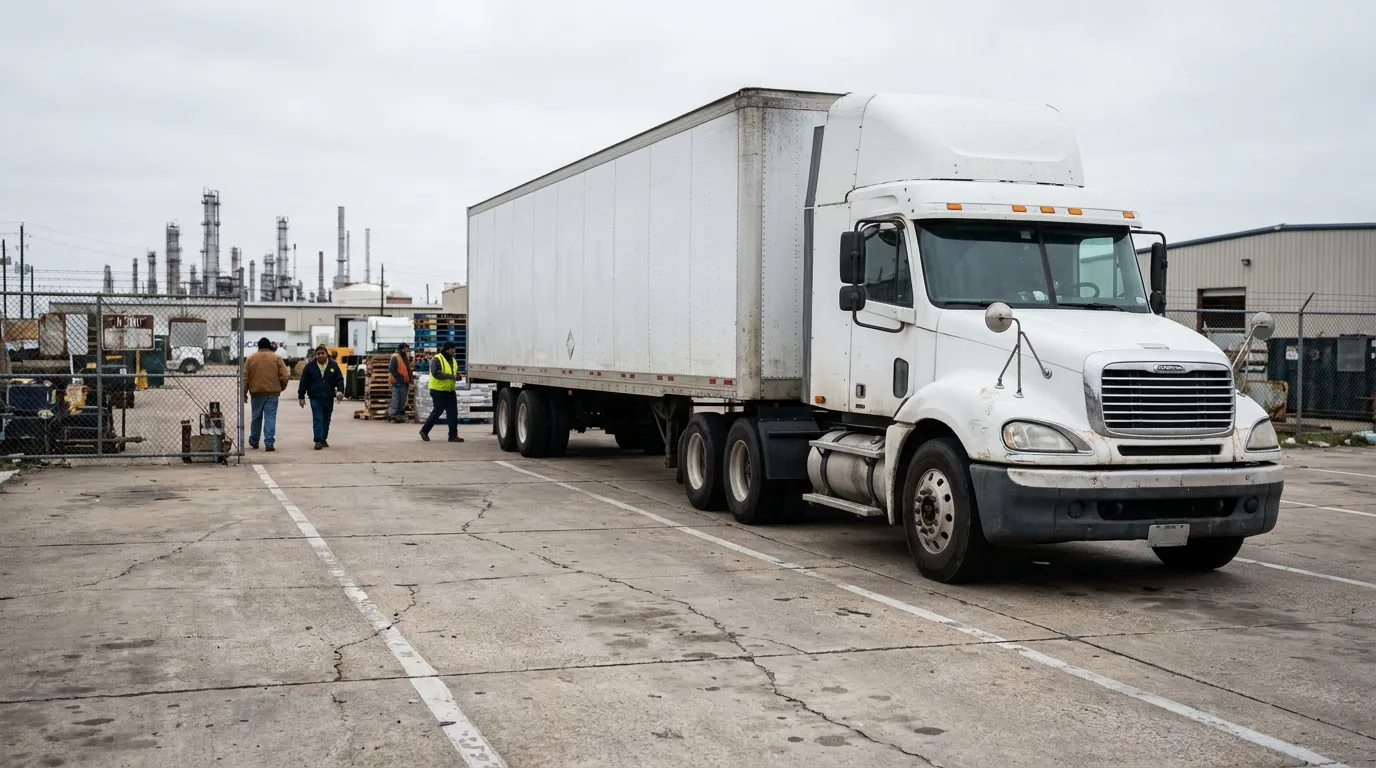
The 2024 Harris County Truck Crash Surge and What It Means for Injured Victims
Key Takeaways: More than 6,000 truck crashes hit Harris County in 2024, reflecting the region’s role as a major freight hub where large commercial vehicles cause catastrophic injuries. Liability can extend beyond the driver to trucking companies, maintenance providers, and parts manufacturers, with Tex. Civ. Prac. & Rem. Code Sec. 72.054 allowing employer accountability. Texas follows modified comparative fault called proportionate responsibility, reducing your recovery by your fault percentage but barring recovery if you exceed 50 percent responsibility. A strict two-year deadline under Sec. 16.003 governs most personal injury and wrongful death claims, and missing it permanently bars recovery. Because evidence like maintenance logs disappears quickly, early action is critical. Working with an experienced local attorney such as Payne Law Firm can help injured Houstonians protect their rights and pursue fair compensation.
More than 6,000 truck crashes struck Harris County roads in 2024, turning ordinary commutes into life-altering events for thousands of families. These collisions involve big rigs, semi-trucks, and commercial vehicles that dwarf passenger cars, often resulting in catastrophic injuries. Understanding the legal facts behind these numbers can help you protect your rights, meet critical deadlines, and pursue deserved compensation.
At Payne Law Firm, we treat our clients like family. If you or a loved one was hurt in a commercial vehicle crash in Texas, call our team at 713-223-5100, reach out through our confidential contact page, or learn more about how Payne Law Firm supports injured Houstonians.
Why the 2024 Truck Crash Numbers Matter to Houston Families
The volume of Harris County truck crashes reflects the region’s role as a major freight hub, where commercial trucks share crowded highways with everyday drivers. When a fully loaded tractor-trailer collides with a passenger vehicle, occupants frequently suffer spinal injuries, traumatic brain injuries, or fatal harm. These truck accident statistics in Houston represent real people navigating medical bills, lost income, and grief.
Behind every crash statistic is a question of accountability that Texas law takes seriously. For a closer look at local data and how it affects claims, read our detailed discussion of Harris County truck crashes and legal help available to victims.
💡 Pro Tip: Keep a personal file of everything related to your crash, including photos, medical records, and the crash report number. Organized documentation strengthens claims.
Who Can Be Held Liable After a Commercial Vehicle Crash in Texas
Liability in a truck crash frequently extends beyond the driver to the employing company. Under Tex. Civ. Prac. & Rem. Code Sec. 72.054, injured victims often pursue both the driver and the trucking company that put that driver on the road.
Identifying every potentially liable party requires thorough investigation. Depending on the facts, responsibility may extend to:
- The truck driver whose conduct may have caused the collision
- The trucking company or motor carrier that employed the driver
- Maintenance or repair entities responsible for the vehicle’s condition
- Manufacturers of defective truck parts or equipment
A truck driver’s record and conduct can become important evidence. Under the state’s commercial driver disqualification rules, a first conviction for driving under the influence, leaving the scene of a collision, or causing a death through negligent operation can trigger a one-year disqualification under Tex. Transp. Code Sec. 522.081(b). Such violations may be relevant when evaluating fault.
How Bifurcated Trials Can Affect Employer Accountability
In qualifying commercial motor vehicle collision cases, a defendant may move for a two-phase, or bifurcated, trial. Under Tex. Civ. Prac. & Rem. Code Sec. 72.052, the first phase decides liability and compensatory damages, while the second phase addresses exemplary, or punitive, damages. This procedure was added in 2021 and amended in 2023.
A finding that the driver was negligent in phase one can support proceeding against the employer in phase two. Under certain circumstances, that may include theories such as negligent entrustment. Outcomes depend heavily on specific evidence.
How Texas Fault Rules Shape Your Houston Truck Accident Attorney Claim
Texas follows a modified comparative fault system called proportionate responsibility, which governs how fault and damages are divided. This framework is codified in Chapter 33 of the Texas Civil Practice and Remedies Code. Under the proportionate responsibility statute, an injured person’s recovery is reduced by their share of fault rather than eliminated.
A critical threshold exists under this system, often called the 51% bar rule. Under Section 33.001, a claimant may not recover damages if their percentage of responsibility is greater than 50 percent. This standard distinguishes Texas from pure comparative negligence states and makes fault allocation a central battleground in many claims.
A common misconception is that Texas uses contributory negligence, which would bar recovery for any fault. In reality, the state applies comparative, proportionate responsibility, meaning your recovery is reduced by your percentage of fault instead of being eliminated entirely. Insurance adjusters sometimes blur this distinction, which is one reason working with a knowledgeable Texas truck accident lawyer can help protect your interests.
💡 Pro Tip: Be cautious about giving a recorded statement to an insurer before understanding your rights. Casual comments can be used to argue you share more fault than you actually do.
| Fault Concept | How It Generally Works in Texas |
|---|---|
| Proportionate responsibility | Damages reduced by your percentage of fault |
| 51% bar rule | No recovery if you are more than 50% at fault |
| Contributory negligence | Not the governing rule in Texas |
Deadlines That Can Make or Break a Houston Truck Crash Claim
Texas law imposes a strict two-year deadline to file most personal injury lawsuits, including truck crash claims. Under Tex. Civ. Prac. & Rem. Code Sec. 16.003(a), a person generally must bring suit for personal injury not later than two years after the day the cause of action accrues, which is typically the collision date. Missing it can permanently bar recovery.
The two-year period also applies to related claims arising from the same crash. Property damage claims fall under this rule, and for crashes resulting in death, the two-year clock generally runs from the date of the injured person’s death under Sec. 16.003(b). Texas also provides a residual four-year limitations period under Sec. 16.051 for certain claims where no other statute expressly applies.
Certain narrow exceptions can affect these deadlines, but courts interpret them narrowly. The two-year rule is subject to statutory exceptions cross-referenced in Sections 16.010, 16.0031, and 16.0045. Tolling or discovery rules may apply only in limited circumstances and are never automatic.
💡 Pro Tip: Do not wait until the deadline nears. Evidence such as truck maintenance logs, driver records, and electronic data can disappear quickly, so early action preserves crucial proof.
Wrongful Death and Derivative Claims
Families who lose a loved one in a fatal truck crash may pursue wrongful death remedies under Texas law. Under the Texas Wrongful Death Act in Chapter 71, Subchapter A, of the Texas Civil Practice and Remedies Code, a wrongful death action generally may be brought by the surviving spouse, children, and parents of a person whose death was caused by another’s wrongful act, neglect, carelessness, unskillfulness, or default.
These cases carry deep emotional weight in addition to complex legal questions. Because wrongful death claims involve strict timing and detailed proof, specific facts shape available remedies. A compassionate approach paired with careful legal analysis can help families feel heard during a painful time.
Why Experience and Local Knowledge Matter for Houston Truck Accident Legal Help
Choosing the right advocate can influence how confidently you move through the claims process. Payne Law Firm brings more than 20 years of service to injured Houstonians, and Attorney Jason E. Payne is Board Certified in Personal Injury Trial Law by the Texas Board of Legal Specialization. He has also been recognized as a Texas Super Lawyer from 2019 through 2026, reflecting a proven track record in serious injury matters.
Our firm is deeply community oriented and committed to explaining the process clearly. A native of Port Arthur, Texas, Attorney Payne built his practice around helping injured Houstonians feel heard, informed, and respected. To understand the scope of representation available, review our resources for anyone seeking a trusted Houston truck accident attorney after a serious collision.
Frequently Asked Questions
How long do I have to file a truck accident claim in Texas?
You generally have two years from the collision date to file a personal injury lawsuit. Under Tex. Civ. Prac. & Rem. Code Sec. 16.003(a), this deadline applies to most truck crash claims, though narrow exceptions may apply. Acting early helps preserve evidence.
Can I recover compensation if I was partly at fault?
In many cases, yes, as long as you were not more than 50 percent at fault. Texas uses proportionate responsibility under Section 33.001, so your recovery is reduced by your percentage of fault. If your fault exceeds 50 percent, the 51% bar rule prevents recovery.
Who can be held responsible in an 18-wheeler accident?
Responsibility may extend beyond the driver to the trucking company and others. Under Tex. Civ. Prac. & Rem. Code Sec. 72.054, an employer can be liable for a driver’s negligence in operating a commercial motor vehicle. Maintenance entities and parts manufacturers may also share fault.
What deadline applies to a wrongful death truck crash claim?
A two-year deadline generally applies, running from the date of death. Under Sec. 16.003(b), the cause of action typically accrues on the death of the injured person. Timing should be confirmed for your specific situation.
Does Texas use contributory negligence?
No, Texas applies comparative, proportionate responsibility instead. This means your recovery is reduced by your share of fault rather than barred for any fault. Insurers sometimes misstate this rule.
Moving Forward After a Harris County Truck Crash
The 2024 truck crash figures underscore how frequently commercial vehicle collisions upend lives across Houston. Texas law provides meaningful protections, from the two-year filing deadline to proportionate responsibility rules and employer liability standards, but each depends on specific facts and strict timing. Informed and timely action offers the strongest footing for pursuing full and fair compensation.
You do not have to face the trucking company or its insurer alone. Payne Law Firm has helped over a thousand injured individuals and families seek the compensation they deserved, and we offer free consultations to answer your questions with compassion and clarity. Call us today at 713-223-5100, start your case through our secure contact form, or visit Payne Law Firm to take the first step toward the support and answers you deserve.