
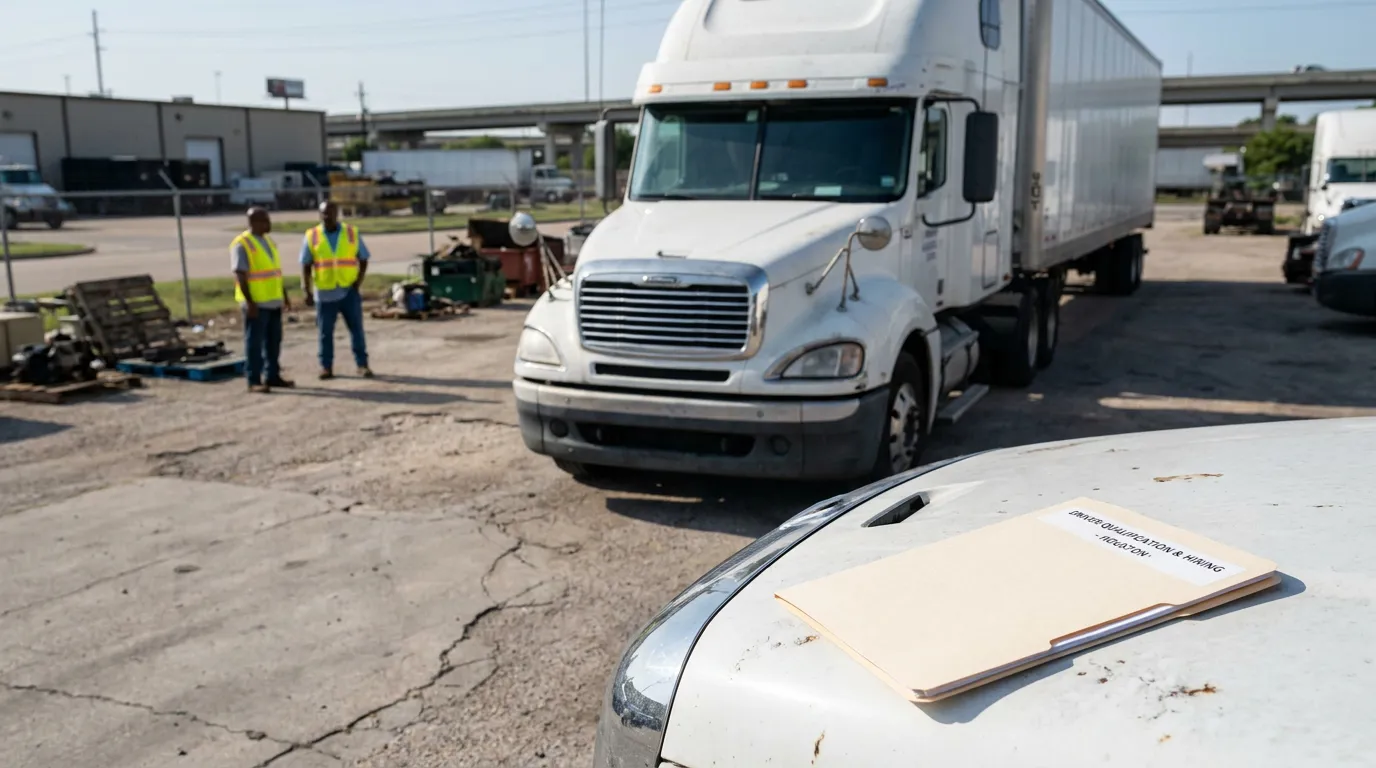
Understanding Employer Liability After a Houston Truck Crash
Key Takeaways: Negligent hiring holds a Houston trucking company responsible for putting a dangerous or unqualified driver behind the wheel when it knew, or should have known, the driver was unfit. Unlike vicarious liability, it focuses on the company’s conduct and doesn’t require the driver to have been acting within the scope of employment. Proving it requires showing a duty to hire competent drivers, a breach of that duty, and causation, supported by the truck driver qualification file, CDL checks, and motor vehicle records. Texas uses a bifurcated trial process that can affect when these employer claims are presented. Related theories like negligent retention frequently accompany it; negligent training and negligent supervision are treated as derivative of negligent hiring under Texas law, though courts require a pattern of frequent, recent incidents rather than a single old violation.
Negligent hiring is a legal theory that holds a trucking company directly responsible when it puts a dangerous or unqualified driver behind the wheel of a commercial vehicle. When an 18-wheeler causes a serious crash in Houston, the driver is rarely the only party at fault. The company that hired that driver may share liability if it knew, or should have known, the driver was unfit. In Texas, this is a form of direct employer liability, separate from vicarious liability.
For families facing catastrophic injuries or the loss of a loved one, understanding this theory matters. It can open the door to additional accountability and compensation. At Payne Law Firm, we believe injured Houstonians deserve clear answers during one of the most stressful chapters of their lives.
If you were hurt in a collision with a commercial truck, the team at Payne Law Firm is ready to listen. Call us at 713-223-5100 or reach out through our contact page for a free, no-pressure consultation where we treat you like family.
💡 Pro Tip: Preserve everything after a crash. Photos, police reports, medical records, and witness names can later help establish how a trucking company hired and managed its driver.
What Negligent Hiring Means Under Texas Law
Negligent hiring is a direct negligence claim that focuses on the trucking company’s own conduct rather than only the driver’s actions. An employer can be liable if it hires someone it knew, or should have known through reasonable care, was reckless, incompetent, or dangerous. This stands apart from vicarious liability, where the employer answers for the driver’s on-the-job conduct.
Under Texas law, a negligent hiring claim generally requires proof of three elements: a duty to hire competent employees, the employer’s breach of that duty, and that the breach proximately caused the damages. An employer breaches this duty when it hires an unfit worker who creates an unreasonable risk of harm to others.
Direct Liability Versus Vicarious Liability
Negligent hiring does not depend on the driver acting within the scope of employment. A vicarious liability claim, by contrast, requires both an employer-employee relationship and a wrongful act that occurred on the job. Both theories can apply in a single Houston semi truck crash, and experienced attorneys often pursue them together to maximize accountability.
This distinction matters because companies sometimes admit the driver was working at the time of the crash, which can affect how negligent hiring and related claims move forward.
How Texas Structures Commercial Truck Negligence Claims
In many commercial motor vehicle collision cases in Texas, a defendant may move for a two-phase, or bifurcated, trial under Tex. Civ. Prac. & Rem. Code Section 72.052, which the court must then grant. In the first phase, the jury decides liability and compensatory damages. The second phase is designated for exemplary (punitive) damages. A first-phase finding that the driver was negligent may serve as a basis to proceed in the second phase on employer-level claims that require a predicate finding of employee negligence, such as negligent entrustment, but negligent hiring and negligent retention do not necessarily require such a predicate and are not specifically enumerated as second-phase claims under the statute. This framework appears in the Texas Civil Practice and Remedies Code under the bifurcated trial statute § 72.052.
This structure creates a procedural hurdle that Houston truck accident attorneys must navigate carefully. Under Tex. Civ. Prac. & Rem. Code § 72.054(b), if an employer stipulates that its employee was acting within the scope of employment, the claimant generally may not present ordinary negligence claims against the employer in the first phase. The order and timing of proof become essential to a successful claim.
💡 Pro Tip: Ask early whether the company will stipulate to scope of employment. That single decision can reshape how your case is presented to the jury.
For a closer look at a related employer theory, our overview of negligent entrustment in a Houston truck crash explains how courts evaluate whether a company handed the keys to an unfit driver.
CDL Checks and the Truck Driver Qualification File
Before issuing a commercial driver’s license, the Texas Department of Public Safety must check the applicant’s driving record as required by federal standards. The Texas Transportation Code requires this review, and federal regulations separately obligate trucking companies to investigate a driver’s CDL and driving history before hiring, including the motor vehicle record inquiry required under 49 C.F.R. § 391.23. You can read the relevant provisions, including the requirement to check the applicant’s driving record, in Tex. Transp. Code § 522.028.
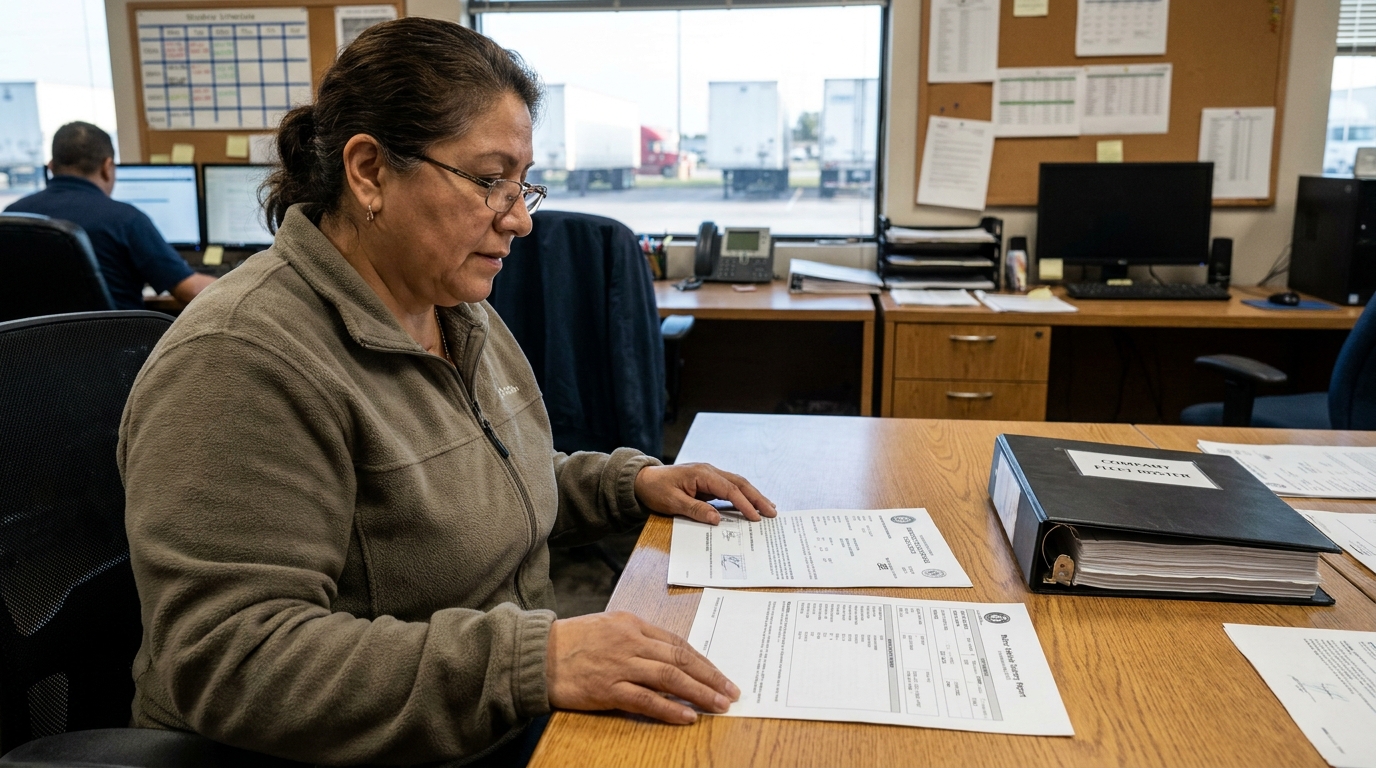
A CDL application also carries mandatory certifications that companies should verify during hiring. Under Tex. Transp. Code § 522.021(a)(5), the application must include certifications required by 49 C.F.R. § 383.71(a), covering the driver’s operating history, prior disqualifications, and medical certifications. A company that skips reviewing these records may face exposure for negligent hiring. These documents typically live in the truck driver qualification file, a central focus of investigation.
What a Diligent Hiring Process Looks Like
Trucking companies that perform a careful CDL driver background check are often in a stronger position to defend themselves. Investigators in negligent hiring cases generally look for whether the company completed steps like these:
- Verifying the CDL and reviewing the motor vehicle record (MVR)
- Conducting a background check and pre-employment drug screening
- Reviewing the driver’s operating history and prior disqualifications
- Confirming required medical and safety certifications
Fleet ownership arrangements can affect these duties. In some cases, one company hires drivers while another runs background checks and MVR reviews, creating shared but distinct responsibilities. Sorting out who owed what duty is often a central question.
Negligent Retention, Training, and Supervision
Negligent hiring rarely travels alone, and related claims frequently accompany it in trucking cases. Employers may also face claims labeled negligent training or negligent supervision; however, the Texas Supreme Court held in Werner Enterprises, Inc. v. Blake (No. 23-0493, decided June 27, 2025) that negligent training and negligent supervision are not recognized as independent theories of tort liability and, if viable at all, are derivative of negligent hiring and depend on the employee’s underlying negligence being a proximate cause of the injury. While these labels conceptually target different stages of the employment relationship, Texas courts treat them as related, derivative claims rather than fully distinct legal theories.
Negligent retention focuses on what happened after the driver was hired. Texas law requires the department to check a driver’s record before issuing a CDL under Tex. Transp. Code § 522.028, and CDL renewal procedures are governed by § 522.053. While a company that continued employing a driver with known disqualifying issues may face liability under negligent retention principles, § 522.053(d) explicitly mandates that the department shall check the applicant’s driving record before renewing a commercial driver’s license as required by 49 C.F.R. § 383.73; however, that obligation falls on the state Department of Public Safety rather than on the employer, which is why a negligent retention truck driver claim often hinges on what the company independently learned about a driver’s record over time.
💡 Pro Tip: Records can disappear. Sending a prompt preservation request helps protect qualification files, training logs, and supervision records before they are routinely deleted.
How an 18 Wheeler Accident Lawyer Houston Trusts Builds the Case
Proving negligent hiring takes more than showing the driver had any blemish on their record. Texas courts have held that proof of a single prior traffic violation is grossly inadequate to establish a driver’s incompetency or recklessness. Decisions finding recklessness or incompetence typically involve frequent and recent citations or driving incidents, not isolated old violations.
This high bar is why investigation strategy matters. A seasoned 18 wheeler accident lawyer Houston families rely on will often work with accident reconstructionists and medical professionals to connect the company’s hiring failures to the harm suffered.
| Claim Type | Core Focus | Common Evidence |
|---|---|---|
| Negligent Hiring | Decision to hire an unfit driver | Qualification file, MVR, background check |
| Negligent Retention | Keeping an unfit driver | Renewal records, post-hire incidents |
| Negligent Training | Inadequate preparation | Training logs, safety policies |
| Vicarious Liability | On-the-job conduct | Employment records, dispatch logs |
For broader information, our Houston truck accident attorney team maintains a dedicated resource page on commercial vehicle claims. With more than 20 years of service, Attorney Jason E. Payne, Board Certified in Personal Injury Trial Law by the Texas Board of Legal Specialization, has helped over a thousand injured individuals and families pursue the compensation they deserved.
Frequently Asked Questions
Is negligent hiring different from blaming the truck driver?
Yes. Negligent hiring targets the trucking company’s decision to put an unfit driver on the road. It is a direct negligence theory and doesn’t depend on the driver acting within the scope of employment.
What evidence helps prove negligent hiring in Houston?
The truck driver qualification file is often central. This includes the CDL verification, MVR, background check, and required certifications under 49 C.F.R. § 383.71(a). Courts look for a pattern of frequent and recent incidents rather than one old violation.
Can a company avoid liability by admitting the driver was on the job?
Sometimes the timing of claims changes. Under Tex. Civ. Prac. & Rem. Code § 72.054, a scope-of-employment stipulation may limit certain employer negligence claims in the first phase of a bifurcated trial.
What is the difference between negligent hiring and negligent retention?
Hiring focuses on the decision to bring a driver on. Retention focuses on keeping a driver after the company learned of disqualifying problems, including issues surfacing at CDL renewal under Tex. Transp. Code § 522.053, which requires the department to check the applicant’s driving record before renewing a commercial driver’s license; however, that statutory duty rests with the Department of Public Safety rather than with the employer.
Do I need to identify every liable party before calling a lawyer?
No. Determining liability is part of the legal process. A consultation can help identify drivers, employers, and other potentially responsible parties based on your crash.
Protecting Your Right to Compensation After a Big Rig Crash
Negligent hiring claims can add a powerful layer of accountability when a Houston trucking company puts an unsafe driver on the road. By examining the CDL background check, the qualification file, and how the company hired, trained, retained, and supervised its driver, injured people may uncover evidence that strengthens their pursuit of full compensation. Because these claims are fact-sensitive and shaped by Texas statutes and court decisions, careful and timely investigation is essential.
If you or someone you love was hurt in a commercial truck crash, the compassionate team at Payne Law Firm is here to help you feel heard, informed, and respected. Call us today at 713-223-5100 or start your free consultation online, and let our community-rooted firm fight for the answers and accountability you deserve.