
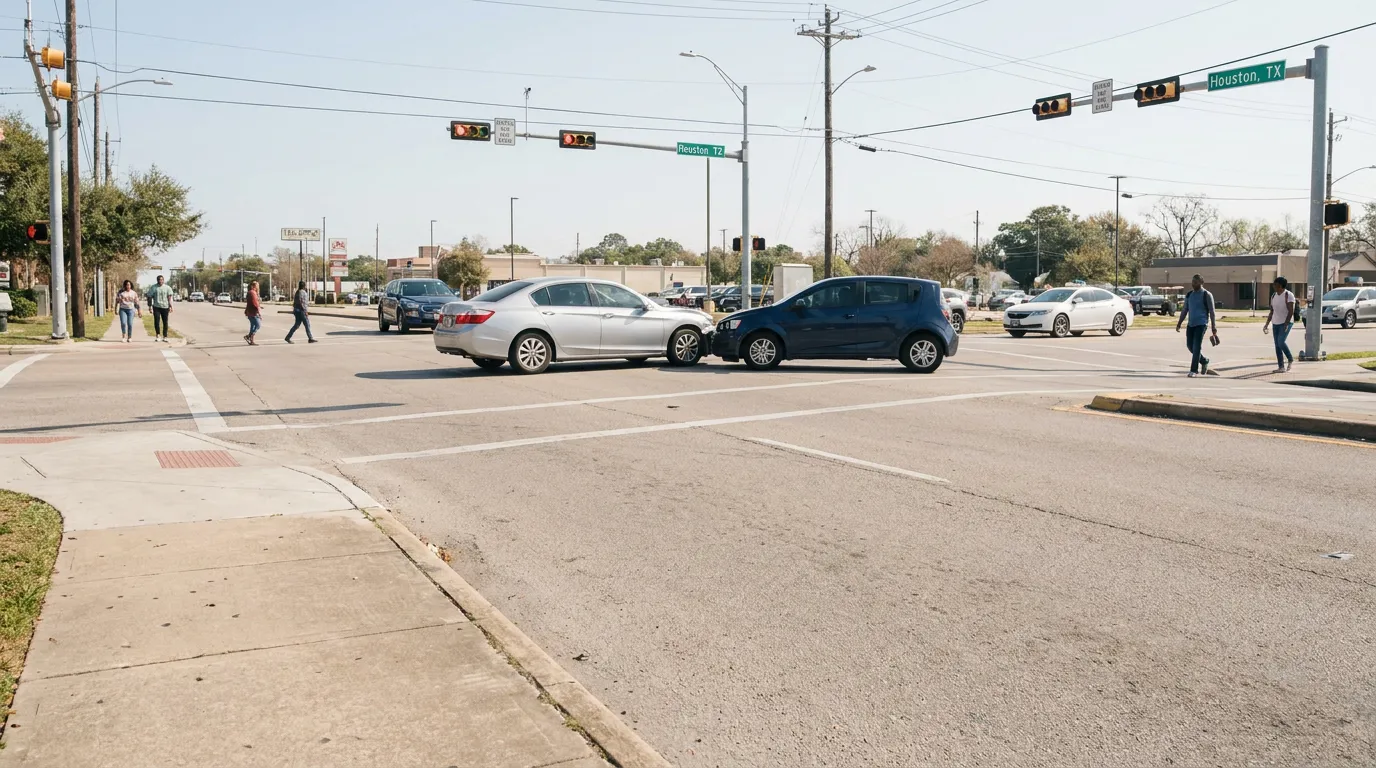
Understanding Why Side-Impact Crashes Are So Common at Houston Intersections
Key Takeaways: T-bone accidents occur when one vehicle’s front strikes another’s side, typically at intersections where a driver fails to yield right-of-way. The five most common Houston scenarios are left-turn drivers misjudging oncoming traffic (§ 545.152), running red lights (§ 544.007), failing to stop at flashing red signals (§ 544.008), failure to yield at stop/yield signs (§ 545.153), and confusion at uncontrolled intersections (§ 545.151). Texas right-of-way statutes create presumptions of fault, making the intersection’s traffic control central to liability. Vehicle sides offer less protection, causing serious injuries like fractures, spinal damage, and head trauma. Proving fault requires showing duty, breach, causation, and damages. Victims generally have two years to file a claim under Texas law.
T-bone accidents happen when the front of one vehicle strikes the side of another, usually at an intersection where one driver fails to honor right-of-way. Fault typically depends on which driver was legally required to stop or yield and did not. Determining t bone accident fault in Houston starts with identifying the traffic control at the intersection and the specific Texas law governing it.
If you or a loved one was hurt in a side-impact crash, the team at Payne Law Firm is here to explain your options. Reach a Houston car accident attorney by calling 713-223-5100 or through our online contact page to schedule a free consultation.
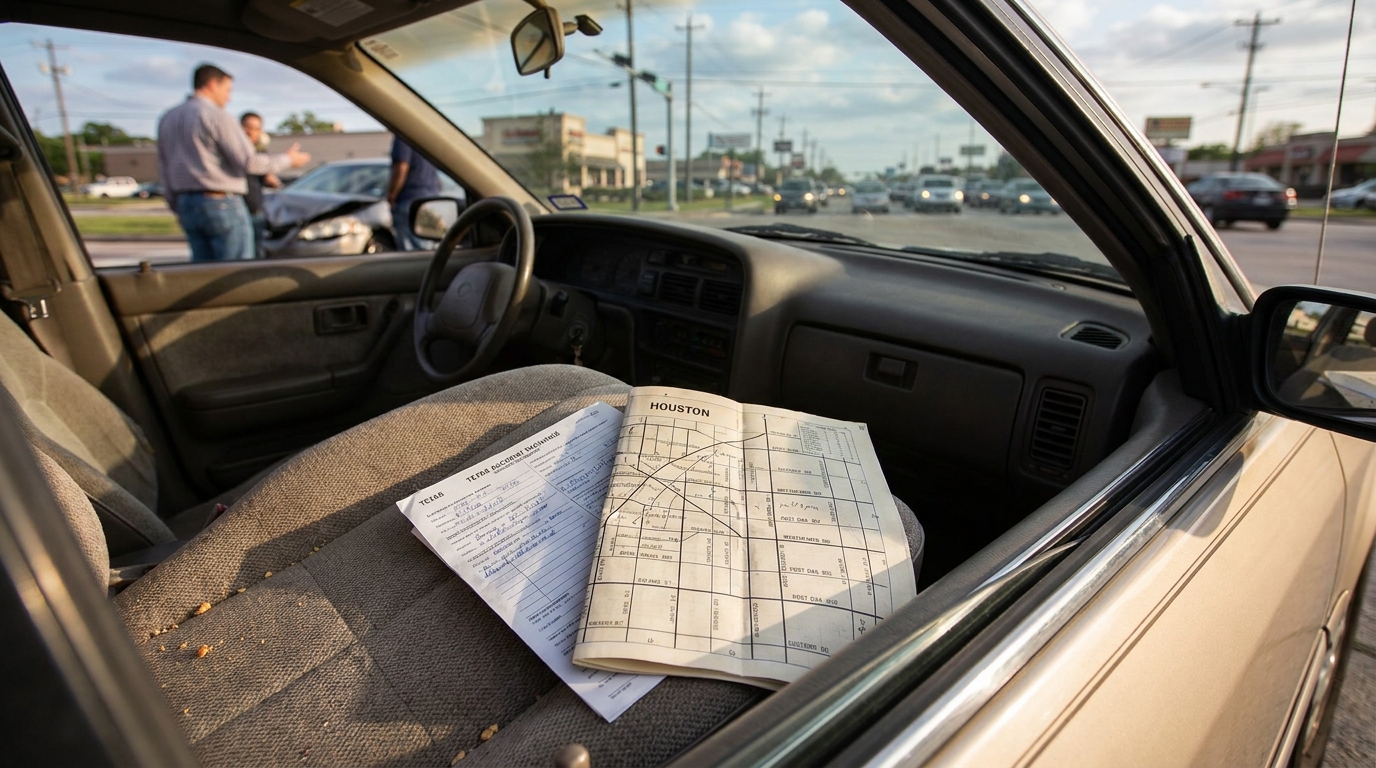
Why T-Bone Collisions Cause Such Serious Injuries
Side-impact crashes are dangerous because vehicle sides offer far less protection than fronts or rears. With less structural protection, people in the broadsided vehicle may suffer broken bones, spinal damage, and head trauma.
The data reinforces these dangers. According to the National Safety Council, angle collisions cause the greatest number of deaths, about 8,400 in 2024. Multi-vehicle wrecks are overrepresented in injury statistics, with collisions between motor vehicles representing 79% of injuries and 74% of injury crashes.
💡 Pro Tip: After any side-impact crash, seek medical evaluation even if you feel fine. Some injuries may not produce symptoms until days later, and prompt records help connect your injuries to the collision.
Five Common Side-Impact Collision Causes on Houston Roads
Most T-bone accident scenarios in Houston trace back to a handful of recurring driver errors at intersections. Each typically involves a violation of a Texas right-of-way rule, which can be central to proving negligence.
1. Left-Turn Drivers Who Misjudge Oncoming Traffic
A left turn accident in Houston is one of the most common ways a T-bone crash occurs. Texas law places the burden on the turning driver to wait for a safe gap. Under Texas Transportation Code § 545.152, an operator turning left at an intersection shall yield right-of-way to a vehicle approaching from the opposite direction that is in the intersection or so close as to be an immediate hazard. A driver who turns across traffic and misjudges speed or distance is frequently found at fault, because violating this statutory duty can serve as evidence of negligence.
2. Drivers Who Run a Red Light
Running a steady red signal is among the clearest bases for establishing fault in a red light crash in Houston. Under Texas Transportation Code § 544.007(d), an operator facing only a steady red signal shall stop at a clearly marked stop line, and a vehicle not turning shall remain standing until an indication to proceed is shown. When a driver ignores that duty and broadsides a vehicle lawfully crossing the intersection, liability is often straightforward.
3. Drivers Who Ignore a Flashing Red Signal
Malfunctioning or flashing traffic signals create a common T-bone hazard at Houston intersections. Many drivers wrongly treat a flashing red light as a yield rather than a full stop. Texas Transportation Code § 544.008(a) requires that the operator of a vehicle facing a flashing red signal shall stop, and the right to proceed is subject to the rules applicable after stopping at a stop sign. Failing to come to a complete stop can establish fault in a resulting side-impact collision.
💡 Pro Tip: If a traffic signal was malfunctioning or flashing at the time of your crash, note the date, time, and intersection. This information may matter for both fault and any signal maintenance claim.
4. Failure to Yield at Stop and Yield Signs
A driver who blows through a stop or yield sign often causes a failure to yield T-bone crash. Under Texas Transportation Code § 545.153(d), if an operator required to yield is involved in a collision in an intersection after driving past a yield sign without stopping, the collision is prima facie evidence that the operator failed to yield right-of-way. That presumption is rebuttable but provides powerful evidence in a personal injury claim.
5. Confusion at Uncontrolled Intersections
Uncontrolled intersections, where no sign or signal directs traffic, are frequent sites of Texas intersection crash types. These crashes often hinge on who entered first and who was approaching from the right. Texas Transportation Code § 545.151(f) provides that an operator required to stop and yield right-of-way at an intersection who is involved in a collision is presumed not to have yielded. This legal presumption is rebuttable but remains a critical factor in determining liability.
Understanding how T-bone crashes compare with other collisions provides context. According to a widely referenced overview of accident types, head-on crashes are among the most devastating but also least common, while rear-end collisions are much more common but often less damaging because they tend to occur at lower speeds.
How Establishing T Bone Accident Fault Houston Victims Rely On Works
Proving fault in a side-impact crash generally requires showing duty, breach, causation, and damages. Texas right-of-way statutes help establish the duty and breach elements, but specific facts of each crash still matter. Police reports, witness statements, signal timing, and vehicle damage patterns all play a role, which is why preserving evidence early is critical. To understand the evidence and legal standards in detail, review our guide on how to prove fault in a T-bone crash.
Reporting the crash to police is also a legal duty in many situations. Texas Transportation Code § 550.026(a) requires the operator of a vehicle involved in a collision resulting in injury, death, or vehicle damage severe enough that the vehicle cannot be normally and safely driven to immediately give notice to the local police department if the collision occurred in a municipality.
💡 Pro Tip: Ask the responding officer how to obtain a copy of the crash report. This document frequently contains diagrams, statements, and observations supporting your version of events.
Drivers who leave the scene face serious consequences beyond civil liability. Under Texas Transportation Code § 550.021, the operator of a vehicle involved in a collision that results or is reasonably likely to result in injury or death shall immediately stop at the scene, and failing to stop when a collision results in death is a felony of the second degree. At-fault drivers who fail to yield may also face significant fines under Texas Transportation Code § 542.4045.
The table below summarizes several scenarios and the governing statute.
| Scenario | Common Cause | Governing Statute |
|---|---|---|
| Left-turn crash | Turning across oncoming traffic | § 545.152 |
| Red light crash | Entering on a steady red | § 544.007 |
| Flashing signal crash | Not stopping at flashing red | § 544.008 |
| Stop/yield sign crash | Failing to yield | § 545.153 |
| Uncontrolled intersection | Right-of-way confusion | § 545.151 |
Protecting Your Right to File a Claim on Time
Texas sets firm deadlines for pursuing compensation after a crash, so acting promptly matters. The statute of limitations for personal injury claims, including car accidents, is two years from the date of injury under Texas Civil Practice and Remedies Code § 16.003. Property damage claims also carry a two-year statute of limitations.
That two-year window is the default rule, but it is not absolute. Courts interpret exceptions narrowly and apply them only in limited circumstances. Administrative or government claim deadlines can be shorter, so speaking with a knowledgeable Houston car accident attorney can help you confirm which deadline governs your claim before time runs out.
The following steps can help protect your claim after a side-impact crash:
- Document the scene with photos of vehicle positions, signals, and signs.
- Gather names and contact information for any witnesses.
- Keep all medical records, bills, and proof of lost wages.
- Avoid giving a recorded statement to an insurer before seeking advice.
Frequently Asked Questions
- Who is usually at fault in a T-bone accident in Houston?
Fault typically falls on the driver who failed to obey a right-of-way rule. That may be a left-turning driver, a driver who ran a red light, or one who ignored a stop or yield sign. Texas statutes create presumptions of fault in several scenarios, so the specific intersection control often determines liability.
- What if I was partially at fault for the crash?
Texas follows a modified comparative fault system, so partial fault does not automatically bar recovery. Your compensation may be reduced by your percentage of responsibility, and recovery is barred only if your share of fault exceeds 50 percent.
- How long do I have to file a claim after a T-bone crash?
Generally, you have two years from the date of injury under Texas law. Some exceptions may extend or shorten that period, but courts apply them narrowly. Confirm your deadline early rather than assume an extension applies.
- Do I have to report a T-bone accident to the police?
Texas law requires reporting crashes involving injury, death, or disabling vehicle damage. In Houston, that means notifying the Houston Police Department. A police report can serve as important evidence supporting your claim.
- What injuries are common in side-impact collisions?
Side-impact crashes frequently cause injuries because vehicle sides offer limited protection. These range from soft-tissue injuries to fractures and head trauma. Prompt medical care helps both your recovery and your potential claim.
Moving Forward After a Houston T-Bone Crash
Understanding the most common T-bone accident scenarios in Houston can help you recognize how fault is established and why timely action matters. From left-turn errors to red light violations and failure-to-yield collisions, Texas right-of-way statutes often shape who bears responsibility. Still, every case turns on its own facts, and presumptions of fault can be challenged. For broader information on these claims, our team is recognized for handling cases as a dedicated Houston car accident attorney for injured families across the community.
At Payne Law Firm, we have served injured Houstonians for more than 20 years and have helped over a thousand individuals and families pursue the compensation they deserved. If you were hurt in a side-impact crash, reach out to Payne Law Firm for compassionate, personalized support. Call us at 713-223-5100 or use our secure contact form to request your free consultation, because we treat our clients like family and fight for people who feel overlooked.