
Key Takeaways:
T-bone (side-impact) car accidents in Houston often result in severe injuries because the side of a vehicle offers less structural protection than the front or rear. Proving fault requires establishing duty of care, breach, causation, and damages under Texas negligence law. Key evidence includes photographs, eyewitness statements, police reports, and intersection data. Texas follows a modified comparative negligence rule with a 51% bar, meaning you may only recover compensation if you are 50% or less at fault. The statute of limitations for personal injury claims in Texas is two years under Texas Civil Practice and Remedies Code § 16.003(a), so acting quickly is critical.
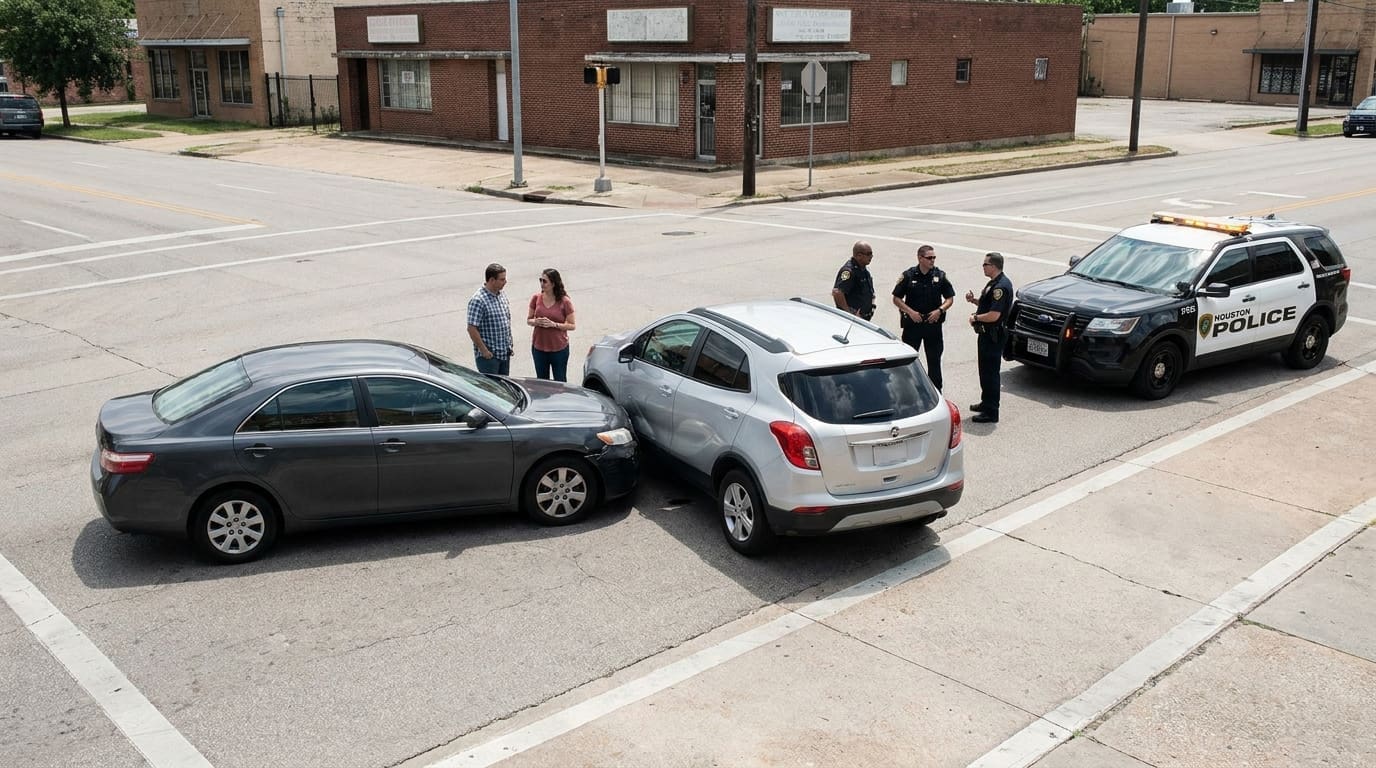
T-bone collisions, also known as side-impact accidents, are among the most dangerous crashes on Houston’s busy roads. These accidents frequently occur at intersections when one driver fails to yield the right of way, running a red light or stop sign and striking the side of another vehicle. Since the side of a car has less structural protection, occupants in the broadsided vehicle often suffer serious injuries, including traumatic brain injuries, broken bones, and spinal cord damage. Understanding how fault works in Texas can help you take the right steps toward recovering compensation you deserve.
If you need guidance after a t-bone car accident in Houston, Payne Law Firm is here to help. Call 713-223-5100 for a free consultation, or reach out to our team online to get started today.
Proving Fault After a T-Bone Car Accident in Houston
To hold the at-fault driver accountable for a t-bone crash in Houston, you must establish four elements of negligence under Texas law. These elements form the foundation of every car accident claim in the state.
- Duty of care: Every driver owes a legal duty to operate their vehicle safely and follow traffic laws.
- Breach of care: You must show the other driver violated that duty, such as by running a red light or failing to yield.
- Causation (harm): You must demonstrate the breach directly caused the collision and your injuries.
- Damages: You must prove you suffered actual losses, including medical expenses, lost wages, or pain and suffering.
Understanding these elements early helps you and your attorney build a stronger claim. In many t-bone accidents at intersections, the driver who entered against a traffic signal or without yielding often bears primary responsibility, but the specific facts of your case will always matter.
Key Evidence That Supports Your Claim
Gathering the right evidence is one of the most important steps after a side-impact collision in Houston. Photographs of the damage, statements from eyewitnesses, and police reports are all relevant. Intersection cameras, traffic signal timing records, and cell phone data may also help establish what happened before the crash.
💡 Pro Tip: If physically able, use your phone to photograph the vehicles, intersection, traffic signals, skid marks, road conditions, and visible injuries. This evidence can be difficult or impossible to collect later.
Exchange information with the other driver but avoid admitting fault at the scene. Admissions made to the other driver or their insurance company will likely weaken your position. Let the evidence and investigation determine responsibility.
Why Intersection Evidence Matters in Houston
Houston’s sprawling network of intersections creates numerous opportunities for failure-to-yield accidents, a common cause of t-bone collisions. Busy corridors throughout Harris County can make it difficult to determine what happened without thorough evidence review. Traffic camera footage, accident reconstruction analysis, and witness testimony all help piece together the sequence of events.
💡 Pro Tip: Write down names and contact information of any witnesses at the scene immediately. Witness memories fade quickly, and their statements can be critical to proving fault.

Texas Is an At-Fault State: What That Means for Your T-Bone Accident Claim
Texas operates as an at-fault state for car accidents, meaning the driver who caused the collision is responsible for resulting damages. After a t-bone crash, you would typically file a claim against the at-fault driver’s liability insurance. Some states use a no-fault system, but Texas requires victims to pursue recovery through the responsible party. However, Texas does allow optional personal injury protection (PIP) coverage as an add-on, which can provide extra no-fault insurance benefits regardless of who caused the crash.
This at-fault system means proving negligence is central to your claim. Without establishing the other driver’s fault, you may struggle to recover compensation for medical bills, lost income, and other damages.
How Shared Fault Affects Your Recovery Under Texas Law
Texas follows a modified comparative negligence rule known as the 51% bar rule. Under this framework, you may only receive compensation if you are 50% or less at fault. If a jury or insurance adjuster determines you share responsibility, your compensation will be reduced by your percentage of fault.
| Your Percentage of Fault | Effect on Your Recovery |
|---|---|
| 0% | Full compensation available |
| 1%, 50% | Compensation reduced by your fault percentage |
| 51% or more | No recovery permitted |
When multiple parties share fault, juries apportion responsibility among all defendants. A plaintiff has only one opportunity to obtain compensation, so it’s important to identify and pursue claims against all potentially responsible parties. For example, in a multi-vehicle chain reaction accident at a Houston intersection, more than one driver may have contributed to the collision.
💡 Pro Tip: Even if you think you share some fault, don’t assume your case is hopeless. Many t-bone accident victims who were partially at fault still recover significant compensation under Texas’s comparative negligence rules. Consult an attorney to evaluate your circumstances.
The Statute of Limitations for T-Bone Accident Claims in Texas
Under Texas Civil Practice and Remedies Code § 16.003(a), you generally have two years from the date of injury to file a personal injury lawsuit. The same two-year deadline applies to property damage claims. Missing this deadline typically results in case dismissal, regardless of your evidence’s strength.
Exceptions That May Extend the Filing Deadline
In limited circumstances, the statute of limitations may be tolled, or paused, but courts interpret these exceptions narrowly. Tolling may apply in cases involving minors, mentally incapacitated individuals, fraudulent concealment by the defendant, or when the defendant is absent from the state. For wrongful death claims, Texas Civil Practice and Remedies Code § 16.003(b) provides that the two-year period runs from the date of death, not the accident. Don’t assume any tolling exception applies without consulting an attorney, as Texas statute of limitations framework carries meaningful nuance.
💡 Pro Tip: Don’t wait until close to the two-year deadline. Critical evidence, such as surveillance footage and witness memories, deteriorates over time. The sooner you begin building your case, the stronger your position.
Steps to Protect Your Rights After a Houston Intersection Accident
Taking the right steps immediately after a t-bone car accident can significantly impact your claim’s outcome. Here are practical actions that may strengthen your case:
- Request a copy of the police report filed at the scene
- Seek medical attention promptly, even if injuries seem minor
- Document everything, including medical visits, missed work, and expenses
- Avoid giving recorded statements to the other driver’s insurance company without first speaking to an attorney
- Keep a journal of your symptoms, pain levels, and how the injury affects daily life
An experienced Houston car accident attorney can help you navigate insurance tactics and protect your right to fair compensation. Insurance companies often move quickly to settle claims for less than they’re worth.
💡 Pro Tip: If the insurance company contacts you shortly after the accident with a settlement offer, be cautious. Early offers often fail to account for future medical treatment, ongoing pain, or the full extent of lost earnings.
Frequently Asked Questions
1. Who is typically at fault in a t-bone accident at a Houston intersection?
In many cases, the driver who failed to yield the right of way or ran a red light or stop sign bears primary fault. However, fault depends on specific facts of each accident, including traffic signal timing, witness accounts, and available camera footage.
2. What types of evidence help prove fault in a side-impact collision in Houston?
Photographs of vehicle damage, eyewitness statements, police reports, traffic camera footage, cell phone records, and accident reconstruction analysis can all help establish what happened. Preserving this evidence early is critical to building a strong claim.
3. Can I still recover compensation if I was partially at fault for the t-bone accident?
Under Texas’s modified comparative negligence rule, you may recover compensation as long as you are 50% or less at fault. Your recovery will be reduced by your percentage of fault. If you are 51% or more at fault, you are generally barred from recovering damages.
4. How long do I have to file a lawsuit after a t-bone car accident in Texas?
Texas Civil Practice and Remedies Code § 16.003(a) generally provides a two-year statute of limitations for personal injury and property damage claims. Limited exceptions may apply, but courts interpret tolling provisions narrowly. Consulting an attorney promptly helps ensure you don’t miss critical deadlines.
5. Should I talk to the other driver’s insurance company after a t-bone crash?
Be very cautious about providing statements to the other driver’s insurer without first consulting an attorney. Admissions of fault or even casual comments can weaken your claim. An attorney can communicate with the insurance company on your behalf.
You Do Not Have to Navigate This Alone
A t-bone accident can turn your life upside down, leaving you dealing with painful injuries, mounting medical bills, and uncertainty about your future. You deserve compassionate, personalized legal support from a team that treats clients like family. Attorney Jason Payne, a native of Port Arthur, Texas, built his practice around helping injured Houstonians during stressful moments of their lives. With over 20 years of service, Board Certification in Personal Injury Trial Law by the Texas Board of Legal Specialization, and recognition as a Texas Super Lawyer from 2019 through 2025, he brings a proven track record to every case. You can also explore our car accident resources for more information.
Payne Law Firm offers free consultations and is ready to listen to your story. Call 713-223-5100 or contact us today to discuss your t-bone accident claim with a team that will fight for the compensation you deserve.