
Yes, passengers injured in rideshare accidents in North Carolina may claim punitive damages under certain circumstances. Unlike compensatory damages that reimburse medical bills, lost wages, and pain, punitive damages serve a different purpose. Under North Carolina General Statutes Chapter 1D, punitive damages punish defendants for egregiously wrongful acts and deter similar future conduct.
However, securing these damages in a Charlotte Uber or Lyft injury claim requires meeting a higher legal standard than ordinary negligence. Riders injured in a rideshare crash can go over their options with a Charlotte rideshare accident lawyer. Attorney Jason E. Payne’s bar admissions include the State Bar of North Carolina, 2020.
Under § 1D-25(a), punitive damages are determined separately from compensation for other damages. Additionally, under § 1D-30, defendants may request bifurcated trials so compensatory damages are resolved before punitive damages are considered.
Not every rideshare accident in North Carolina supports a claim for punitive damages, but certain types of driver misconduct can unlock this additional category of compensation.
The Legal Standard for Punitive Damages

Under N.C.G.S. Chapter 1D, punitive damages may be awarded if the claimant proves fraud, malice, or willful or wanton conduct by clear and convincing evidence, as stated in § 1D-15(a). Punitive damages require proof of aggravating factors beyond ordinary negligence.
Willful or wanton conduct in North Carolina is more than gross negligence. Under N.C. Gen. Stat. § 1D-5(7), it requires a finding that the defendant consciously and intentionally disregarded and was indifferent to the rights and safety of others, and knew or should have known the conduct was reasonably likely to result in injury.
Under N.C. Gen. Stat. § 1D-15(c), punitive damages cannot be awarded solely on vicarious liability. These claims are complex and fact-dependent, making legal representation critical.
Pro Tip: When you believe your Lyft driver was impaired, get the police report as early as you can. Toxicology results and officer observations documented in that report can be powerful evidence for a punitive damages claim.
A passenger’s own conduct can come up too; see the contributory negligence rule for rideshare passengers.
Timing is another piece of the puzzle, covered in our guide to the filing deadline for Charlotte Lyft claims.
North Carolina’s Cap on Punitive Damages
North Carolina places a statutory cap on punitive damages, but a key exception exists for impaired driving. Under N.C. Gen. Stat. § 1D-25(b), punitive damages generally cannot exceed three times compensatory damages or $250,000, whichever is greater. However, under § 1D-26, this cap does not apply when the defendant’s actions would give rise to a driving while impaired offense. For passengers injured by intoxicated rideshare drivers, this exception can substantially increase potential recovery.
Our page on drunk driving accident claims in Charlotte covers those crashes in more depth.
An important procedural safeguard protects injured claimants during trial. Under § 1D-25(c), the statutory cap must not be made known to the trier of fact through voir dire, evidence introduction, argument, or jury instructions. This ensures the trier of fact focuses on conduct severity rather than working backward from a predetermined limit.
A separate limit applies when the claim reaches the rideshare company itself. For corporations like TNCs, their officers, directors, or managers must have participated in or condoned the conduct giving rise to punitive damages.
What Conduct Can Lead to Punitive Damages in a Rideshare Crash
Passengers may pursue punitive damages when the at-fault driver’s conduct meets the willful or wanton standard. Passengers have no control over the vehicle and depend entirely on the driver’s judgment. When a rideshare driver engages in conduct such as driving while impaired, excessive speeding, or intentionally running red lights, injured passengers may have strong grounds to seek punitive damages.
One of those situations gets its own article: suing after a rideshare driver runs a red light.
Other crash victims, including occupants of other vehicles, pedestrians, and cyclists, can also pursue punitive damages under the same framework. The key factor is not the claimant’s relationship to the rideshare vehicle but the nature of the defendant’s conduct.
If you were in the other vehicle, our page on car crash claims in Charlotte explains how those cases work.
Examples of Conduct That May Qualify
Certain behaviors frequently arise in rideshare punitive damage claims:
- Getting behind the wheel drunk or on drugs
- Extreme speeding significantly above the posted limit
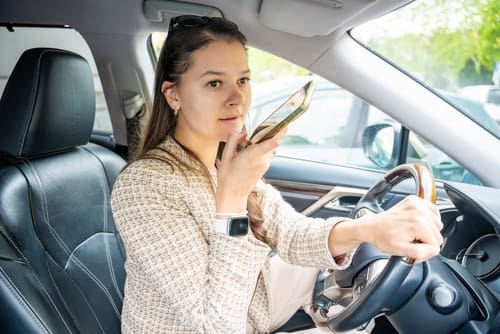
- Texting, streaming video, or prolonged phone use while driving
- Driving the wrong way on a one-way street or highway
- Continuing to drive after experiencing obvious signs of medical impairment or extreme fatigue
- Driving away from the crash instead of stopping
A driver who fails to check a mirror may be negligent, while a driver who knowingly speeds through a red light while intoxicated could meet the willful or wanton threshold. Texting while driving may support a punitive damages claim if evidence shows the driver’s phone use was prolonged, deliberate, and created conscious disregard for passenger safety.
Pro Tip: Start building a record the moment a rideshare crash is over. Screenshots of your ride confirmation, the driver’s name, vehicle information, and the route taken can all become critical evidence if your case involves potential punitive damages.
Pro Tip: Rideshare companies maintain detailed driver activity records, including hours logged, routes taken, and trip frequency. Your attorney can request these through discovery to demonstrate fatigue or reckless scheduling patterns.