

The Paper Trail Behind Every Commercial Truck Driver
Key Takeaways: Federal regulation 49 C.F.R. § 391.51 requires motor carriers to maintain a driver qualification file containing the employment application, prior employer investigations, motor vehicle records, annual reviews, road test certificate, and medical certification. Gaps in that file can show a Houston attorney that the carrier may have placed an unvetted driver on the road, potentially supporting negligent hiring or supervision claims. Chapter 72 of the Texas Civil Practice and Remedies Code, particularly § 72.054(c), may allow this evidence to reach the jury even in bifurcated trials when otherwise admissible. Texas applies proportionate responsibility under § 33.001, where recovery is barred when a claimant’s responsibility exceeds 50 percent, making documentary proof of carrier noncompliance critical to fault percentages. Personal injury and wrongful death claims generally fall under the two-year period in § 16.003, and carrier retention schedules mean records may be purged before suit is filed. Prompt preservation letters and early attorney involvement help keep this evidence available.
After a serious collision with an 18-wheeler, some of the most persuasive proof of fault may sit in a filing cabinet at the trucking company’s terminal. Federal regulations require motor carriers to maintain a personnel file for every driver, and Texas law provides a path for injured people to place that file before a jury. A Houston truck accident lawyer may use those documents to explore whether the driver should have been dispatched at all.
If you or someone you love was hurt in a commercial truck crash, the team at Payne Law Firm can help you understand what records may exist and how to preserve them. Call 713-223-5100 or request your free consultation to talk with an attorney who will treat your family like our own.
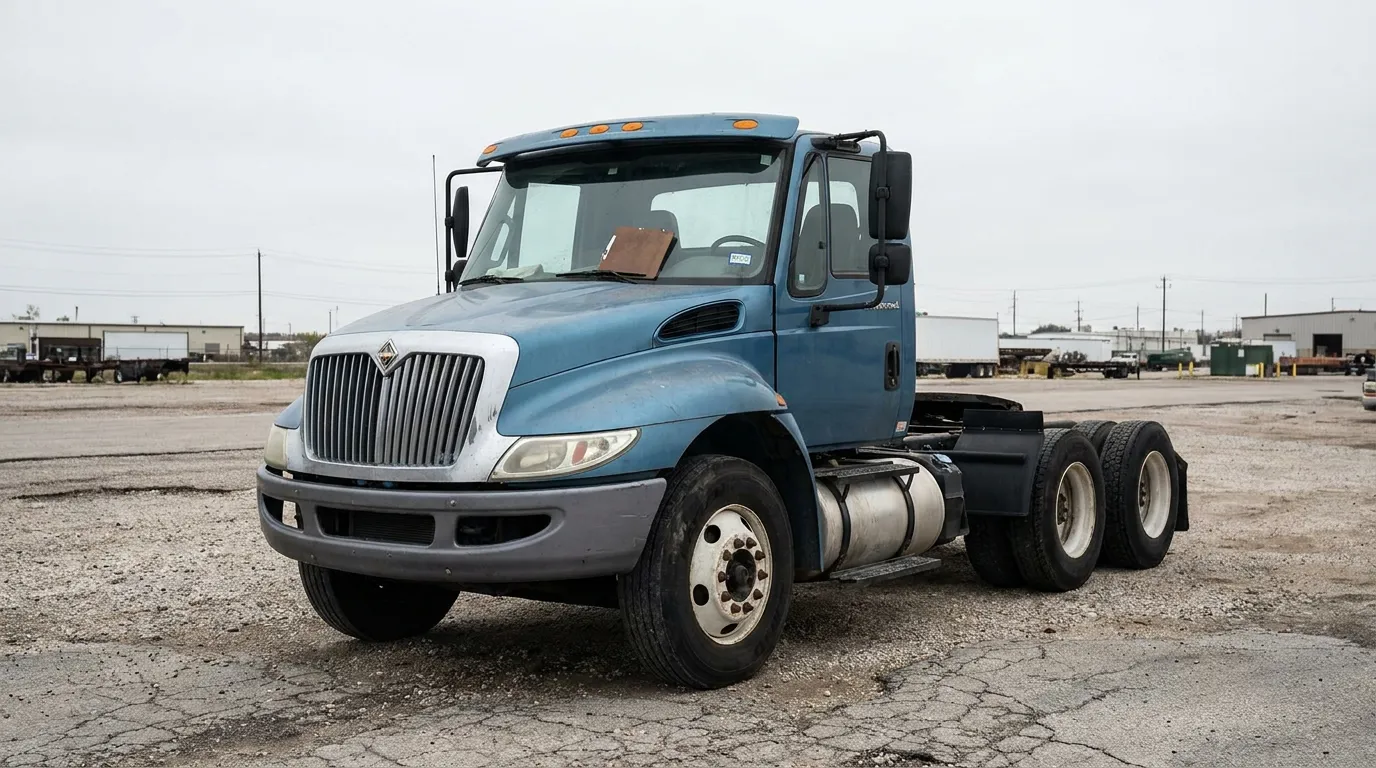
What a 49 CFR 391.51 Driver Qualification File Actually Contains
Federal motor carrier rules require an employing carrier to keep a qualification file for each driver. Under 49 C.F.R. § 391.51, the file must include the driver’s employment application, documentation of investigations into prior employers and safety history, motor vehicle record inquiries, annual driving record reviews, a road test certificate (or equivalent), and medical qualification documentation. Specific requirements vary by driver type, and some records may be maintained separately or verified electronically. Each gap in the file may tell a story.
Missing paperwork may not be merely a technical violation. When a carrier cannot produce a road test certificate or current medical examiner’s certificate, a plaintiff may argue the company placed an unvetted driver on Houston highways. Whether that argument succeeds depends on the facts, the causal connection to the crash, and trial court rulings.
Why the File Reveals Carrier Decisions, Not Just Driver History
The qualification file documents what the trucking company knew and when. A pre-employment inquiry that turned up prior out-of-service orders, positive drug screens, or a suspended commercial license may show the carrier had notice. Notice is often central to negligent hiring, retention, or supervision theories, shifting focus from driver error to the company’s safety practices.
How Texas Law Turns 391.51 Evidence Into Admissible Proof
Chapter 72 of the Texas Civil Practice and Remedies Code is the roadmap for converting qualification records into proof of fault. Texas law permits bifurcated trials in certain commercial motor vehicle cases under Tex. Civ. Prac. & Rem. Code §§ 72.051-72.052, separating driver negligence from claims against the employer. Section 72.054(c) expressly allows specified categories of evidence in the first phase when the employer is regulated by the Motor Carrier Safety Improvement Act of 1999 or Chapter 644 of the Transportation Code. This means qualification failures may reach the jury even in the liability phase when relevant and otherwise admissible under the Texas Rules of Evidence.
The statutory categories track the qualification file item by item. Under Tex. Civ. Prac. & Rem. Code § 72.054(c)(1), a plaintiff may offer evidence of whether the driver was licensed, disqualified under federal regulations, subject to an out-of-service order, or driving in violation of a license restriction. Other subsections address road test certificates and medical qualification requirements. The Texas commercial vehicle trial statute also permits carrier-side proof, including whether the driver submitted required applications and whether the employer performed pre-employment investigations. Counsel should compare each exhibit against the exact statutory text.
Pairing Qualification Gaps With Other Recordkeeping Failures
A pattern of noncompliance may reframe the entire dispute. Texas imposes independent recordkeeping duties on registered motor carriers. Under Tex. Transp. Code § 643.103(a)-(b), a registered carrier must file and maintain evidence of insurance. When a carrier fails those obligations and cannot produce a complete qualification file, a jury may view the company’s safety culture differently.
Why Fault Percentages Make DQ File Discovery So Valuable
Texas applies proportionate responsibility, and the defense often works to move fault percentages onto the injured driver. Under Tex. Civ. Prac. & Rem. Code § 33.001, a claimant generally may not recover if their percentage of responsibility exceeds 50 percent. The doctrine of comparative negligence reduces recoverable damages according to the degree each party contributed.
A few percentage points can change claim value substantially. If a factfinder assigns 60 percent responsibility to the trucking defendant and 40 percent to the plaintiff, the plaintiff would generally recover 60 percent of the damages found. Documentary evidence that the carrier hired a disqualified driver may help keep responsibility where it belongs.
| Evidence in the DQ File | What It May Help Establish |
|---|---|
| Employment application (§ 391.51(b)(1)) | Whether the carrier collected required background information |
| Prior employer inquiries (§ 391.23(a)) | Notice of a driver’s safety performance history with DOT-regulated employers during the preceding three years |
| Road test certificate (§ 391.31) | Whether the driver was tested for the vehicle operated |
| Medical examiner’s certificate (§ 391.51(b)(7)) | Whether the driver was physically qualified to drive |
| License and disqualification records | Whether the driver was legally permitted to operate |
💡 Pro Tip: Trucking crashes frequently involve several defendants, including the driver, motor carrier, and sometimes a broker. Fault allocation among them may interact with Texas’s limited joint and several liability rules, which is why identifying every potentially responsible party early matters.
The Timing Problem Every Houston Trucking Claim Faces
Deadlines can control whether qualification file evidence ever matters. Most personal injury and property damage claims fall under the two-year period in Tex. Civ. Prac. & Rem. Code § 16.003(a), and wrongful death claims are subject to a two-year period under § 16.003(b). Missing an applicable deadline will generally bar the claim, although limitations is an affirmative defense that must be pleaded and proved.
Tolling and discovery-rule exceptions exist, but Texas courts often interpret them narrowly. Whether an exception may extend a deadline is fact-dependent and often disputed. Claims involving governmental entities can carry separate administrative notice requirements that are frequently much shorter.
Anticipating the Defenses the Carrier Will Plead
Defendants must raise affirmative defenses early, shaping discovery strategy. In Texas, defendants must assert affirmative defenses in an Answer or other timely pleading, or risk waiving them. Reviewing those pleaded defenses early may allow counsel to target the qualification records most likely to rebut them.
Practical Steps That Protect Driver Records Fault Evidence
Qualification records are only useful if they still exist when the lawsuit begins. Carriers operate under retention schedules, and files can be purged in the ordinary course of business. A prompt spoliation letter demanding preservation is often one of the first documents sent in a serious truck crash case.
Steps that support a thorough investigation include:
- Sending written preservation demands to the carrier, its insurer, and any broker
- Requesting the complete qualification file rather than selected pages
- Comparing the file against driver logs, dispatch records, and maintenance history
- Identifying prior employers named in the application for independent subpoenas
- Retaining accident reconstruction and medical professionals early
Preservation extends beyond personnel paperwork. Electronic control module data, telematics, and inspection reports can degrade or disappear. Our overview of evidence a truck accident attorney can preserve explains how these categories fit together.
Frequently Asked Questions
1. Can I get a trucking company’s driver qualification file without filing a lawsuit?
Sometimes, but carriers rarely volunteer complete files before litigation. Formal discovery in a filed lawsuit generally provides the strongest mechanism for obtaining the full file, along with court intervention if the carrier resists.
2. What if the file is complete and shows no violations?
A clean file does not end the case. Liability in truck crashes can rest on driver conduct, hours of service issues, maintenance failures, or dispatch pressure. Qualification records are one category of proof among many.
3. Does a missing document automatically prove the carrier was negligent?
No. Regulatory noncompliance may be evidence a jury considers, but it is not an automatic finding of liability. A plaintiff must still connect the deficiency to the harm suffered.
4. How does my own share of fault affect what I can recover?
Under Texas proportionate responsibility, your recovery is reduced by your percentage of fault and is barred if that percentage exceeds 50 percent. Strong carrier negligence proof may influence how a jury allocates responsibility.
5. How soon should I contact an attorney after a truck crash?
As soon as possible. Early involvement allows preservation demands to go out before records cycle out and helps protect against limitations problems.
Turning Records Into Accountability for Houston Families
A driver qualification file is more than compliance paperwork. It is a contemporaneous record of the decisions a trucking company made before its truck reached the Sam Houston Tollway, and Texas law provides a defined statutory path for placing those decisions before a jury. Whether that evidence is admitted depends on the facts, the documents produced, and the rulings in your particular case. What is consistent is that records must be preserved quickly and reviewed carefully by counsel who handles commercial vehicle litigation.
For more than 20 years, Attorney Jason E. Payne, a Port Arthur native who is Board Certified in Personal Injury Trial Law by the Texas Board of Legal Specialization and recognized in Texas Super Lawyers from 2019 through 2026, has helped over a thousand injured individuals and families pursue compensation. Our 49 cfr 391.51 driver qualification file lawyer team explains the process clearly and fights for people who feel overlooked by insurance companies. Reach Payne Law Firm’s Houston office at 713-223-5100 or contact us now for a free consultation.
Disclaimer: This content is for informational purposes only and is not legal advice. Every case is unique, and results may vary. Consult an attorney about your specific circumstances.