
When Exhaustion Behind the Wheel Turns Deadly
Key Takeaways: ELD logs are among the most persuasive evidence for proving a Houston truck driver caused a crash while fatigued, automatically recording driving time, duty status, and required rest from the vehicle. Unlike paper logs, this machine-generated data is harder to falsify and is measured against federal hours-of-service limits and Texas intrastate rules. However, showing a violation alone is insufficient; fatigue must be tied to the collision through causation and negligence, often alongside black box data, witness statements, and medical proof. Both driver and trucking company can face liability under direct or vicarious theories, and these high-stakes cases are fiercely contested. Because evidence can be overwritten within weeks, preserving ELD data quickly and working with a knowledgeable attorney is critical.
Electronic logging device data can be the most persuasive evidence for proving a tired trucker caused a serious collision. When an 18-wheeler slams into a passenger vehicle on I-45 or the Sam Houston Tollway, drivers rarely admit exhaustion. The truth often lives inside the truck’s digital records, which quietly track duty status, driving time, and required rest periods, making them powerful tools for connecting fatigue to a crash.
At Payne Law Firm, we treat our clients like family and understand how overwhelming it feels facing a trucking company after a devastating wreck. If you or someone you love was hurt, we are ready to listen. Call us today at 713-223-5100, reach out through our confidential contact form, or learn more about how Payne Law Firm helps injured Houstonians pursue full compensation.

What ELD Logs Are and Why They Matter
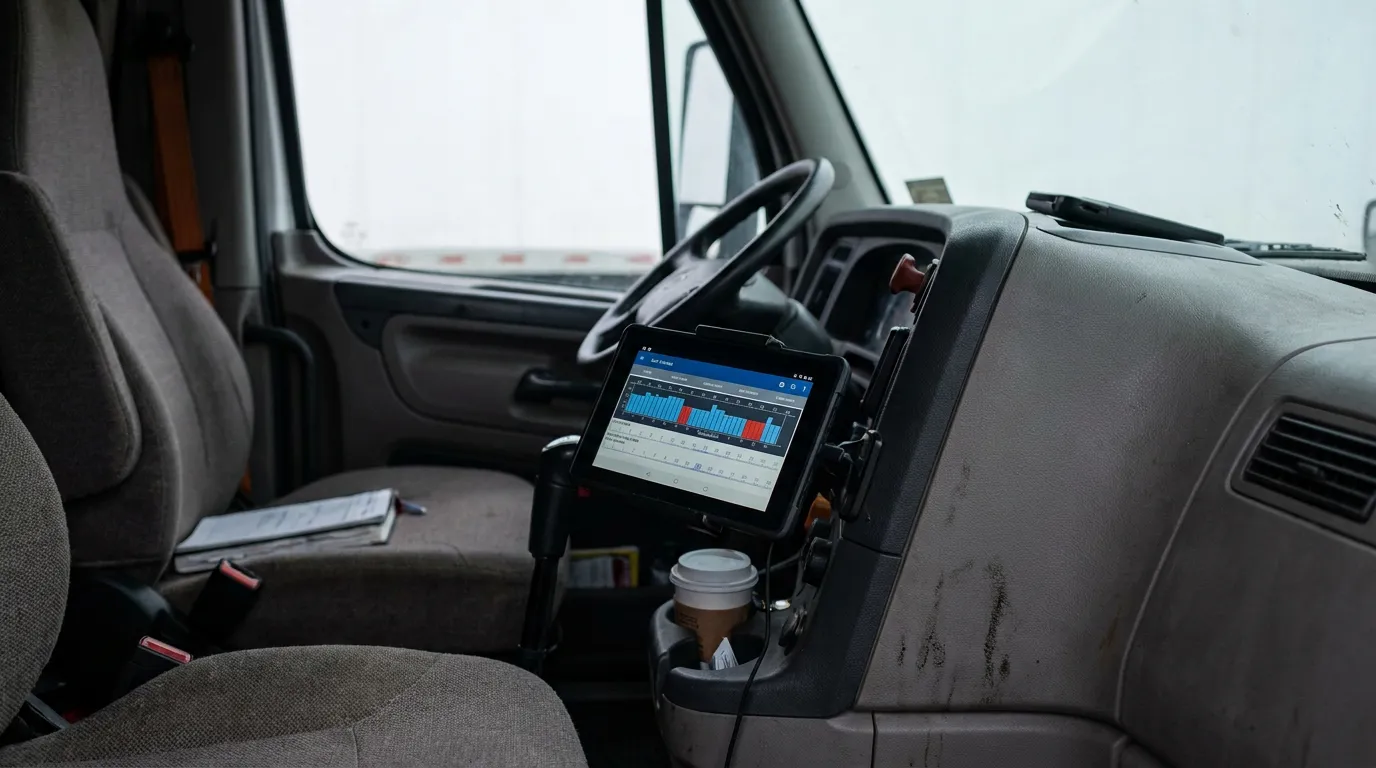
An electronic logging device connects to a commercial truck’s engine and automatically records driving time and duty status. Unlike old paper logbooks drivers filled out by hand, an ELD captures data directly from the vehicle, making it far harder to falsify. That reliability is why this evidence matters so much in fatigue cases.
The trucking industry is heavily regulated at federal and state levels, and thorough investigation is often necessary to uncover everyone at fault. ELD records sit at the investigation’s center because they document driver hours in a way that can be compared against legal limits.
💡 Pro Tip: After a serious crash, evidence like ELD data can be overwritten or lost within weeks. Sending a prompt preservation letter to the trucking company is often one of the most important early steps in protecting a claim.
Why Digital Records Beat Paper Logs
Paper logs have long been vulnerable to manipulation, which is why courts value objective electronic data. Drivers under pressure to deliver on time have sometimes bent the rules. Truckers sometimes falsify these records to conceal violations, which is why an attorney should review logs alongside the truck’s event data recorder, often called the black box.
When paper entries and the black box tell different stories, electronic evidence frequently wins out. This is why ELD logs truck accident investigations rely on machine-generated timestamps rather than handwritten notes.
How ELD Logs Help Prove Driver Fatigue Houston Truck Crashes
ELD data proves fatigue by revealing whether a driver exceeded legally allowed driving hours before resting. Hours of service rules imposed by the Federal Motor Carrier Safety Administration aim to combat truck driver fatigue, and ELD logs document whether those rules were followed.
In driver fatigue Houston truck crashes claims, investigators pull ELD data and line it up against required rest periods. If logs show a driver exceeded the permitted driving window with no meaningful break, that gap becomes compelling truck accident evidence Houston juries can understand.
Texas layers its own limits atop the federal framework. Under the Texas commercial driver rules in Chapter 644, specifically Texas Transportation Code Sec. 644.053(a)(1), a rule adopted under that chapter may not prevent an intrastate operator from driving up to 12 hours following eight consecutive hours off duty. Exceeding that window is central to fatigued-driver claims because ELD records show exactly when drivers crossed the line.
💡 Pro Tip: Fatigue is not always about total hours. A driver who technically stayed within limits but drove overnight through natural low-alertness hours may still have been dangerously drowsy, so the full duty-status pattern matters.
The Federal Benchmarks Investigators Compare Against
Federal hours-of-service limits give investigators concrete numbers to measure ELD data against. These benchmarks are the yardstick for a hours of service violation. A trucker cannot drive until 10 consecutive hours off duty, has a 14-hour period to drive no more than 11 hours, and cannot exceed 60 hours in seven days or 70 hours in eight days.
When ELD records show any threshold was exceeded, it supports the argument that the driver was operating while impaired by fatigue. Here are the core limits:
| Rule | Limit |
|---|---|
| Off-duty reset (federal) | 10 consecutive hours before driving |
| Daily driving window | 14 hours, with no more than 11 hours driving |
| Weekly cap | 60 hours in 7 days or 70 hours in 8 days |
| Texas intrastate | Up to 12 hours driving after 8 consecutive hours off |
Connecting Fatigue to the Crash Itself
Showing a rules violation is insufficient alone; the fatigue must be tied to the collision. A successful claim requires proof of causation. A victim must show that truck driver fatigue was a proximate cause of the accident, meaning it was both a cause-in-fact and a foreseeable cause of the harm, not merely that the wreck would not have happened but for the driver’s excessive drowsiness.
This connects to the broader negligence standard governing these cases. To recover, an injured person generally must show the defendant was negligent, meaning they acted unreasonably dangerously under the circumstances. ELD logs help bridge the gap between a technical violation and unreasonable conduct behind the wheel. To see how this evidence plays out in real disputes, our discussion of how ELD data can strengthen your case walks through the strategy in depth.
💡 Pro Tip: Preserve your own evidence too. Photos, the police report, and prompt medical records help medical and accident reconstruction professionals connect the truck’s data to the injuries you suffered.
Who May Be Held Responsible for a Fatigued Driver
Both driver and trucking company can face liability when fatigue causes a Houston 18-wheeler crash. A company is not automatically off the hook simply because the driver dozed off. It may be responsible under more than one legal theory.
Direct liability: A company may be directly liable if it encouraged the driver to violate hours of service rules, demanded unreasonable deadlines, or looked the other way.
Vicarious liability: A company may be indirectly liable if a driver failed to use reasonable care while on the job.
Truck cases can also reach beyond these two parties. Potential defendants may include a truck driver, trucking company, truck manufacturer, loading company, maintenance company, or even a government agency. Identifying every responsible party often requires the kind of investigation a dedicated Houston truck accident lawyer can coordinate.
Why These Cases Are Fought So Hard
Because catastrophic injuries mean large potential damages, trucking defendants fight aggressively. These matters are far more complex than a typical fender bender. With so much money at stake, these cases are often fiercely contested by defendants and insurers.
Texas law accounts for the heightened stakes when a crash causes catastrophic harm. Suits arising from commercial-vehicle collisions that result in death or serious, disabling injuries are subject to special procedural rules and heightened scrutiny in Texas courts, including the commercial-vehicle litigation reforms the Legislature enacted in 2021. Fatigue-related 18-wheeler collisions frequently produce these life-altering injuries, raising the stakes of getting the ELD evidence right.
💡 Pro Tip: Keep a personal journal of how your injuries affect daily life. In cases involving substantial disablement, this record can support claims for pain, lost income, and diminished quality of life.
Frequently Asked Questions
Can ELD logs alone win my truck accident case?
Not usually by themselves, but they are often a cornerstone of the evidence. ELD logs establish whether a hours of service violation occurred, yet you generally still need to connect that violation to causation and damages. Most fatigued truck driver Texas claims also rely on the black box, witness statements, and medical proof.
How long do I have to file a truck accident claim in Texas?
Texas generally applies a two-year statute of limitations for personal injury claims, subject to exceptions. Certain circumstances may shorten or extend that window, and courts interpret exceptions narrowly. Because deadlines can differ for claims involving government entities, consult a lawyer promptly rather than assume any extension automatically applies.
What if the driver’s paper logs contradict the ELD data?
The electronic data frequently carries more weight because it is generated by the vehicle itself. When falsified logbooks clash with an electronic logging device Texas record, digital evidence can expose the manipulation. This is why preserving the ELD and black box quickly is so important.
Is the trucking company always liable if the driver was fatigued?
No, liability depends on the specific facts. A company may be directly or vicariously liable under certain circumstances, but outcomes turn on the employment relationship, company policies, and what the evidence shows. Each commercial truck crash Texas case is different.
Do I need a lawyer to obtain ELD data?
In most cases, yes, because the data is controlled by the trucking company. A truck accident attorney Houston families trust can send preservation demands and pursue the records through the legal process before they are lost or overwritten.
Moving Forward After a Fatigue-Related Wreck
ELD logs can absolutely help prove driver fatigue, but they are one piece of a larger, fact-dependent puzzle. When combined with hours-of-service benchmarks, black box data, and medical proof, this evidence can transform a difficult claim into a well-supported one. Because these cases are heavily contested and outcomes depend on specific facts, having knowledgeable guidance matters. Attorney Jason Payne, who is Board Certified in Personal Injury Trial Law by the Texas Board of Legal Specialization and has served injured Texans for more than 20 years, built this practice around helping people feel heard, informed, and respected.
If a fatigued trucker turned your life upside down, you do not have to face the trucking company and its insurer alone. Reach out to Payne Law Firm for a free consultation by calling 713-223-5100 or by sending us a message through our online case review. Let our compassionate team review your options and fight for the compensation you and your family deserve.