

If you were injured while riding your bicycle on a Houston street, you may be wondering what legal protections apply to you. Texas law treats bicycles much like motor vehicles, giving cyclists significant road rights. Under Tex. Transp. Code § 551.101, bikes are entitled to all rights and obligated to all duties that apply to motor vehicles. This means a negligent driver who strikes a cyclist can be held accountable just as if they had hit another car.
If you or a loved one suffered injuries in a bicycle crash, Payne Law Firm is ready to help. Call 713-223-5100 or reach out online to discuss your case today.
Texas Law Recognizes Cyclists as Legitimate Road Users
Many drivers do not realize that cyclists have the same legal standing on the road as any other vehicle operator. Under Tex. Transp. Code § 551.101, a person operating a bicycle has every right that applies to a driver of a motor vehicle, unless specifically altered by Chapter 551 or inapplicable by its nature. Cyclists must follow the same traffic laws, including stopping at red lights and stop signs. When a motorist fails to respect a cyclist’s lawful presence, that driver may be liable for resulting injuries.
Courts and insurance companies analyze bicycle accident claims using the same negligence principles that apply to car collisions. This framework protects injured cyclists who were lawfully using the roadway at the time of the crash.
💡 Pro Tip: After any bicycle accident in Houston, take photos of the scene, your injuries, and any vehicle damage before anything is moved. Preserving this evidence early can strengthen your claim significantly.
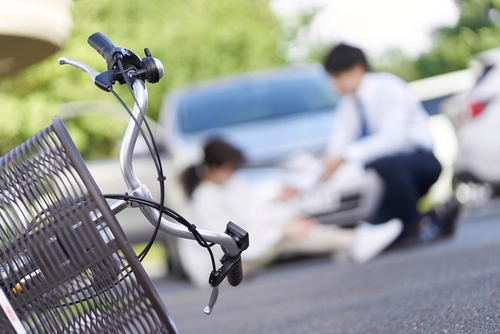
When Can a Houston Cyclist "Take the Lane"?
Texas law does not require cyclists to hug the curb at all times. While cyclists moving slower than other traffic should ride as near as practicable to the right curb, they may take the full lane when conditions make riding near the curb unsafe. Under Tex. Transp. Code § 551.103, a cyclist may occupy the full lane when:
- The outside lane is less than 14 feet in width and does not have a designated bicycle lane adjacent to that lane
- The lane is too narrow for a bicycle and a motor vehicle to safely travel side by side
- The cyclist is passing another vehicle or preparing to turn left
- A roadway condition, including a fixed or moving object, parked vehicle, pedestrian, animal, or surface hazard, prevents safe riding next to the right curb
Knowing when you can lawfully take the lane matters for your accident claim. If a motorist struck you while you were legally occupying the lane, the driver cannot argue fault simply because you were not riding at the edge of the road. An experienced Houston bicycle accident lawyer can help demonstrate your lane positioning was lawful and the driver’s negligence caused the collision.
💡 Pro Tip: You are not required to use an off-road bike path even when one runs alongside the roadway. A cyclist may choose to use the roadway instead, provided they follow all applicable traffic rules.
Bicycle Equipment Requirements and How They Affect Your Claim
If your accident happened at night, the equipment on your bicycle could play a role in determining fault. Texas Transportation Code § 551.104 establishes bicycle equipment requirements. When riding at nighttime, your bicycle must have a front lamp emitting white light visible from at least 500 feet and a rear red reflector visible from 50 to 300 feet when directly in front of lawful upper beams of motor vehicle headlamps. A rear red lamp visible from 500 feet to the rear may replace the red reflector. Chapter 547, Subchapter J does not govern bicycle lighting; it covers provisions relating to warning devices on motor vehicles.
Failure to comply with lighting requirements could affect your legal claim. An insurance company may argue that your lack of proper lighting contributed to the crash, potentially reducing your compensation under Texas comparative fault rules. However, even if your bicycle lacked certain equipment, the other driver may still bear the majority of fault.
How Helmet Use May Impact Your Claim
Texas does not have a universal bicycle helmet law for adults, but not wearing a helmet can still affect your case. An insurance company might argue that failure to wear a helmet contributed to or worsened a head injury, potentially reducing your compensation. Discussing helmet use with a bicycle injury lawyer in Houston is a wise step early in the process.
💡 Pro Tip: Even though Texas law does not mandate helmets for adult cyclists, wearing one creates a stronger position if you need to file an injury claim.
Proving Negligence After a Car-Bicycle Accident in Houston
To receive compensation after a bicycle accident, you must prove that another party’s negligence caused the crash. This means establishing four elements: the driver owed you a duty of care, the driver breached that duty, the breach caused your injuries, and you suffered actual damages. Because bicycles carry the same legal status as motor vehicles on Texas roads, motorists must yield the right-of-way to cyclists when appropriate.
Gathering Evidence at the Scene
What you do in the minutes after a crash can shape the outcome of your entire case. Under Tex. Transp. Code § 550.021 through § 550.023, any operator involved in a collision resulting in injury or death must stop at the scene, provide their name, address, registration number, and insurer information, and render reasonable assistance. Collect all of this information from the driver.
When a Crash Report Is Required
Texas law sets clear thresholds for when a crash must be reported. Under Tex. Transp. Code § 550.026, if a collision results in injury or death, or damage to a vehicle to the extent that it cannot be normally and safely driven, the operator must immediately notify law enforcement. A separate provision, § 550.061, requires a written accident report when property damage reaches $1,000 or more. Filing a report even in minor crashes creates an official record that can support your claim later.
| Crash Report Requirement | Report Required? |
|---|---|
| Injury or death occurred | Yes |
| Property damage of $1,000 or more | Yes (written report required under § 550.061) |
| No injury and damage under $1,000 | No, but recommended |
💡 Pro Tip: Always request a copy of the police crash report. It often contains the officer’s observations about fault, witness statements, and other valuable evidence.
What Damages Can an Injured Cyclist in Houston Recover?
Injured cyclists may pursue both economic and non-economic damages after an accident. Understanding what you can claim helps you avoid accepting inadequate settlements.
Economic Damages
- Medical expenses, including emergency care, surgery, rehabilitation, and future treatment
- Lost wages from time missed at work during recovery
- Property damage to your bicycle and gear
Non-Economic Damages
- Pain and suffering and emotional distress
- Loss of enjoyment of life
- Disfigurement or permanent disability
The total value of your claim depends on the severity of your injuries, the strength of your evidence, and the degree of the other party’s fault. Texas follows a modified comparative fault system, meaning your compensation may be reduced by your percentage of responsibility. If you are found 51 percent or more at fault, you are barred from recovering damages.
Obstructed Bike Lanes and Third-Party Liability
Sometimes the cause of a bicycle accident is not a negligent driver but a hazardous condition in the bike lane itself. Under Tex. Penal Code § 42.03, it is a Class B misdemeanor to obstruct a highway, street, sidewalk, or other passageway. If a blocked bike lane forced you into traffic where you were struck, you may have a claim against the party responsible for the obstruction. You can review additional Texas bicycle laws for further details.
Cyclists involved in rideshare-related collisions face additional complexities. If a rideshare vehicle struck you while cycling, you can learn more in our guide on whether cyclists can file a claim after a rideshare crash.
Steps to Protect Your Rights After a Houston Cycling Accident
Taking the right steps after a crash can make a meaningful difference in your ability to recover fair compensation. Beyond gathering evidence at the scene, seek medical attention promptly even if your injuries seem minor. Delayed symptoms are common in bicycle accidents, and a medical record linking your injuries to the crash is important evidence.
Avoid giving a recorded statement to the at-fault driver’s insurance company before consulting an attorney. Insurers may use your words against you to minimize or deny your claim. Texas has a two-year statute of limitations for most personal injury claims under Tex. Civ. Prac. & Rem. Code § 16.003. Review Texas vehicle equipment statutes to confirm your bicycle met legal requirements.
💡 Pro Tip: Keep a journal documenting your pain levels, medical appointments, and how the injury affects your daily life. This record can serve as powerful evidence when calculating non-economic damages.
Frequently Asked Questions
1. Do Houston cyclists have the same rights as drivers on the road?
Yes. Under Tex. Transp. Code § 551.101, a person operating a bicycle on a Texas roadway has all the rights and duties applicable to the driver of a motor vehicle, unless specifically altered by Chapter 551. This means motorists must treat cyclists with the same respect and yield the right-of-way when required.
2. Can I still recover damages if I was not wearing a helmet during my bicycle accident?
Potentially, yes. Texas does not require adult cyclists to wear helmets. However, an insurer may argue that the lack of a helmet contributed to head injuries, which could reduce your compensation under comparative fault principles.
3. What should I do if the driver leaves the scene after hitting me on my bicycle?
Try to note as many details about the vehicle as possible, including the license plate, make, model, and color. Call 911 immediately. Under Tex. Transp. Code § 550.021, leaving the scene of a collision involving injury is a criminal offense. A police report and witness information can help identify the driver.
4. Am I required to use a bike path if one is available next to the road?
No. A cyclist is not required to use an off-road bike path adjacent to the roadway and may choose to ride on the road instead, provided they follow all applicable traffic laws.
5. How long do I have to file a bicycle accident lawsuit in Houston?
In Texas, the statute of limitations for most personal injury claims is two years from the date of the accident under Tex. Civ. Prac. & Rem. Code § 16.003. However, specific circumstances may affect this timeline, so consulting an attorney promptly is important.
Protecting Your Future After a Houston Bicycle Accident
Bicycle accidents can leave Houston cyclists facing serious injuries, mounting medical bills, and uncertainty about what comes next. Texas law provides meaningful protections for cyclists, from the right to occupy a full lane to the ability to pursue damages from a negligent driver. Understanding these rights is essential.
Payne Law Firm is committed to standing up for injured cyclists in Houston and throughout Harris County. If you need guidance on your bike crash legal rights in Texas, call 713-223-5100 or contact us today to discuss your case and learn how we can help you move forward.