

If you were injured in an Uber crash in Houston, the evidence on your phone right now could determine your insurance coverage. Rideshare accident claims hinge on one critical detail: the driver’s app status at the exact moment of collision. That single data point determines whether you face a limited liability policy or up to $1 million in corporate coverage. Knowing how to preserve app evidence after an Uber accident in Texas can make or break your case.
If you need guidance on your next steps, Payne Law Firm is ready to help. Call 713-223-5100 or reach out online to discuss your rideshare accident claim today.
Why App Evidence Matters in a Houston Rideshare Accident
The insurance that applies to your Uber crash depends entirely on what the driver’s app was doing when the collision happened. Rideshare companies like Uber and Lyft classify coverage into distinct periods based on app activity. Because rideshare drivers are independent contractors, different insurance rules apply. Without proof of which coverage period was active, the rideshare company may minimize or deny your claim.
Preserving Houston rideshare accident evidence starts with understanding these coverage periods. During Period 1, when the driver is logged in but waiting for a ride request, Uber and Lyft provide limited coverage of $50,000 per person and $100,000 per accident for bodily injury, plus $25,000 for property damage. Once the driver accepts a ride request through passenger drop-off (Periods 2 and 3), at least $1 million in third-party liability coverage activates.
| Coverage Period | Driver App Status | Typical Bodily Injury Limits | Property Damage |
|---|---|---|---|
| Period 1 | App on, waiting for request | $50,000/$100,000 | $25,000 |
| Period 2 | Ride accepted, en route to pickup | $1,000,000+ | Included in liability |
| Period 3 | Passenger in vehicle through drop-off | $1,000,000+ | Included in liability |
Screenshot the Uber App Immediately After the Crash
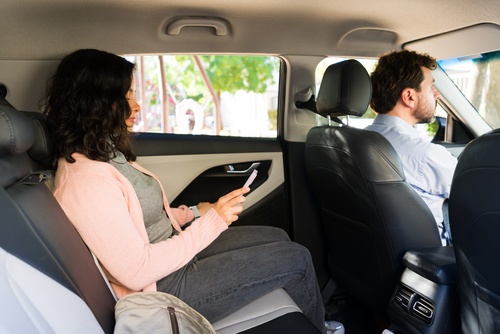
The single most important action at the scene is capturing screenshots of the Uber or Lyft app on your phone. If you were a passenger, your app shows the active trip, driver’s name, vehicle information, and route. If you were in another vehicle or a pedestrian, ask the rideshare driver to show their app screen and photograph it. This real-time data can disappear once the trip ends or the driver logs out.
Screenshots should capture the trip details screen, driver profile, and ride receipt or confirmation. These digital records establish the driver’s connection to the Uber platform at the crash time, critical for determining which insurance policy applies.
💡 Pro Tip: Take screenshots before you close the Uber or Lyft app. Once the trip ends, some ride data may only be accessible through a formal data request, which can take weeks or months to obtain.
Securing Video and Physical Evidence Before It Disappears
Video evidence from dashcams, traffic cameras, and nearby surveillance systems is powerful for proving fault in a rideshare crash, but it must be secured immediately. Many businesses overwrite surveillance footage within days. Traffic camera footage managed by the City of Houston may also have limited retention windows. Note camera locations and businesses so your attorney can send preservation requests right away.
Physical evidence at the crash scene also requires prompt documentation. Use your phone to photograph vehicle damage, skid marks, traffic signals, road conditions, and visible injuries. Gather witness names and contact information. If emergency responders arrive, request a copy of the police report. An experienced rideshare accident lawyer in Houston can help identify additional evidence sources.
💡 Pro Tip: If the rideshare vehicle has a dashcam, note the camera’s make and model. Your attorney may be able to subpoena that footage before the driver deletes or overwrites it.
How Texas Law Impacts Your Uber Accident Claim
Texas law creates specific challenges for rideshare injury victims that make early evidence preservation urgent. Under Texas Civil Practice and Remedies Code § 16.003(a), personal injury and property damage claims carry a two-year statute of limitations. Wrongful death claims also have a two-year deadline under § 16.003(b). While two years may sound lengthy, building a strong rideshare claim requires gathering app data, corporate records, and insurance information that becomes harder to obtain over time.
Texas HB 1745, effective September 1, 2023, limits the vicarious liability of transportation network companies like Uber. Under Sec. 150E.003, the statute establishes a two-part liability shield: a transportation network company cannot be held vicariously liable when (1) the claimant does not prove gross negligence by clear and convincing evidence, AND (2) the company has fulfilled all of its obligations under Chapter 2402 of the Texas Occupations Code, which governs driver background checks and vehicle inspections. A claimant can defeat this shield by proving either gross negligence by clear and convincing evidence or that the company failed to fulfill its Chapter 2402 obligations. This framework means you need strong, well-preserved evidence to hold Uber accountable.
Important exceptions exist under this statute. The liability shield does not apply if the company failed to comply with Chapter 2402 obligations, such as driver vetting, background checks, and vehicle safety standards. Evidence supporting these exceptions could include prior complaints, safety reports, or internal company records.
💡 Pro Tip: Do not assume you have plenty of time to act. Key digital evidence, like Uber Lyft crash documentation, can vanish within days.
Steps to Preserve Digital and App Evidence After an Uber Crash in Houston
Following a clear checklist in the hours and days after your crash protects your ability to pursue full compensation. Here are the most important Houston Uber accident steps for preserving digital evidence:
- Screenshot your Uber or Lyft app showing the active trip, driver details, route, and fare estimate
- Download your complete ride history from the app settings
- Save any text messages, notifications, or emails from the rideshare platform related to the trip
- Photograph the driver’s phone screen showing their app status if safely possible
- Request your data from Uber or Lyft through their in-app privacy tools or by submitting a formal data request
Beyond app data, preserve every piece of supporting documentation. Save medical records from your initial treatment, keep copies of all bills, and document lost wages. If you communicated with the rideshare driver, insurance adjuster, or any party about the crash, save those messages. Your attorney will use this evidence to build your claim against responsible parties.
💡 Pro Tip: Forward your Uber ride receipt email to a secondary email address or cloud storage. If you lose access to your primary account, you will still have proof of the trip.
Why an Uber Accident Attorney in Houston Can Protect Your Evidence
An attorney experienced in rideshare litigation knows how to send spoliation letters and formal preservation demands to Uber, Lyft, and third parties before critical evidence is lost. Rideshare companies maintain internal data about driver activity, GPS logs, speed data, and app connectivity that are not available to individual claimants without legal action. A 2025 Texas appellate case, Acosta and Molina v. Uber Technologies Inc. and Rasier, LLC (No. 08-24-00099-CV, Tex. App., El Paso), illustrates how Uber crash lawsuits in Texas can involve lengthy appellate proceedings, reinforcing why early evidence collection is critical.
Your attorney can also navigate the complexities of multiple insurance policies. Rideshare claim evidence in Houston often involves the driver’s personal auto policy, the rideshare company’s commercial policy, and potentially your own underinsured or uninsured motorist coverage. Understanding what to do after a rideshare accident and which policies apply requires careful analysis of the driver’s app status and crash facts.
The Statute of Limitations and Your Rideshare Claim Timeline
Acting quickly is not just good practice; it is a legal necessity. In Texas, the two-year filing deadline for personal injury, negligence, and property damage claims under Texas Civil Practice and Remedies Code § 16.003(a) means delayed evidence preservation could jeopardize your entire case.
Starting early also puts you in a stronger negotiating position. When your uber accident attorney in Houston can present well-documented app evidence, medical records, and liability proof, insurance companies are more likely to offer fair compensation.
💡 Pro Tip: Set a calendar reminder for key deadlines. While the two-year statute of limitations is the outer boundary, most attorneys recommend beginning the claims process within weeks of the crash.
Frequently Asked Questions
1. How long do I have to file an Uber accident claim in Texas?
Under Texas Civil Practice and Remedies Code § 16.003(a), you generally have two years from the crash date to file a personal injury or property damage claim. Wrongful death claims also carry a two-year deadline under § 16.003(b).
2. What should I screenshot on the Uber app after a crash?
Capture the active trip screen, driver name and photo, vehicle details, route map, and the fare or ride receipt. If you are not the passenger, photograph the driver’s phone screen showing their app status.
3. Can I still pursue a claim if I did not save app evidence at the scene?
Yes, but your case may be more challenging. An attorney can submit formal data requests to Uber or Lyft and use subpoenas to obtain trip records, GPS data, and driver activity logs.
4. Does Uber’s $1 million insurance policy always apply?
No. The $1 million in third-party liability coverage generally applies only during Periods 2 and 3, when the driver has accepted a ride or has a passenger. During Period 1, coverage is significantly lower.
5. How does Texas HB 1745 affect my ability to sue Uber?
Texas HB 1745 (effective September 1, 2023) creates a liability shield under Sec. 150E.003 that prevents vicarious liability when the claimant does not prove gross negligence by clear and convincing evidence and the company has fulfilled its Chapter 2402 obligations. A claimant can defeat that shield by proving gross negligence by clear and convincing evidence or by showing the company failed to fulfill its Chapter 2402 obligations. This makes thorough evidence preservation even more important.
Protect Your Claim by Preserving Evidence Now
Every day that passes after a Houston Uber crash increases the risk of losing critical app data, video footage, and digital records. The driver’s app status, your ride history, and surveillance footage are all time-sensitive. Texas law gives you a limited window to act, and the heightened liability standards under HB 1745 demand strong, well-documented evidence. Taking immediate steps to preserve this information gives you the best chance of accessing full insurance coverage and holding responsible parties accountable.
Do not wait to protect your rights. Contact Payne Law Firm today by calling 713-223-5100 or requesting a consultation online to discuss how we can help preserve your rideshare accident evidence and pursue the compensation you deserve.